The Town That Doesn’t Try to Impress You
After Jaipur’s scale and Jodhpur’s intensity and Jaisalmer’s golden drama, Pushkar can feel, at first arrival, like not very much.
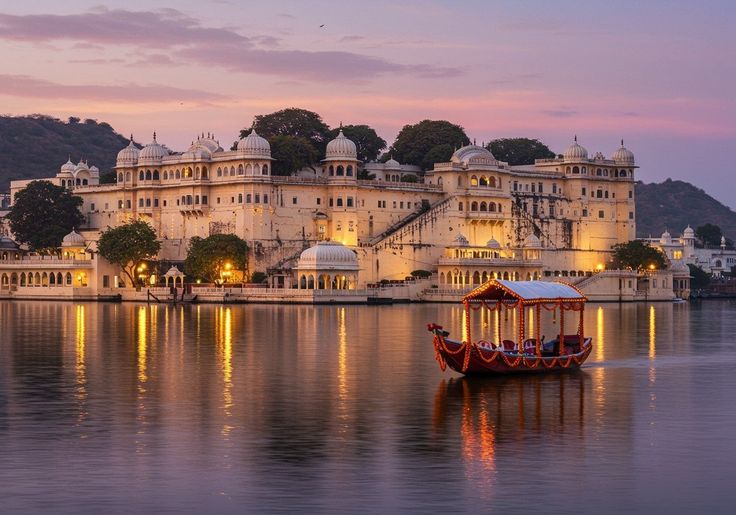
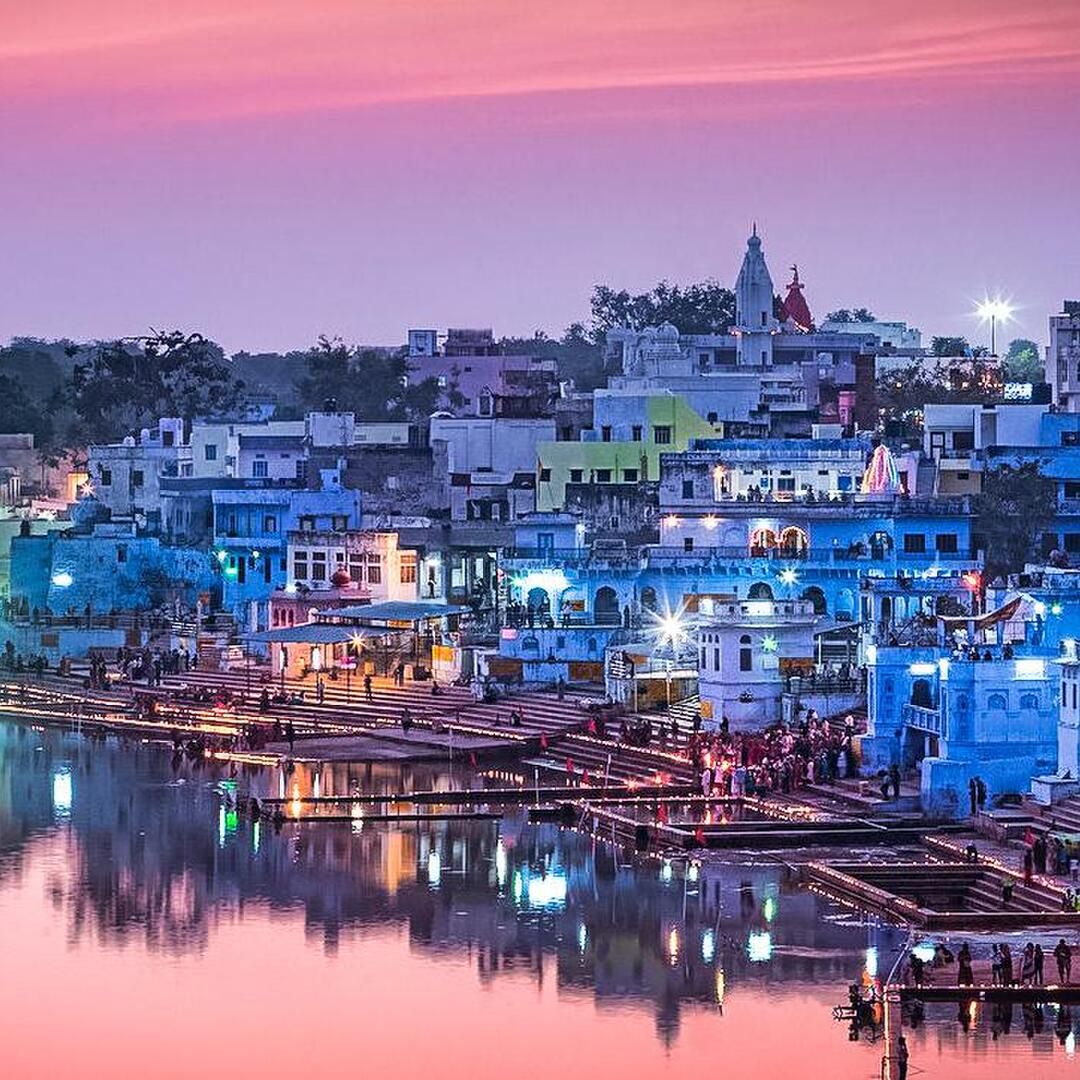
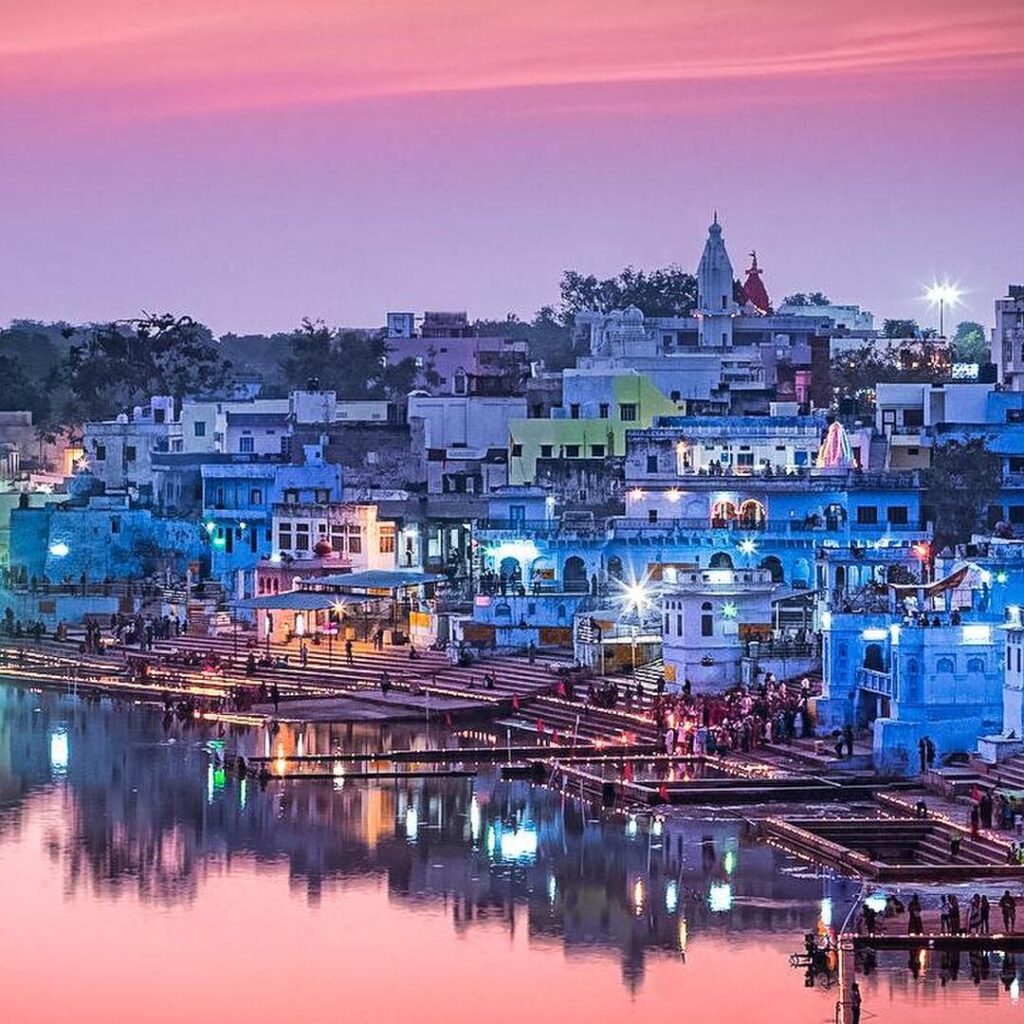
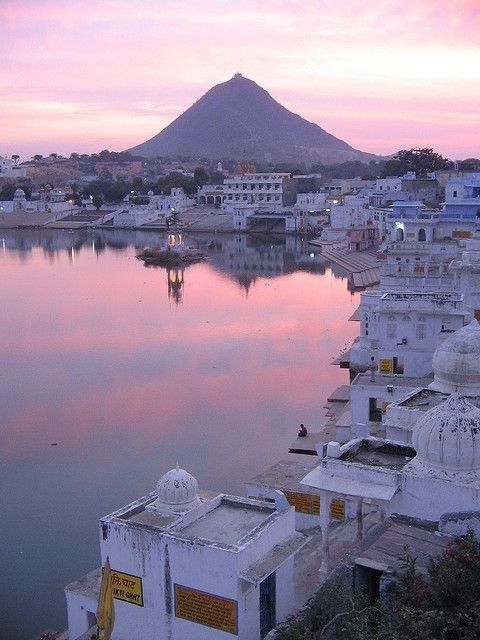
There is no fort. No architectural centrepiece that announces itself from a distance. No visual event that frames the visit and gives it an obvious anchor. What there is instead is a lake — a sacred lake at the centre of a small town, with ghats leading down to the water, temples clustered around the edges, narrow lanes extending back from the shoreline into a neighbourhood that is part pilgrimage destination, part traveller town, and entirely itself.
The pace here is slower than anywhere else on the main Rajasthan circuit. This is not accidental — it is the character of the place, shaped by a combination of religious significance, the particular community that has settled around long-term traveller culture, and the simple fact that a town built around a lake has a rhythm that a town built around a fort does not.
Pushkar is easy to underestimate on a first pass and difficult to forget afterward. The travellers who give it a single rushed afternoon generally describe it as pleasant but insubstantial. The travellers who stay a full day and a night, who sit at the ghats at different hours and walk the lanes without a plan, generally describe it differently — as the place in Rajasthan where they finally stopped trying to extract experience and started actually having it.
What Pushkar Actually Is
Pushkar is one of the oldest continuously inhabited towns in India, and its identity is built around a single geographical and religious fact: the lake at its centre, which Hindu tradition considers sacred and which is believed to be one of the few natural bodies of water created by the direct act of the creator deity Brahma.
The Brahma Temple that stands in the town is, as a consequence, one of the very few temples in India dedicated to Brahma — a deity who, despite being one of the three principal deities of Hinduism, is almost never the primary object of temple worship. This makes Pushkar a specific pilgrimage destination that draws visitors from across the country, many of them undertaking rituals at the lake as part of larger religious journeys.
Alongside the pilgrimage economy, Pushkar has developed — over several decades — a significant presence of long-term travellers and the café culture and guesthouse ecosystem that accompanies them. The two communities occupy the same space without obvious friction and give Pushkar its particular layered quality: a town that is genuinely sacred and simultaneously relaxed in a way that few sacred Indian towns are. You can sit at a lakeside café and watch pilgrims conducting rituals twenty metres away, and neither the café nor the ritual feels incongruous.
This combination is either immediately interesting or slightly dissonant depending on your expectations. For the traveller who comes looking for undiluted spiritual atmosphere, the backpacker cafés may feel intrusive. For the traveller who comes looking for an easy rest point between larger destinations, the religious life of the town may feel more present than expected. Knowing in advance that both things are true and simultaneous is the most useful preparation.
When to Go — Two Very Different Versions
Pushkar has two distinct versions across the year, and the difference between them is substantial enough that they deserve separate consideration.
October through March — excluding the Camel Fair period — is the Pushkar that most visitors experience: a quiet, walkable town with a manageable number of visitors, comfortable weather, and the unhurried quality that the place is known for. November through February is the most comfortable within this window. The evenings are cool, the mornings at the lake have a quality of stillness that the warmer months do not, and the town operates at a pace that rewards the visitor who has come to slow down.
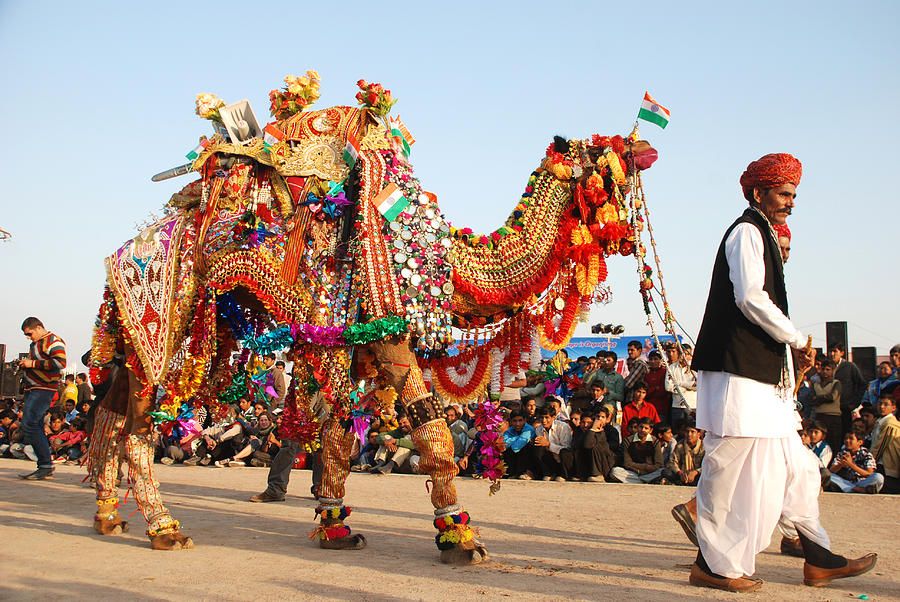
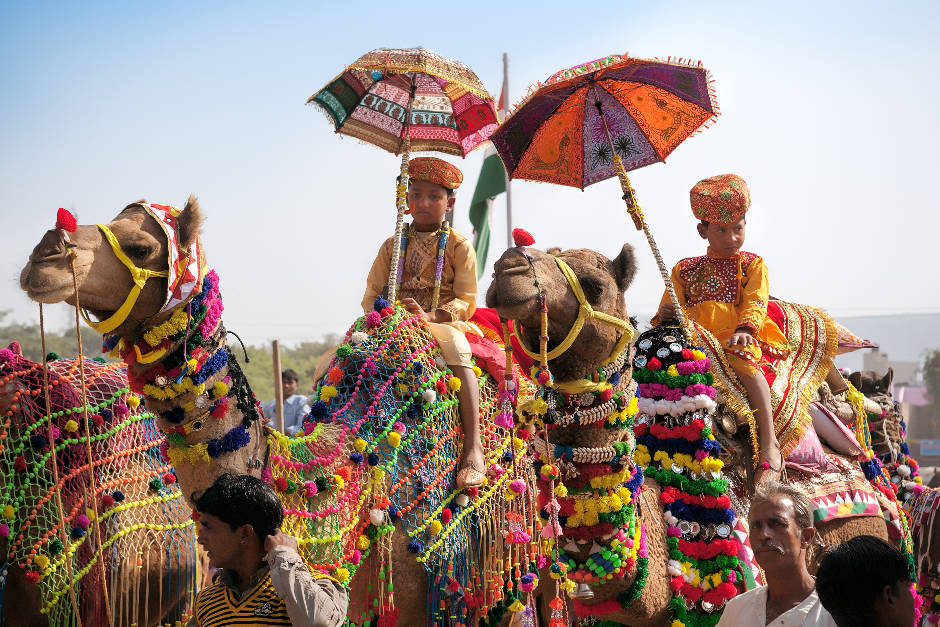
The Pushkar Camel Fair — held annually in the Hindu month of Kartik, typically falling in November — is an entirely different experience. What is normally a quiet pilgrimage town becomes one of the most vivid and densely crowded events in Rajasthan: tens of thousands of camels and livestock, traders from across the desert region, folk performances, and a simultaneous pilgrimage that draws enormous numbers of Hindu devotees to bathe in the lake on the most sacred days of the calendar. The fair is genuinely extraordinary and worth planning a trip around specifically — but it requires planning a trip around it, not assuming that a visit during fair week will be a version of the quiet Pushkar experience with added colour. Accommodation books months in advance, prices rise significantly, and the character of the town transforms completely.
Both versions are worth experiencing. They are simply different trips.
The Lake — You Come Back to It More Than Once
Pushkar Lake is not a single experience that you have and move on from. It is the centre of the town’s daily life, and the quality of time spent at it changes meaningfully depending on when you are there.
In the early morning, the lake is at its quietest and its most atmospheric. Priests at the ghats conduct the opening rituals of the day. Pilgrims arrive for the first bathing of the morning. The light at that hour, coming in low over the surrounding hills, sits on the water at an angle that the midday sun does not replicate. If you are staying in Pushkar overnight — and this is worth doing — the first morning at the lake is the version of Pushkar that stays with people longest.
By mid-morning, the activity builds. The ghats become busier, the lanes more animated, the town more fully itself. This version has its own value — the visible, functioning pilgrimage life of a town that has been doing what it does for a very long time.
By evening, the light softens and the ritual activity shifts register. The evening prayers at the main ghats draw a gathering of both devotees and visitors. It is quieter and more intimate than the Varanasi aarti — less staged, more continuous, the prayers happening in parallel at multiple points around the lake rather than as a single coordinated ceremony. Sit somewhere at the edge of the ghat as this begins and stay for longer than you planned to. The hour between the evening light and full darkness at Pushkar is one of the more quietly extraordinary hours in Rajasthan.
The Brahma Temple — Go for Context, Not Architecture
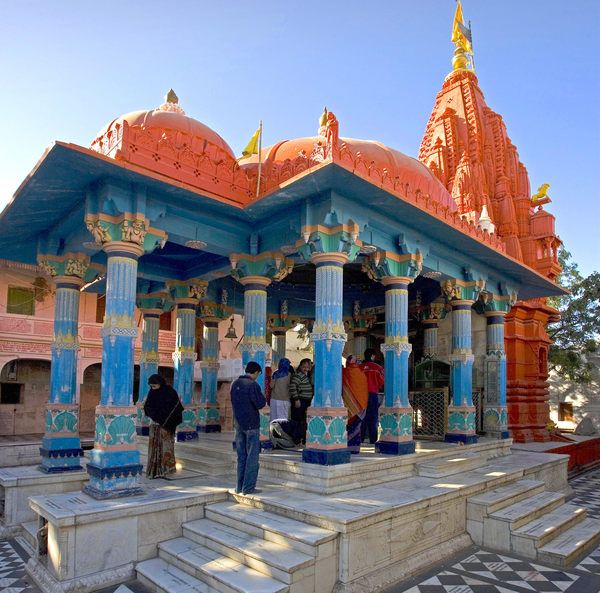
The Brahma Temple, a short walk from the main lake area, is worth visiting — but with calibrated expectations about what you are visiting it for.
Architecturally, the temple is modest. It is not a large or visually elaborate structure in the way that many famous Indian temples are. What it offers is religious and historical context rather than visual spectacle: the experience of being in one of the very few places in India where Brahma is actively worshipped, in a form of practice that has been continuous here for centuries. The pilgrims who come specifically to this temple — many of them completing a circuit of sacred sites that may have taken months — arrive with a sense of purpose that gives the place its atmosphere.
Remove your shoes at the entrance, move through the temple respectfully, and allow yourself to observe rather than analyse. The significance of the place is not in the architecture but in the continuity of what happens there, and that continuity is visible if you are present to it.
The Streets — Where Pushkar’s Two Identities Sit Together
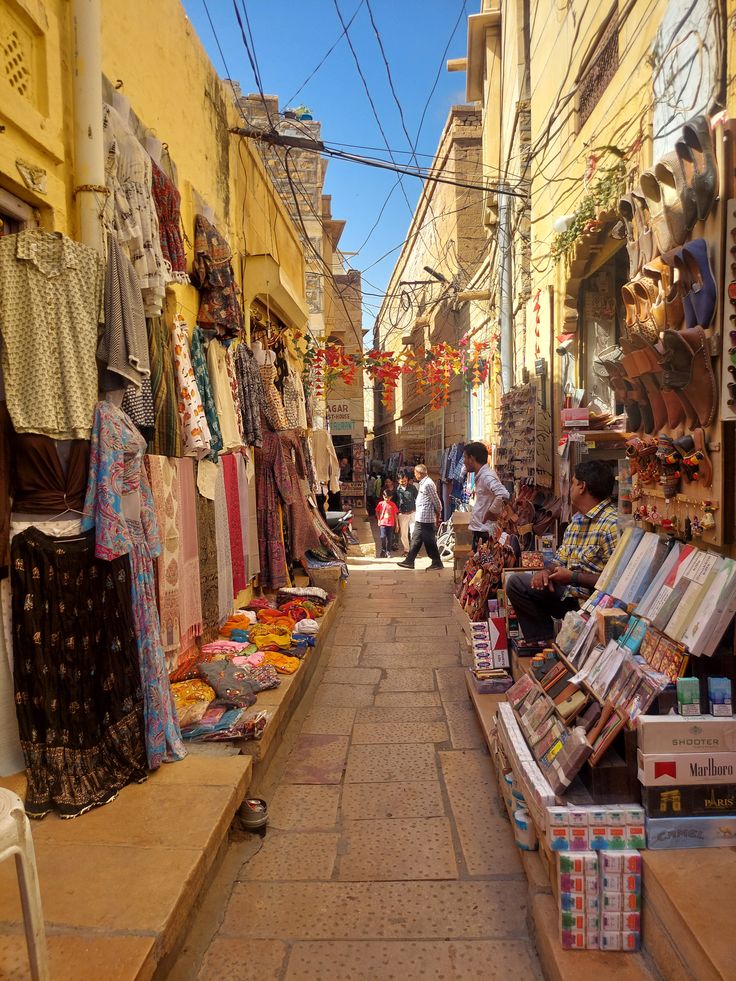
Away from the lake, Pushkar’s lanes hold the particular mixture of its two communities without apparent effort. Guesthouses and small hotels occupy old buildings. Cafés with rooftop seating serve food that ranges from simple Indian thalis to the international menus that have followed the long-term traveller community wherever it has settled across Asia.
The stalls selling silver jewellery, textiles, and various items that have become associated with Rajasthan handicraft culture are present and persistent in the more tourist-facing sections of the bazaar. The local market — vegetable sellers, dairy shops, the ordinary commercial life of a working Indian town — exists alongside it, slightly less visible but equally real.
Walking the lanes without a destination works well here. Pushkar is small enough that there is no real possibility of missing something important by wandering, and the unstructured hour tends to produce more interesting encounters than the scheduled one. A conversation at a tea stall, a temple that is not in any guide but is clearly actively used, a view from a lane that opens suddenly over the lake — these are the things that make Pushkar personal rather than simply visited.
How Many Days and How to Use Them
One night and two days is the honest minimum for Pushkar to make sense. With a single afternoon visit — common among travellers on the Jaipur to Jodhpur circuit who stop for a few hours — you get the lake and the main street but not the quality of the place, which is partly a function of being there when it is quieter than midday and partly a function of having nowhere else to be.
Two nights gives you more, but Pushkar is small enough that the third day begins to feel repetitive unless you are genuinely using the time to do less rather than to see more. The right duration is the one where you leave with the sense that you could have stayed another day — not because there was more to do, but because the pace of the place had just started to feel natural.
Structure the time simply: mornings at the lake, afternoons in the lanes or at a café with a book, evenings back at the ghats. That rhythm is what Pushkar is offering. Working against it by filling the hours with activity is the most common way to miss it.
Where to Stay
Pushkar’s accommodation options cluster around the lake and the lanes immediately adjacent to it, and proximity to the water is worth prioritising. Staying close to the lake means the morning walk to the ghats is immediate rather than a commute, and the quality of the evenings — sitting within earshot of the water as the town quiets — is directly affected by how close you are to it.
The range of options is wide: small family-run guesthouses at modest prices, boutique properties that have converted old buildings thoughtfully, a few more comfortable hotels for those who want reliable facilities alongside the atmosphere. At most price points, Pushkar delivers accommodation that feels appropriate to the place — which is to say, small-scale, personal, and without the corporate polish that would feel incongruous here.
Avoid the properties on the main road at the edge of town if you have a choice. The distance from the lake is small in metres and significant in experience.
Pushkar in a Rajasthan Circuit
Pushkar sits approximately eleven kilometres from Ajmer and 145 kilometres from Jaipur, which makes it a natural addition to a circuit that includes Jaipur. The drive from Jaipur takes two to two and a half hours — manageable as a day trip, though as argued above, a day trip is not enough to do the place justice.
In a broader Rajasthan circuit, Pushkar works well as a deliberate pause between the more intense destinations — after Jaipur and before Jodhpur, or as a lighter stop that gives the itinerary a breathing point. Its character is different enough from the fort cities to provide genuine contrast, and its scale is small enough that it does not require the same level of physical and mental energy that a day at Mehrangarh or Amber demands.
Do not add it to an itinerary that is already full and expect it to contribute. Pushkar needs room to work — it cannot be squeezed between two other full days and deliver what it is capable of delivering.
Practical Notes
Getting there: From Jaipur, Pushkar is most easily reached by road — two to two and a half hours. The nearest major railhead is Ajmer, eleven kilometres away, which is well-connected to Jaipur, Delhi, and other major cities. From Ajmer, Pushkar is a twenty to thirty minute drive or shared taxi ride through the hills.
Dress and behaviour at the ghats: The lake ghats are sacred space and should be treated accordingly. Modest dress is appropriate — covered shoulders and legs. Photography at the ghats is a contested subject: some priests and devotees are comfortable with it, others are not. Read the situation before pointing a camera and ask if uncertain. Do not photograph rituals at close range without clear indication of consent.
The prasad situation: Visitors to Pushkar, particularly at the lake, are often approached by priests offering to perform a brief lakeside ritual and provide a red thread blessing. The practice is genuine — the priests at the Pushkar ghats have hereditary roles in conducting these ceremonies. What is less transparent is the expectation of payment, which is sometimes significant and not always made clear in advance. Deciding in advance whether you want to participate and what you are comfortable contributing removes the awkwardness of negotiating in the moment.
Freedom Trail India plans private journeys through Pushkar, Jaipur, and across the broader Rajasthan circuit. If you are building a Rajasthan itinerary and want to think through how Pushkar fits into it — we are glad to help.