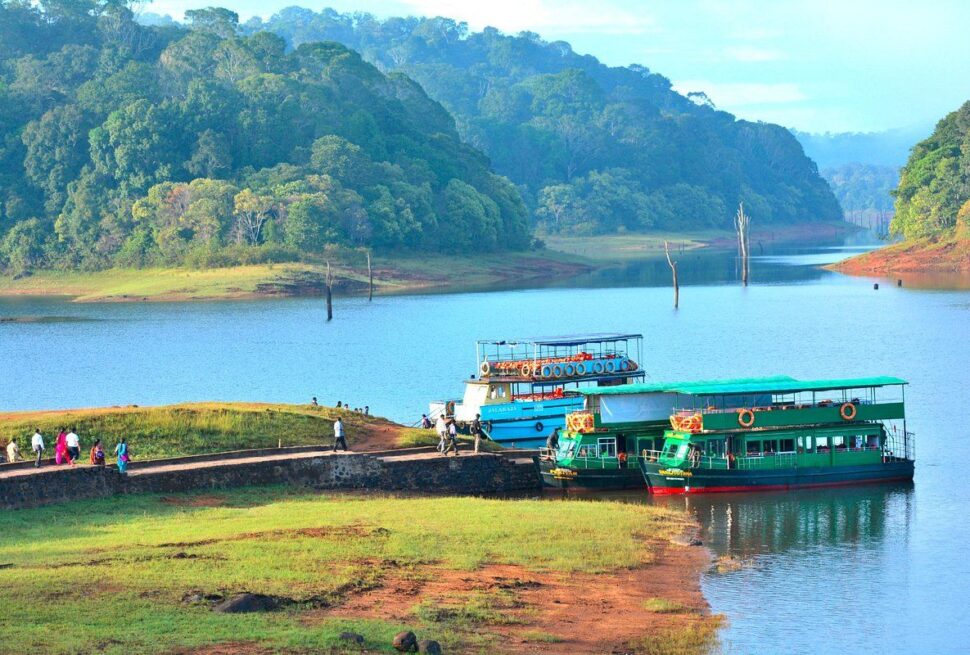
- Best for: Nature lovers · Couples · Slow travellers · First-time Kerala visitors
- Ideal duration: 2–3 days
- Best time to visit: September to March
Why Munnar Feels Different From the Rest of Kerala
The transition to Munnar begins long before you arrive.
The roads start to curve.
The air cools slightly.
And gradually, the landscape lifts.
What was once flat and water-bound begins to rise into layers — hills, valleys, and endless stretches of green.
But Munnar is not just about elevation.
It’s about repetition.
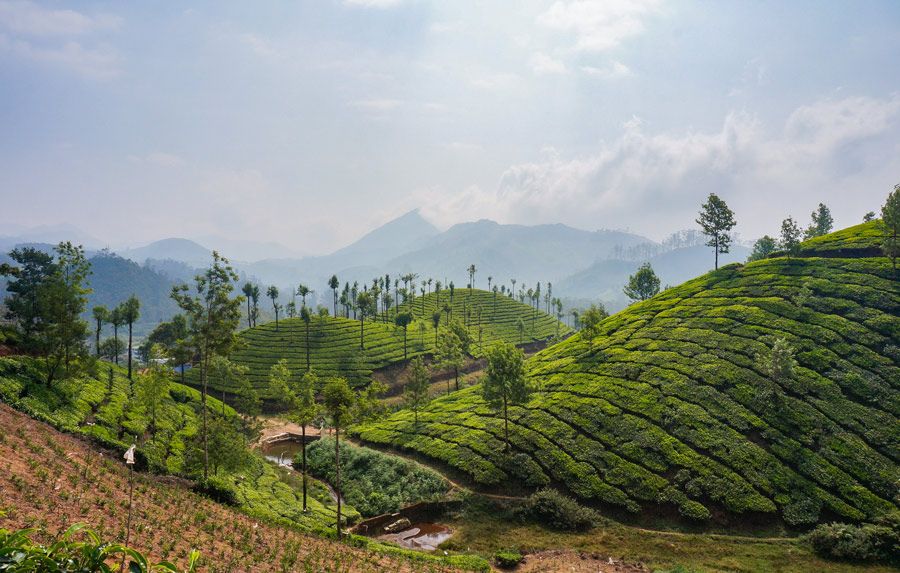
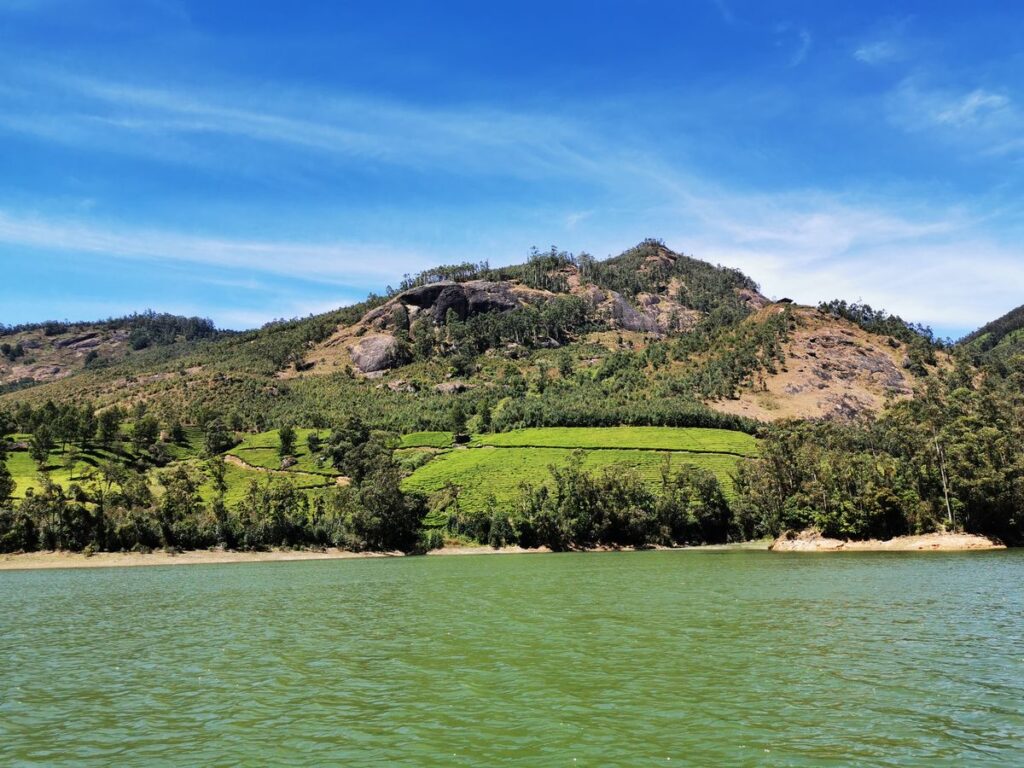
Tea plantations rolling over hills in patterns that seem almost too precise to be natural.
Mist moving slowly across slopes, changing visibility every few minutes.
Light shifting constantly, making the same view look different throughout the day.
This is not a place you “cover.”
👉 It’s a place where the same view keeps changing —
and that becomes the experience.
Understanding Munnar Before You Visit
Munnar developed as a British-era hill station, primarily for tea cultivation.
What remains today is a landscape shaped as much by nature as by human design.
The tea gardens are not random.
They are structured, maintained, and continuous.
And because of that, Munnar feels less like a wild mountain region and more like a designed natural space.
This balance makes it accessible, but also unique.
When to Visit (And What It Actually Feels Like)
From September to March, Munnar feels most balanced.
The weather is cooler, the skies clearer, and movement around the hills is comfortable.
Winter months (Dec–Feb) bring crisp mornings and mist-filled evenings.
Monsoon transforms Munnar completely.
The greens deepen.
The air becomes heavier.
The landscape feels more dramatic — but also less predictable.
👉 Each season changes visibility, not just weather
👉 And that directly affects how you experience the place
The Landscape — Where the Experience Actually Happens
Unlike cities, Munnar doesn’t revolve around specific “spots.”
The experience exists in the spaces between them.
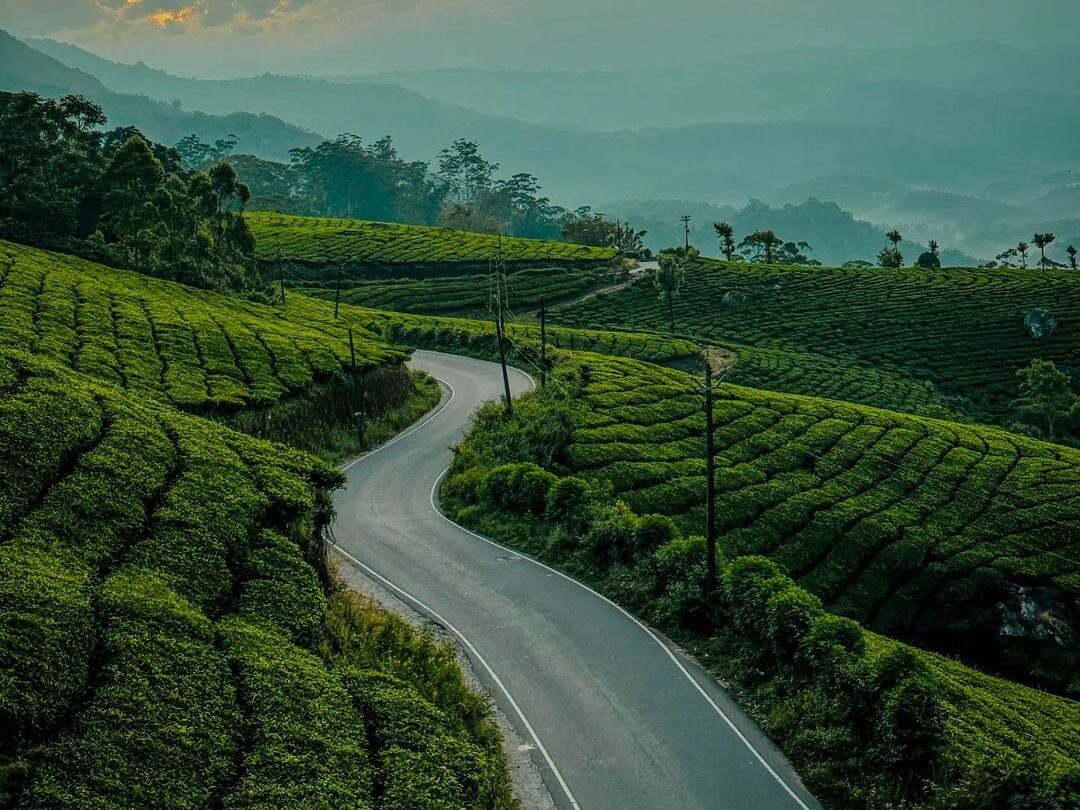
Driving through tea gardens.
Stopping at viewpoints without planning to.
Watching mist roll in and out of the hills.
There is no single highlight that defines Munnar.
👉 The landscape itself is the highlight
Tea Plantations — More Than Just a View
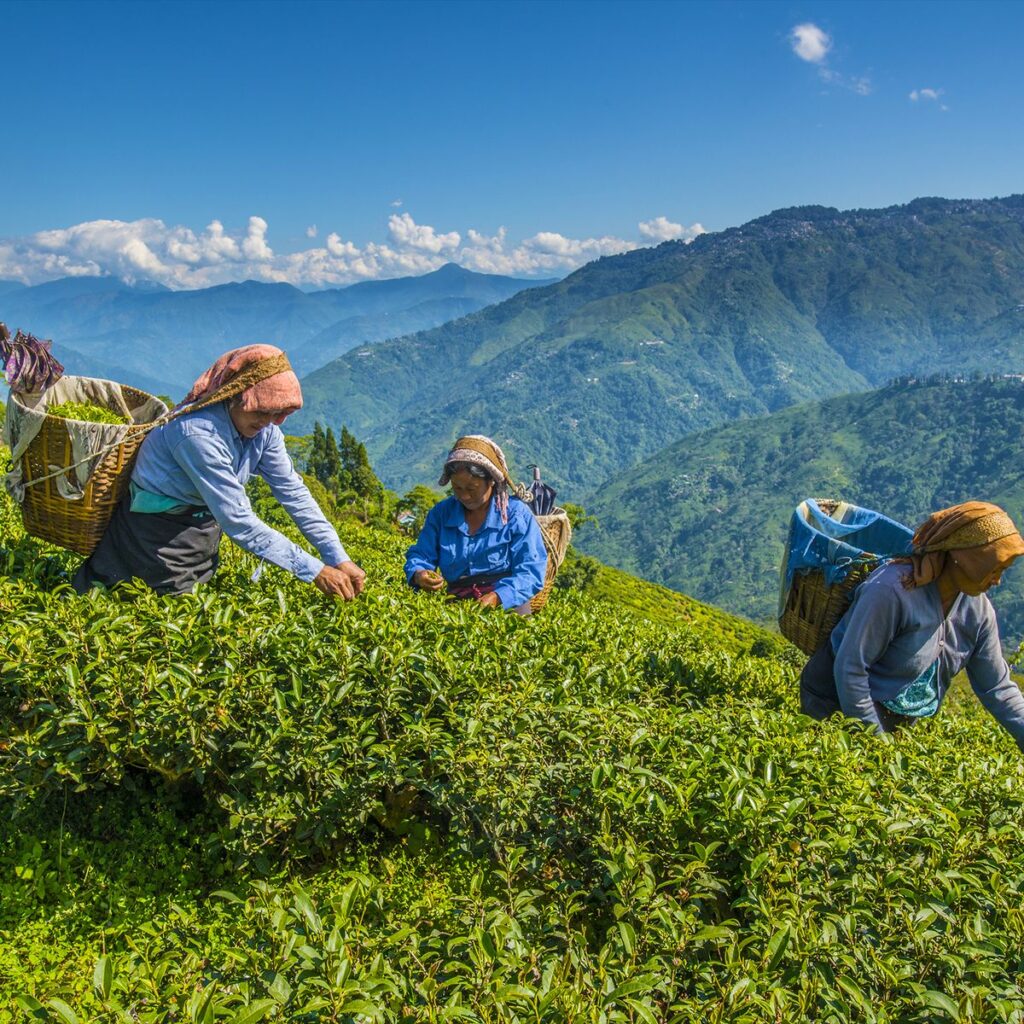
From a distance, the tea gardens look uniform.
But once you’re within them, details start to appear.
Workers moving through narrow paths.
Rows of tea bushes shaped carefully over years.
The rhythm of cultivation that continues daily.
Visiting a tea factory or museum adds context — how leaves are processed, how the system works.
But even without that, simply walking near a plantation changes how you see it.
The Mist — An Unpredictable Layer
In Munnar, visibility is never fixed.
You might arrive at a viewpoint expecting a clear valley — and find nothing but white.
And then, minutes later, the mist clears just enough to reveal layers beneath.
This constant shift is not a disruption.
👉 It is part of the experience
Because it forces you to pause, wait, and observe differently.
Moving Through Munnar
Movement here is slow by nature.
Distances may not seem large on a map, but winding roads and elevation changes affect travel time.
This is why overplanning rarely works.
Instead of trying to cover multiple points in a day, it’s better to:
- choose a direction
- move gradually
- stop where it feels right
👉 Munnar is better experienced as a flow, not a checklist
Where You Stay Shapes the Experience
Accommodation in Munnar is often built into the landscape.
Hillside stays, plantation views, quiet properties slightly outside the main town.
Staying in the town gives you convenience.
Staying slightly away gives you:
- better views
- quieter surroundings
- stronger connection to the landscape
👉 In Munnar, your stay is part of what you experience
Beyond the Views — What Adds Depth
While the landscape carries most of the experience, a few elements add context:
- Tea Museum → understanding the region
- Eravikulam National Park → wildlife + high-altitude ecosystem
- Local village areas → slower, everyday life
But even here, the approach matters.
These are not “must-do” stops.
They are extensions of the main experience.
How to Plan Your Time (Without Rushing It)
Two to three days works well.
But the mistake is trying to assign too many fixed points to those days.
A better approach is simple:
One day → explore nearby areas slowly
One day → move slightly further
One phase → do nothing and just observe
Because in Munnar, doing less often gives you more.
What to Expect From the Food
Food in Munnar is simple, comforting, and regional.
You’ll find:
- Kerala meals
- South Indian staples
- Basic multi-cuisine options
It’s not a food destination.
And that’s okay.
Because here, the setting matters more than the menu.
Final Thought
Munnar does not try to impress you with scale or variety.
It works through subtle shifts.
Light changing across hills.
Mist altering what you can see.
Green repeating in ways that slowly settle into your memory.
If you rush through it, it may feel repetitive.
If you slow down, it begins to feel layered.Not because the landscape changes.
But because your way of seeing it does.