The City That Arrives All at Once
There are cities in India that reveal themselves gradually. Jaipur is not one of them.
Enter the old city for the first time and everything lands simultaneously — the terracotta-pink facades that gave the city its name, the movement of a functioning bazaar district that has been operating continuously for nearly three centuries, the scale of Amber Fort visible on the ridge above the city even before you have decided where to go first. For many international visitors, Jaipur is where India stops being an abstraction and becomes a physical reality. The intensity is real and it is immediate.
The problem is what most people do with that intensity.
The standard response to arriving somewhere overwhelming is to move faster — to cover more ground, tick more boxes, ensure that the investment of the journey is justified by the volume of things seen. In Jaipur, this instinct produces a very specific result: a day that begins at Amber Fort, continues to City Palace, adds Hawa Mahal and Jantar Mantar, and ends at Nahargarh for sunset. Everything covered. Very little actually experienced.
Jaipur does not reward speed. The fort that took two and a half hours to rush through would have been a different encounter given four. The bazaar that felt like a shopping stop would have become a genuine window into the city given an unrushed morning. The pattern we have seen repeatedly, across travellers of every background and budget, is consistent: the people who gave Jaipur time came away with something they could describe clearly. The people who covered it quickly came away with photographs and a vague sense of having been somewhere impressive.
This guide is built around the assumption that you would rather have the first version.
Before You Go — The Timing Question
Season matters more in Jaipur than most travellers factor in during the planning stage.
October and November are when the city feels most fully alive. The post-monsoon air is clear, the days are warm without being harsh, and the particular quality of autumn light in Rajasthan — sharp, golden, long-angled — makes the forts and the old city look the way that the best photographs of Jaipur look. If you have flexibility in your dates, this window is worth prioritising.
December and January bring the most comfortable temperatures but also the highest tourist volume. The city is at its busiest and the major sites — particularly Amber Fort — can feel crowded from mid-morning onward. The solution is not to avoid these months but to arrive early everywhere. A winter morning at Amber Fort before nine o’clock is a different experience from the same fort at eleven.
February and March sit in a good middle position. The weather is still comfortable, the crowds are slightly thinner than peak winter, and if your dates align with Holi — which falls in March on the Hindu calendar — you will encounter Jaipur in a state of collective celebration that is entirely unlike any other version of the city. Holi in Jaipur is worth planning around specifically if the dates work.
April onward the heat builds, and by May and June it becomes genuinely limiting. The city does not shut down — it adjusts, starting earlier and moving indoors through the middle hours — but the experience of walking the old city or spending three hours at an exposed fort is fundamentally different from the October version. If you must visit in summer, structure the days around the heat rather than against it.
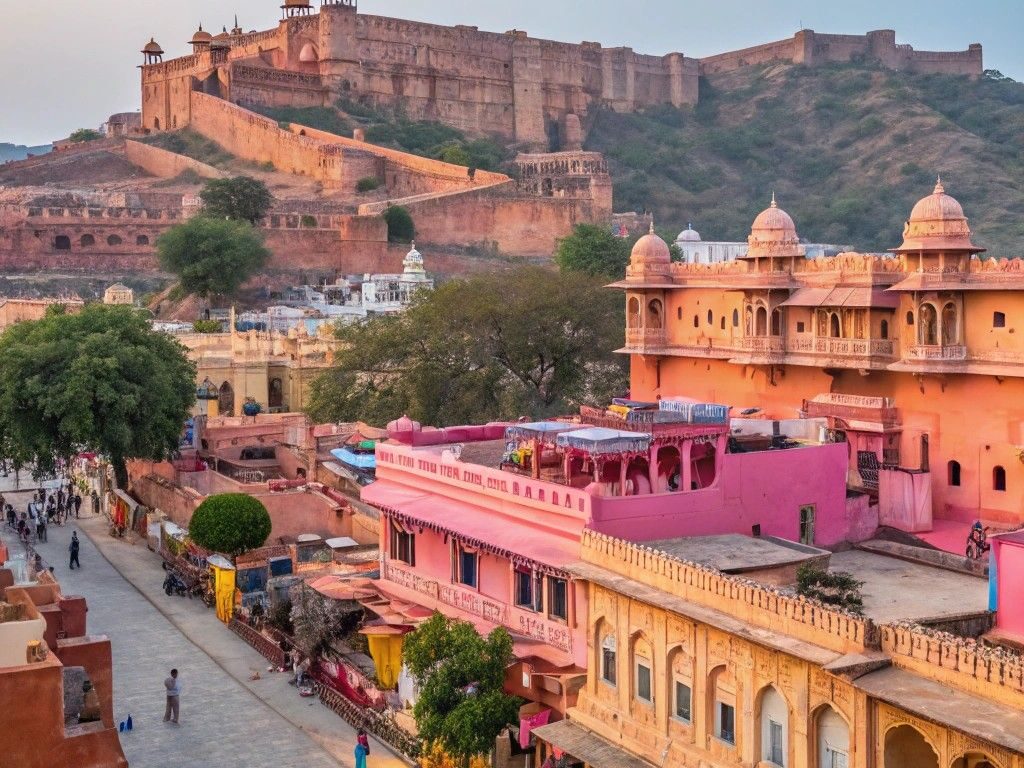
Amber Fort — The Experience Depends Entirely on When You Arrive
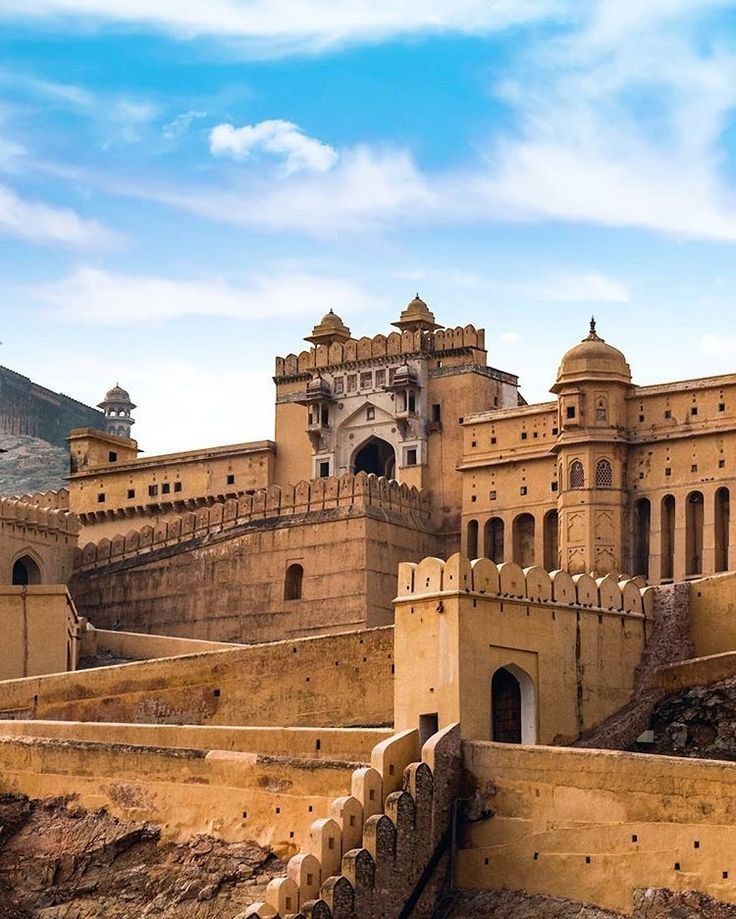
Amber Fort is Jaipur’s most significant site and the one most consistently affected by how it is approached.
The fort sits on a ridge above Maota Lake, eleven kilometres from the city centre, and the approach — whether on foot up the cobbled ramp, by jeep, or looking up at it from the lake road below — sets the tone for everything inside. The scale is immediately apparent: this is not a contained palace but a fortified complex that expanded across multiple rulers, each adding sections that reflect their own period and priorities.
Arrive before nine in the morning and the difference is not marginal — it is categorical. The light in the early morning sits at the right angle for the sandstone and marble to catch it fully. The courtyards are quiet enough that the architectural logic of the place — the sequence of gateways, the progression from public to increasingly private spaces, the extraordinary mirror work of the Sheesh Mahal — can be read without navigating crowds. The Sheesh Mahal particularly rewards an uncrowded morning: the chamber lined entirely with mirror-glass inlay, lit at the right moment, is one of those experiences in Rajasthan that stays with people for a long time after the trip ends.
Give Amber Fort a minimum of three hours. Not because every section demands equal time, but because the fort reveals itself in layers — the first pass gives you the obvious things, and the second and third passes, wandering back through spaces you have already visited with more context, give you the subtler ones.
A note on elephant rides: they are still offered at the fort entrance and have been for a long time. Most thoughtful travellers and most reputable operators now avoid them — the welfare concerns are real and well-documented. Jeeps cover the same ascent in a few minutes. The walk up, for those who are physically comfortable with it, is the better version: it arrives at the fort gradually, which is the right way to arrive at something this significant.
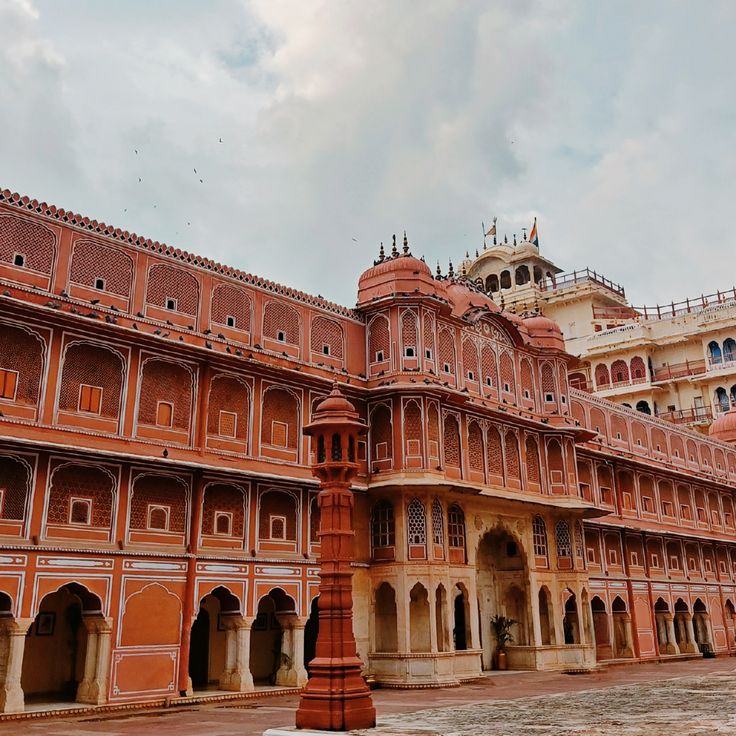
City Palace and Jantar Mantar — Together, With Context
The City Palace and Jantar Mantar sit adjacent to each other in the old city and are almost always visited together. They are also almost always visited in the wrong order, at the wrong pace, and without the context that makes the second one genuinely extraordinary rather than baffling.
The City Palace is the royal complex that has been at the centre of Jaipur’s civic life since the city’s founding in 1727. Parts of it remain the private residence of the Jaipur royal family; the sections open to visitors document the history of the Kachwaha rulers, the relationship between Jaipur and the Mughal empire, and the particular cultural life of a court that produced significant achievements in astronomy, mathematics, and the arts. Move through it with genuine attention to the artefacts rather than as a corridor to the courtyard photo opportunities, and the City Palace provides the historical grounding that makes everything else in Jaipur more legible.
Jantar Mantar, immediately adjacent, is one of five astronomical observatories built by Sawai Jai Singh II in the early eighteenth century and the largest of them. It is also, without explanation, one of the most confusing places in Jaipur — a collection of large geometric stone structures in an open courtyard that look simultaneously like sculpture and like something purposeful but unknowable.
With explanation, it becomes one of the most fascinating. These are working instruments — a giant sundial accurate to two seconds, structures designed to track the positions of specific celestial bodies, devices for calculating the positions of stars at the moment of a person’s birth for astrological purposes. The scale is the point: Jai Singh built them large because larger meant more precise. A guide or a decent audio tour is genuinely necessary here, not as an optional enhancement but as the thing that converts a confusing open-air courtyard into an encounter with eighteenth-century scientific ambition. Do not skip Jantar Mantar, and do not do it without context.
Hawa Mahal — The Right Way to Experience an Icon
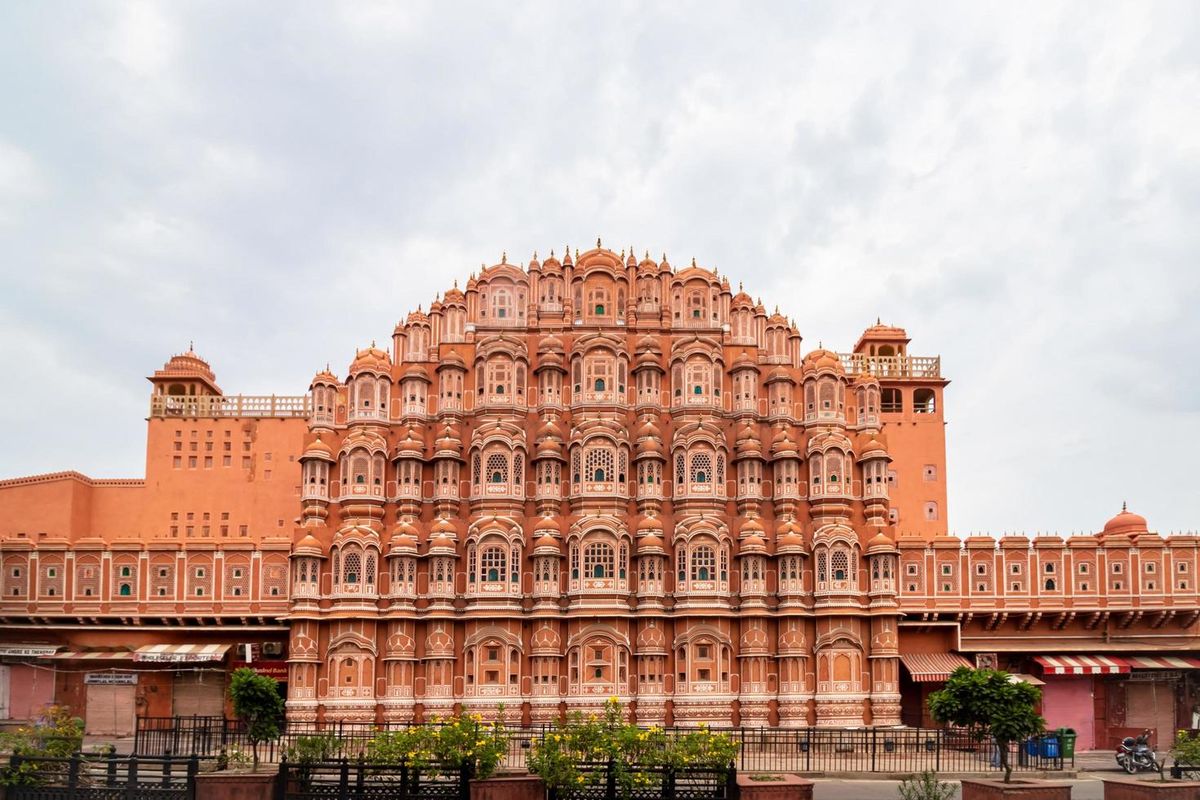
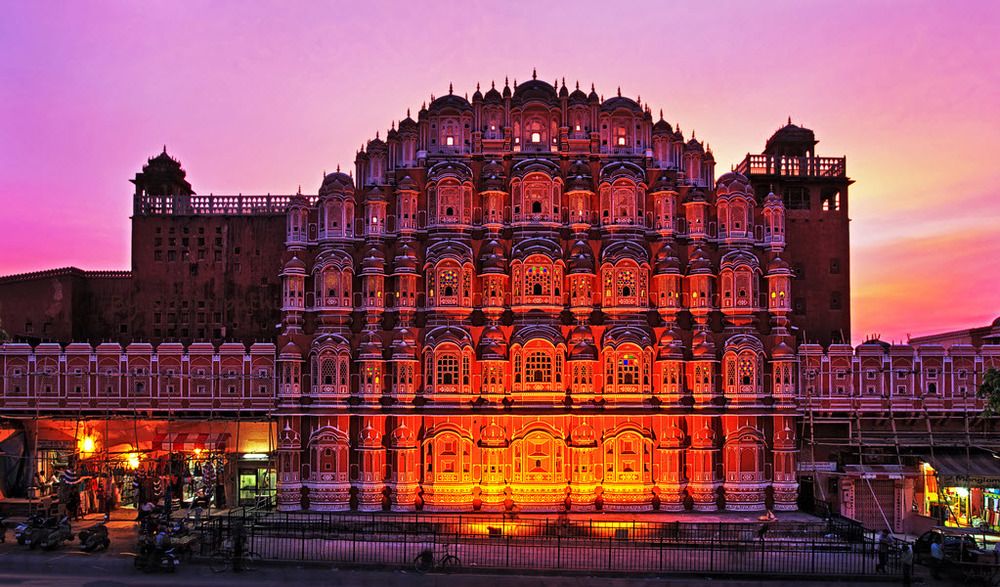
Hawa Mahal — the Palace of Winds — is the most photographed facade in Jaipur and one of the most recognised images of Rajasthan. It is also, in terms of interior depth, one of the shallowest experiences the city offers. The building is essentially a five-storey screen — a latticed sandstone facade behind which the women of the royal court could observe street life without being seen. The interior is a series of small chambers and narrow corridors that do not justify the same time investment as Amber Fort or City Palace.
The best way to experience Hawa Mahal is from the street in front of it, in the early morning when the light hits the facade at the right angle and before the street traffic builds to its midday density. Stand across the road, give yourself ten minutes to actually look at what you are looking at — the 953 small windows, the honeycomb structure, the way the whole thing reads as a single elaborate screen — and then move on. You can go inside if you want a different perspective and a view down onto the street below. But the facade is the thing, and it is best seen from outside.
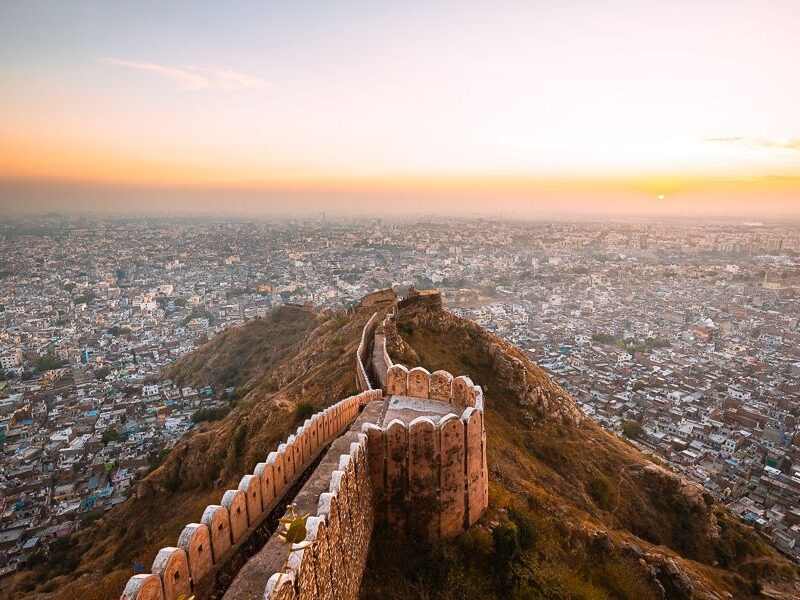
Nahargarh Fort — The City From Above
Nahargarh Fort, on the ridge above the city, plays a different role from Amber. It is less about the structure itself — though the fort has its own history — and more about the perspective it provides.
From the ramparts, Jaipur spreads below in its full horizontal extent: the old city’s grid visible in the pink mass of buildings, the new city extending beyond it, the surrounding hills and the distant plains on clear days. In the late afternoon, as the light starts its decline and the city softens from the sharp midday version to something more atmospheric, this is one of the better places in Jaipur to simply be. Not to see and move on, but to stay for an hour as the light changes and let the full scale of what you have been moving through register from the outside.
Do not treat Nahargarh as a quick sunset photo stop. Come with an hour to spare, walk the full length of the ramparts, and let the pause it creates serve its purpose.
The Bazaars — Where Jaipur Becomes Personal
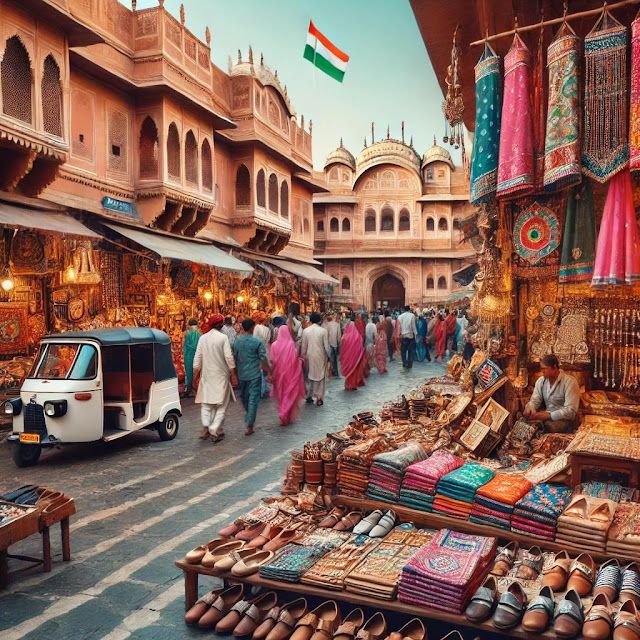
Johari Bazaar, Bapu Bazaar, Tripolia Bazaar — these are real commercial districts that have been functioning as such for centuries, not heritage experiences constructed for tourism. This distinction matters because it determines how to move through them.
The default approach is to arrive with a shopping list and move efficiently between categories — textiles here, jewellery there, souvenirs from the next stall. This produces purchases and a vague sense of having engaged with the city. The better approach is to walk without a list, stop where something interests you, watch the process of making and selling rather than only the products, and let a chai break happen somewhere in the middle without it needing to lead anywhere.
The bazaars are where Jaipur’s daily life is most visible. The artisans doing block printing in the back sections of fabric shops, the jewellers working at benches behind the display counters, the vendors arranging and rearranging their goods with the particular attention of people who have been doing this their entire lives — this is a functioning commercial culture that long predates the tourist economy around it, and it is still more real than most visitors give it credit for. Walk into it with genuine curiosity rather than efficient consumption, and the old city begins to feel like somewhere you actually visited.
How Many Days — and Why Less Is Usually a Mistake
Two days in Jaipur as part of a Golden Triangle circuit is the minimum — workable if the plan is structured honestly, but leaving without the sense that anything was properly absorbed. Three days is where the trip starts to breathe. Four days allows for either a day trip to a nearby destination — Abhaneri’s remarkable step-well, the Samode Palace, the ghost city of Bhangarh for those inclined — or simply the freedom to spend an entire morning in one place without calculating what comes next.
The itinerary structure that works best across two to four days follows the same principle: early starts for the major fort visits, lighter midday activity or a deliberate break, afternoons in the old city or at the higher forts, evenings in the bazaars or at a rooftop with a view over the city. The rhythm is forgiving and the city fills it well.
What does not work is the attempt to see everything in the time available. Jaipur cannot be completed in any meaningful sense — it is a living city, not a collection of monuments — and the attempt to complete it produces exactly the kind of rushed, surface-level experience that the city does not deserve and most travellers do not want.
Where to Stay — The Old City Question
The single most consequential accommodation decision in Jaipur is how close you are to the old city.
Staying within or immediately adjacent to the old city means the bazaars, the major monuments, and the atmosphere of the historic district are accessible on foot or by a short auto-rickshaw ride. It also means noise — the old city is active early and late, and light sleepers will notice it. For first-time visitors who want to be inside the experience of Jaipur rather than travelling to it, the tradeoff is usually worth it.
Heritage properties — converted havelis and historical buildings — are available across various price points in and around the old city. They are almost always more interesting to stay in than modern hotels at the same price point, and the atmosphere of the stay itself becomes part of the experience rather than simply a base between activities.
Staying further out, in the newer parts of the city, provides more comfort and quiet but distances you from the organic atmosphere that makes Jaipur what it is. The extra travel time to and from the old city is small in absolute terms but significant in the texture of each day.
Practical Notes for International Visitors
Getting there: Jaipur has a good international airport with direct connections to Delhi, Mumbai, and several other Indian cities. From Delhi, it is a four to five hour drive or a fast train on the Delhi-Jaipur route, with multiple daily departures. It is well-connected enough that logistics are rarely a planning challenge.
Getting around the city: App-based cabs work well for longer distances and for the fort visits, which require travelling beyond the old city. Auto-rickshaws are good for short distances within the old city — agree on the price before getting in. For Amber Fort and Nahargarh, a vehicle hired for the day is the most practical approach.
Guides: A half-day guide for either Amber Fort or the City Palace area is a worthwhile investment — particularly for Jantar Mantar, where context converts a confusing space into a memorable one. Ask your accommodation to recommend someone, or book through a verified local operator.
Dress: Covered shoulders and legs are appropriate for fort and temple visits. The old city in general is conservative in its dress expectations — light, modest clothing serves both cultural respect and practical comfort in the Rajasthan climate.
Freedom Trail India designs private journeys through Jaipur, the Golden Triangle, and across Rajasthan. If you are planning a first trip to India or want to build a Rajasthan itinerary that gives the right places the right amount of time — we are glad to help.