- Best for: First-time Kerala travellers · Culture seekers · Slow explorers · Short stays
- Ideal duration: 1–2 days
- Best time to visit: October to March
Why Kochi Feels Different From the Rest of Kerala
Kochi doesn’t move at one pace. It shifts.
One moment you’re walking past colonial buildings that feel almost European.
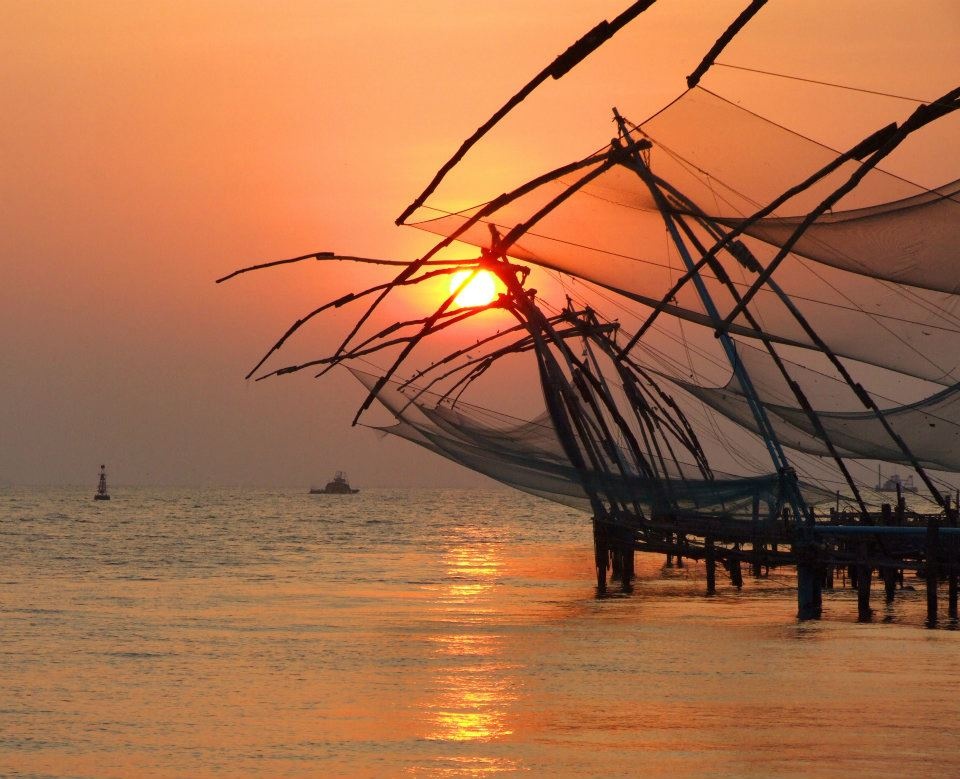
A few minutes later, you’re near Chinese fishing nets silhouetted against the sea.
Turn another corner, and you’re in a busy local street with spice shops, cafés, and everyday life unfolding together.
This constant shift is what defines Kochi.
It is not a single experience.
👉 It is layers — of history, trade, culture, and movement — existing side by side.
Understanding Kochi Before You Visit
Kochi has never been just a city.
It has been a port, a meeting point, a place where different cultures arrived and stayed.
Portuguese, Dutch, British — all left something behind.
But what’s interesting is not just the presence of these influences.
It’s how they exist today.
You don’t see them as separate zones.
You see them blended into the everyday.
That’s why Kochi feels less like a destination
and more like a continuously evolving place.
When to Visit (And What It Actually Feels Like)
From October to March, Kochi feels most comfortable.
The humidity is still there, but manageable.
Walking through Fort Kochi and surrounding areas becomes easier.
Monsoon changes the city’s mood.
Rain, quieter streets, softer light — a different kind of experience.
👉 Kochi doesn’t depend on weather as much as other places
👉 But it does affect how much you can explore on foot.
Fort Kochi — Where Everything Comes Together
If there is one area that defines Kochi, it is Fort Kochi.
But not because of a single attraction.
Because of how everything exists together.
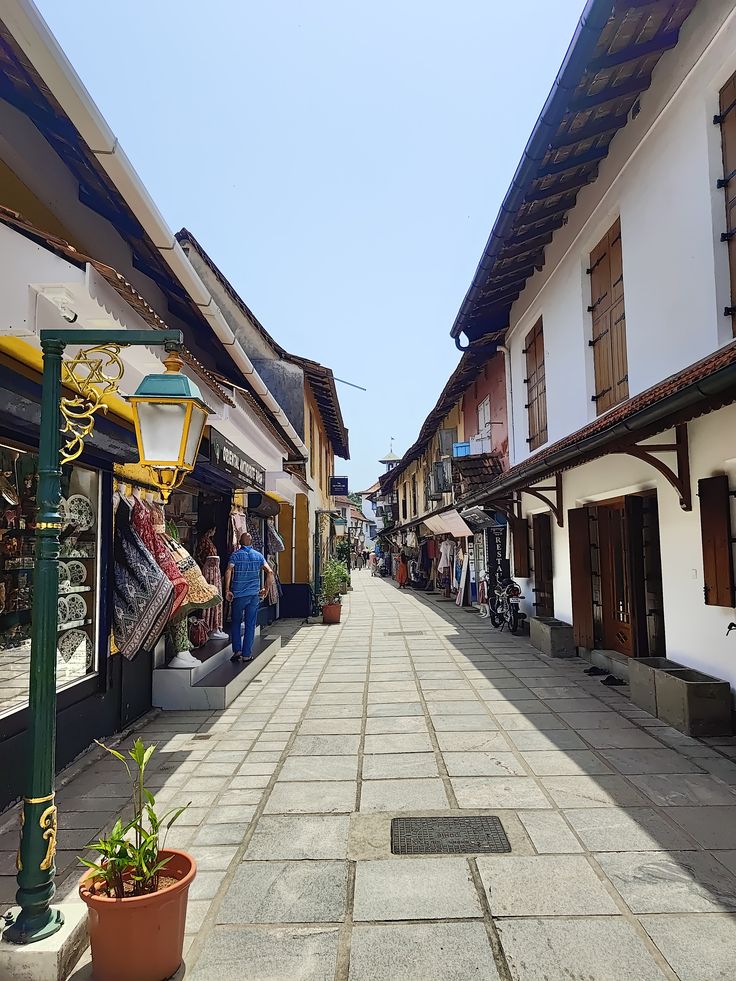
You walk slowly here.
Not because there’s too much to do —
but because every street offers something different.
Old churches, colonial homes, small cafés, art spaces.
Nothing feels forced.
And that’s what makes it work.
The Chinese Fishing Nets — A Quiet Symbol
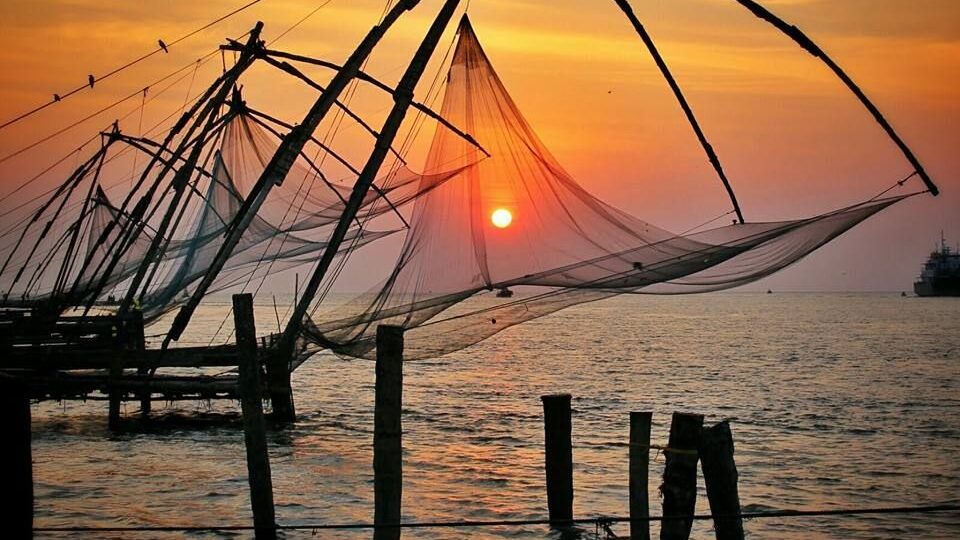
They are simple structures.
Wood, rope, balance.
But standing by the water, watching them move slowly against the backdrop of the sea, they begin to feel more significant.
They represent Kochi’s relationship with trade, with movement, with time.
Not dramatic.
But deeply connected to the place.
Mattancherry & Jew Town — Layers Within Layers
Move slightly away from Fort Kochi, and the tone shifts again.
Mattancherry brings in:
- Spice markets
- Older trading streets
- A denser, more local feel
Jew Town, with its historic synagogue and antique shops, adds another layer — quieter, reflective, slightly removed from the main flow.
Here, history is not presented.
It’s embedded in the streets.
Movement in Kochi — Between Stillness and Activity
Kochi is not slow like Alleppey.
But it is not overwhelming either.
You move between:
- Walking streets
- Short auto rides
- Ferry crossings
And each shift changes how the city feels.
The ferry, in particular, gives a different perspective — the city seen from water rather than land.
Kochi for Different Travellers
First-Time Kerala Visitors
Kochi works as an entry point.
It introduces:
- culture
- history
- local life
before you move into nature-heavy destinations.
Slow Travellers
Even within 1–2 days, Kochi allows for unplanned time.
Walking without a fixed route works surprisingly well here.
Culture Seekers
Art, architecture, food, and history intersect here more than in most Kerala destinations.
Where to Stay (Keep It Contextual)
Staying in Fort Kochi is usually the best choice.
Not because it’s central —
but because it aligns with the experience.
You can walk out and immediately be part of the environment.
Boutique stays, small heritage hotels, and homestays work well here.
What to Eat (Where Culture Reflects Strongly)
Kochi’s food reflects its history.
Seafood, spices, coastal flavours — all shaped by trade and geography.
You’ll find:
- Traditional Kerala meals
- Seafood dishes
- Cafés with global menus
👉 Food here is not separate from culture
👉 It is part of it
How to Plan Your Time (Without Overloading It)
One to two days is enough.
But like most places, it’s not about how much you fit in.
A simple approach works best:
Walk through Fort Kochi slowly.
Spend time near the waterfront.
Explore Mattancherry without rushing.
Leave space in between.
Because Kochi is not about ticking places.
It’s about moving through layers.
Final Thought
Kochi doesn’t try to define itself clearly.
It doesn’t present a single identity or experience.
Instead, it allows different influences to exist together — quietly, naturally, without needing to be explained.
If you rush through it, it may feel scattered.
If you slow down, the connections begin to appear.
Not because the city changes.
But because you start noticing how everything fits together.