The City That Doesn’t Try to Impress You
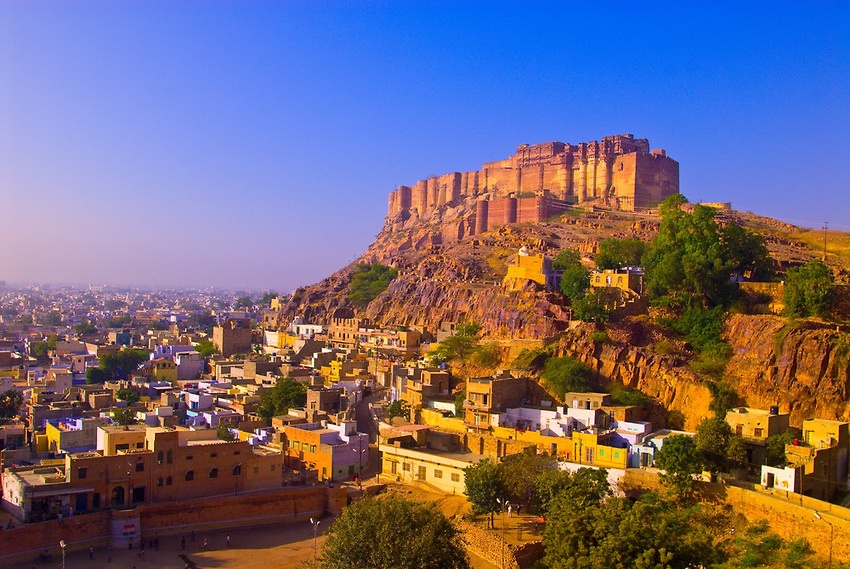
Rajasthan has a particular kind of arrival moment that most of its famous cities deliver reliably. Jodhpur announces itself with a fort rising dramatically from a hill above the blue city. Jaisalmer appears from flat desert as a sandstone mirage. Udaipur reveals a lake and a palace the moment you reach the right vantage point. Bikaner does none of this.
You arrive and the city is simply there — active, functional, getting on with itself in the way that a city built around trade and desert life gets on with things. The streets feel inhabited rather than presented. The markets are full of people buying and selling things that are not aimed at tourists. The pace is unhurried without being sleepy.
This absence of drama is not a deficiency. It is, for the right kind of traveller, exactly what makes Bikaner worth including in a Rajasthan trip. After Jaipur’s scale and Jodhpur’s visual intensity and Jaisalmer’s golden shimmer, Bikaner offers something that the main circuit does not: a version of Rajasthan that has not been arranged for your benefit.
What Kind of Place This Actually Is
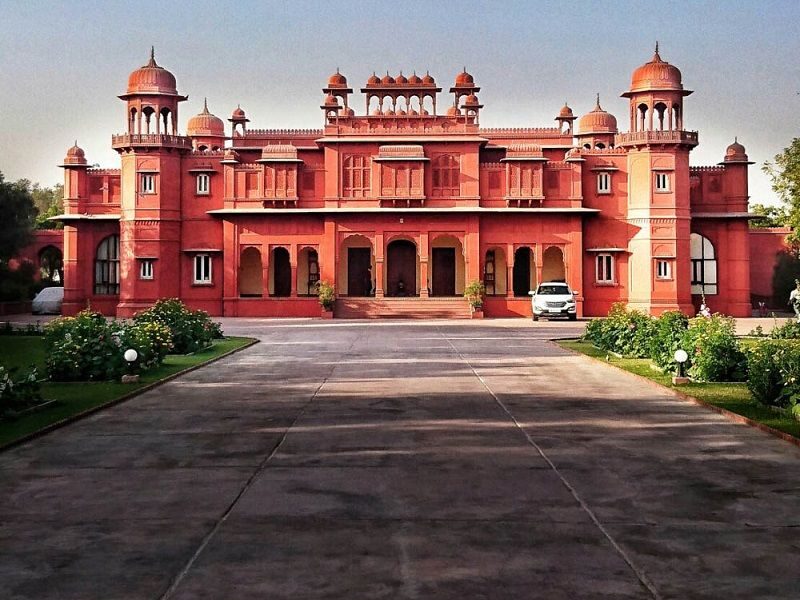
Bikaner was founded in 1488 by Rao Bika, a Rajput prince who established it as a desert trading centre along routes that connected central India to Afghanistan and beyond. Unlike Jaisalmer — whose wealth came from controlling long-distance caravans and whose architecture reflects that particular kind of mercantile grandeur — Bikaner developed with a slightly more grounded character. The wealth arrived here too, as the fort and its interiors clearly demonstrate, but the city that grew around it remained closer to everyday life.
What you find today reflects that history honestly. There is significant architecture, a genuine old city, and a cultural identity that is distinctly Rajasthani — but none of it has been smoothed into a tourist experience. The fort is well-maintained and properly documented. The old city functions as a real neighbourhood. The food is local in the way that Rajasthani food is local: direct, flavourful, and made for people rather than for menus.
Bikaner is best understood not as a destination that competes with the main Rajasthan circuit but as a counterpoint to it. It works best for travellers who have already seen Jaipur and Jodhpur and want a different register of Rajasthan, or for those building a longer circuit who want something between the better-known stops that doesn’t simply replicate them.
When to Go — The Desert Variable
Bikaner is a desert city, and that geography defines the visit more than anything else about timing.
October through February is the primary window. The days are warm enough to move comfortably through the city on foot, the evenings cool down to a genuinely pleasant temperature, and the desert light in the late afternoon — slanting across the sandstone of the fort and the old city — is at its best. These months are when Bikaner shows you its most complete version.
March marks the beginning of the transition. The heat starts building from mid-month, and by April it has reached levels that significantly compress the hours during which outdoor exploration is practical. Summer in Bikaner — like summer across the Rajasthan desert — is serious heat, and the city that can be walked freely in November becomes a place of early mornings, long midday indoors, and late afternoons once the worst has passed.
The honest advice is simple: plan for October to February and the visit is comfortable throughout. Plan for anything after March and build the itinerary around the heat rather than ignoring it.
Junagarh Fort — The Detail Is the Point
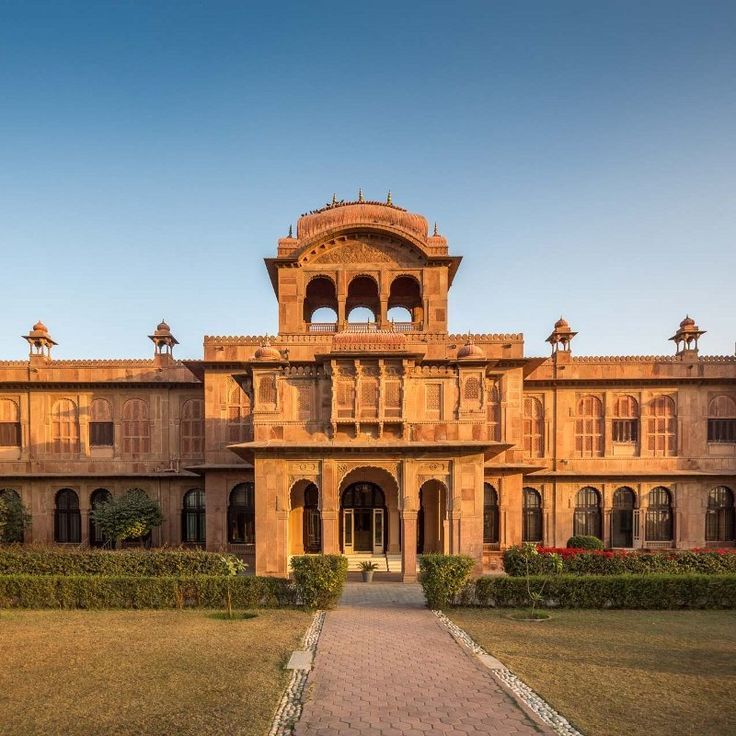
Most forts in Rajasthan derive their visual impact from geography. They sit on hills, they command views, they announce themselves from a distance and continue impressing up close. Junagarh Fort does not have this advantage — it rises directly from flat ground at the edge of the old city, with no elevation to give it drama from the outside.
What it has instead is interior detail of a quality that rewards the visitor who slows down enough to notice it.
Built and expanded across several centuries by successive rulers of Bikaner, Junagarh’s interior reflects each phase of construction differently — Mughal influence in one section, Rajput ornamentation in another, colonial-era additions in a third. The result is not uniform grandeur but a sequence of spaces each with their own character: painted ceilings, carved sandstone screens, rooms lined with mirror work, courtyards that open unexpectedly from corridors. There are halls that document the military campaigns of the Bikaner rulers, including an early aviation exhibit that traces the city’s surprisingly early engagement with aircraft during World War One — one of the more unexpected moments in any Rajasthan fort visit.
The mistake at Junagarh is moving through it at the pace most visitors adopt. The interiors are dense with craftsmanship that disappears at speed. Give it a proper morning — three hours minimum — and move slowly. Ask questions of the guides about specific rooms and what was used for what. The fort gives back in proportion to the attention you bring to it.
The Old City — Where Bikaner Lives
The old city that surrounds and extends from the fort area is the other primary reason to spend time in Bikaner, and it is the part that most visitors underweight relative to the fort.
The lanes here are genuinely working neighbourhoods — not preserved or curated in the way that some Indian old cities have been managed, but simply continuing as they always have. Merchants selling wholesale goods for local consumption, halwais making the snacks that Bikaner is known for, families moving through their daily routines without particular regard for the visitor passing through. The density is real but not overwhelming — Bikaner’s old city moves at a pace that allows you to stop, observe, and continue without the sense of being swept along by crowd pressure.
The food here is worth taking seriously. Bikaner has a legitimate culinary identity — the bhujia produced here is distributed across India and is categorically different from the generic versions sold elsewhere, and the kachori and various fried preparations available at small shops in the old city are the real versions of food that tourist restaurants approximate. Eat where you see local people eating. The settings are simple; the food is not.
Karni Mata Temple — Go Knowing What It Is
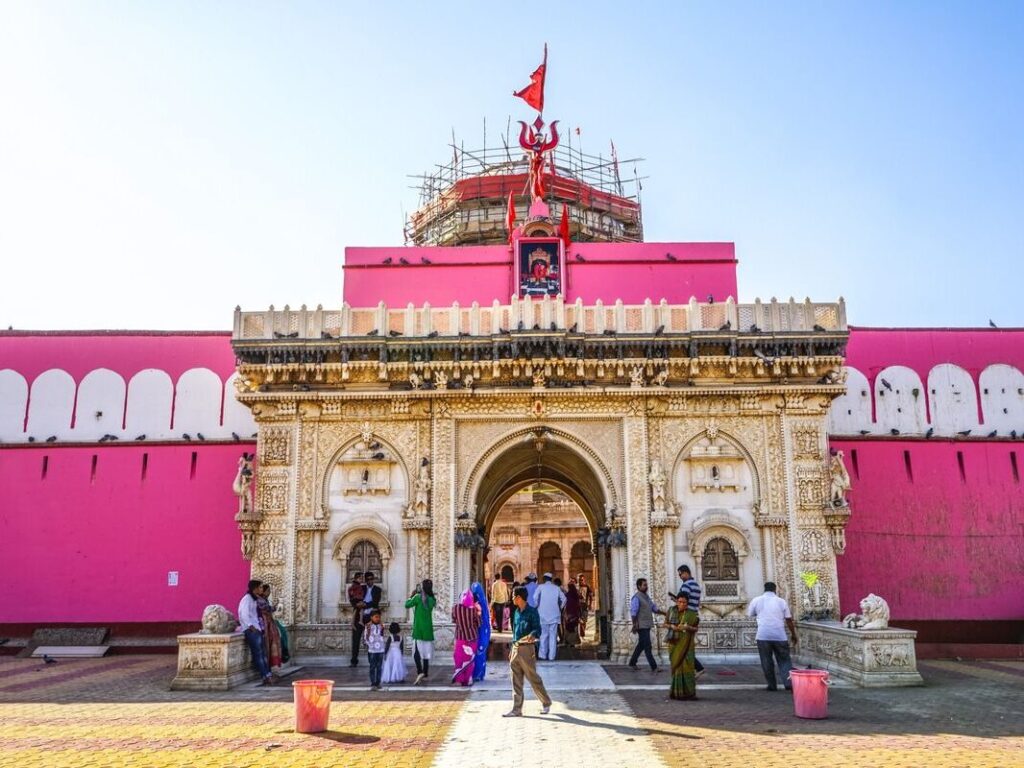
Approximately thirty kilometres from Bikaner, the Karni Mata temple at Deshnok is one of those experiences that requires honest preparation.
The temple is dedicated to Karni Mata, a revered figure in Rajasthani tradition, and it houses thousands of rats that are considered sacred — believed to be reincarnations of devotees and protected accordingly. They move freely through the temple complex, fed by priests and pilgrims, entirely unbothered by the people moving among them.
The experience is not comfortable in the conventional sense. For some visitors it is fascinating, for others unsettling, for many both simultaneously. What it is, consistently, is unlike anything else — a genuine encounter with a devotional practice that operates entirely on its own terms and has no interest in making itself accessible to outside sensibilities.
Go with appropriate footwear that can be removed at the entrance, go with openness rather than reluctance, and go having been told clearly what to expect. The visitors who find it memorable are almost always the ones who arrived informed. The ones who find it purely unpleasant are usually the ones who arrived unprepared and spent the visit trying to manage their reaction rather than being present to the experience.
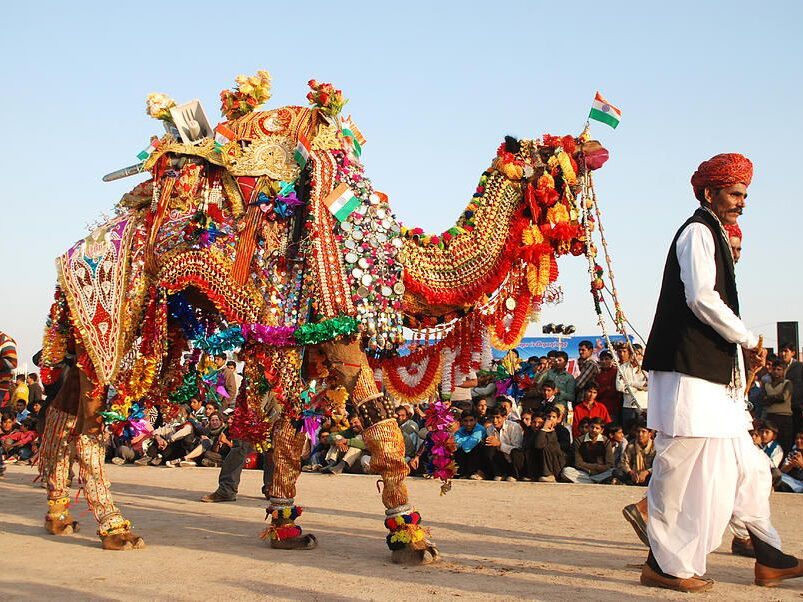
The Camel Breeding Farm — Context Rather Than Attraction
The National Research Centre on Camel, on the outskirts of Bikaner, is one of those visits that sounds more niche than it turns out to be.
The facility is a government research centre focused on camel breeding and conservation — one of a very small number of such centres in the world. What you encounter there is not a performance or a tourist attraction but a working institution: large herds of camels managed across a significant area of desert land, with the particular sound and smell and scale that a working camel farm has.
The visit adds context to the desert landscape in a way that is genuinely useful. The camel is not backdrop in Rajasthan — it is an animal around which entire systems of desert life were organised, and still are in many communities. An hour at the breeding centre gives that fact a physical dimension that no amount of reading about it provides.
It is a half-day addition to a Bikaner itinerary, best visited in the morning before the heat builds. It is not the reason to come to Bikaner, but it is a more interesting use of time than another fort gift shop.
How Many Days and How to Use Them
One night and two days is the right duration for Bikaner. Occasionally two nights for travellers who want more time in the old city or who are building a slower Rajasthan circuit.
The error most people make is not staying too long — it is trying to pack too much into the time they have. Bikaner does not have the density of Jaipur or Jodhpur. It has one major fort, a genuine old city, and two or three worthwhile excursions. Trying to turn that into a full programme of structured activity for two days will make it feel thin.
The version that works: a morning at Junagarh Fort, done slowly. An afternoon in the old city with no fixed agenda — walking, stopping, eating. One of the two excursions — Karni Mata or the camel farm — on the second morning. And the remainder of the time used without a plan, in the way that Bikaner invites you to use it.
The city rewards the traveller who is comfortable with unstructured time. If every hour needs to be justified with an activity, Bikaner will feel limited. If you can sit somewhere with chai and watch the old city move around you for an hour without needing it to lead somewhere, Bikaner will give you something most of Rajasthan’s busier destinations cannot.
Where to Stay
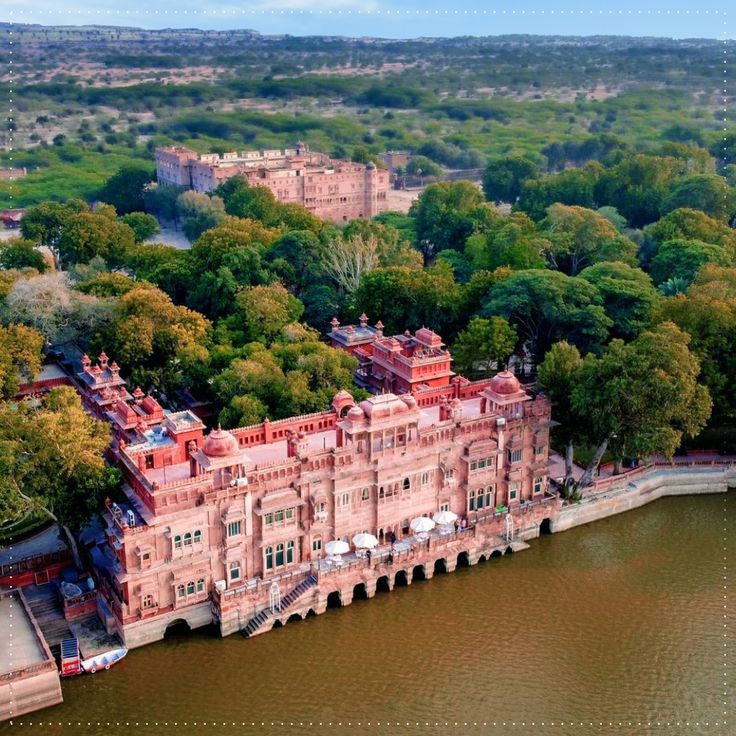
Bikaner has a handful of heritage properties — converted havelis and period buildings — that give the stay a character appropriate to the city. These are not luxury hotels in the international sense, but they are well-maintained, full of the architectural detail that Bikaner does well, and infinitely more interesting to sleep in than a modern business hotel.
For most travellers, a comfortable heritage stay or a well-reviewed mid-range property near the old city is the right choice. The city is compact enough that location is less critical here than in larger destinations, but proximity to the old city and fort area makes the daily experience easier. You can walk to the fort, walk into the lanes, and return on foot — which is how Bikaner is best experienced.
How Bikaner Fits Into a Rajasthan Circuit
Bikaner sits in the northern part of Rajasthan and connects logically to both Jaisalmer and Jodhpur. From Jaisalmer, the drive east to Bikaner is approximately four hours — a comfortable half-day movement. From Jodhpur, it is five to six hours north. This makes it a natural addition to a desert circuit that already includes Jodhpur and Jaisalmer, adding a different kind of stop between the more dramatic desert destinations without requiring significant detour.
It also works as the starting or ending point for a Rajasthan circuit that enters from Delhi via train — Bikaner is well-connected to Delhi by overnight train, which means you can arrive in the morning, spend a full day and a second morning here, and then continue south toward Jodhpur or east toward Jaipur with the desert circuit properly begun.
For travellers on a second Rajasthan trip who have already seen the primary circuit, Bikaner is the most logical addition — different enough from what they have seen to justify the journey, substantial enough to deserve two days, and honest in a way that the busier destinations are not always able to be.
Freedom Trail India plans private and customised journeys across Rajasthan, including circuits that move beyond the standard route. If you are thinking about a Rajasthan trip that includes less-visited destinations like Bikaner — we are glad to help you build something that holds together.