What Kind of Place This Actually Is
There is a specific quality to arriving at Ranthambore before dawn on the first morning.
The air is cool and quiet. The forest beyond the gate is dark in the way that forests are dark before the light arrives — not threatening, but genuinely present, with its own sounds and its own logic that has nothing to do with you or your vehicle or your plans for the day. You drive in. The sky begins to lighten. Something moves in the grass to the left and then is gone, and the guide and driver exchange a look without words, and you understand immediately that you are in a place that does not operate on your schedule.
This is Ranthambore. Not a performance of wildlife for visiting humans, but a functioning ecosystem that occasionally allows humans to observe it — on its terms, at its pace, without any guarantee of what will be visible on any given morning.
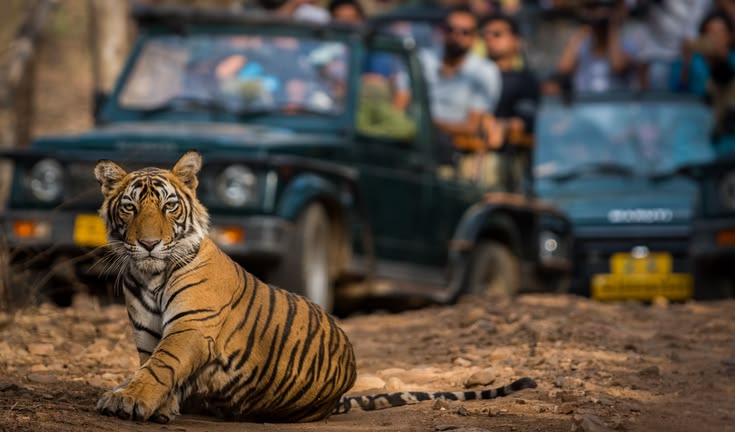
The single most useful thing to understand before arriving is this: the tiger is not the experience. The tiger is one possible event within an experience that is already happening from the moment you enter the forest. Travellers who arrive having understood this leave satisfied almost without exception. Travellers who arrive expecting a tiger sighting as the inevitable centrepiece of a trip they have paid for are setting themselves up for a particular kind of disappointment that no amount of preparation can prevent.
Ranthambore is worth visiting precisely because it makes no promises. That is a rarer quality in travel than it sounds.
Understanding the Landscape
Ranthambore sits in eastern Rajasthan near Sawai Madhopur, at a point where the dry landscape of the Rajasthan plains begins its transition toward the more forested terrain of central India. The reserve covers approximately 1,334 square kilometres, though the core zone where most safaris operate is a smaller area of the forest that is most actively managed for wildlife.
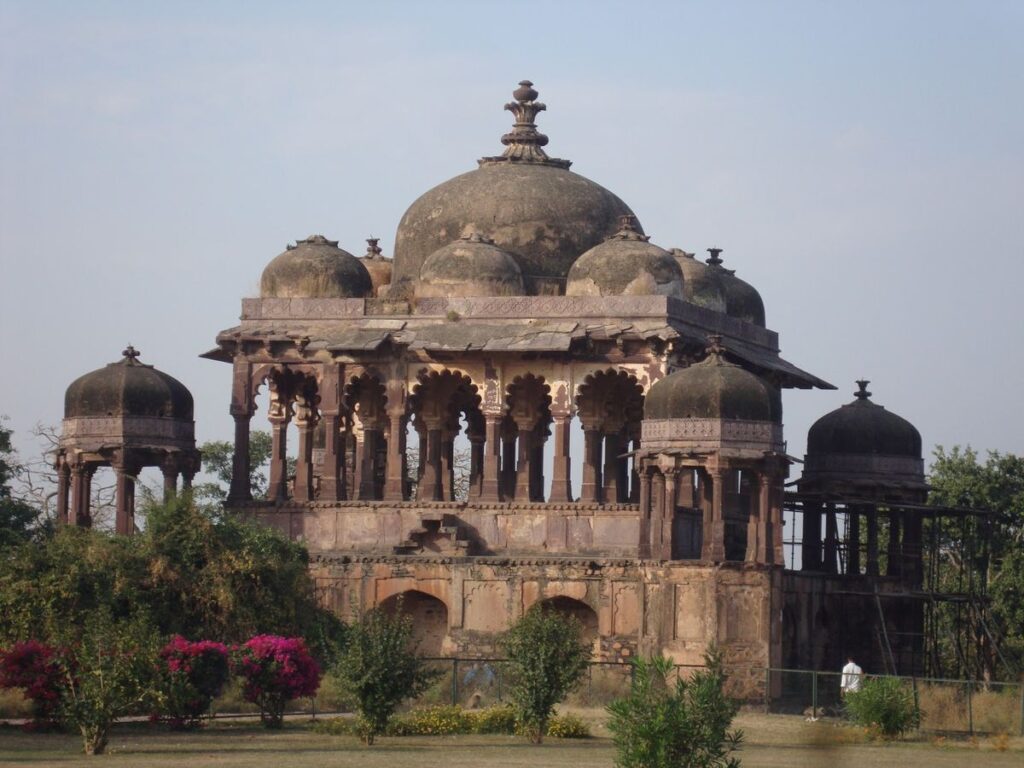
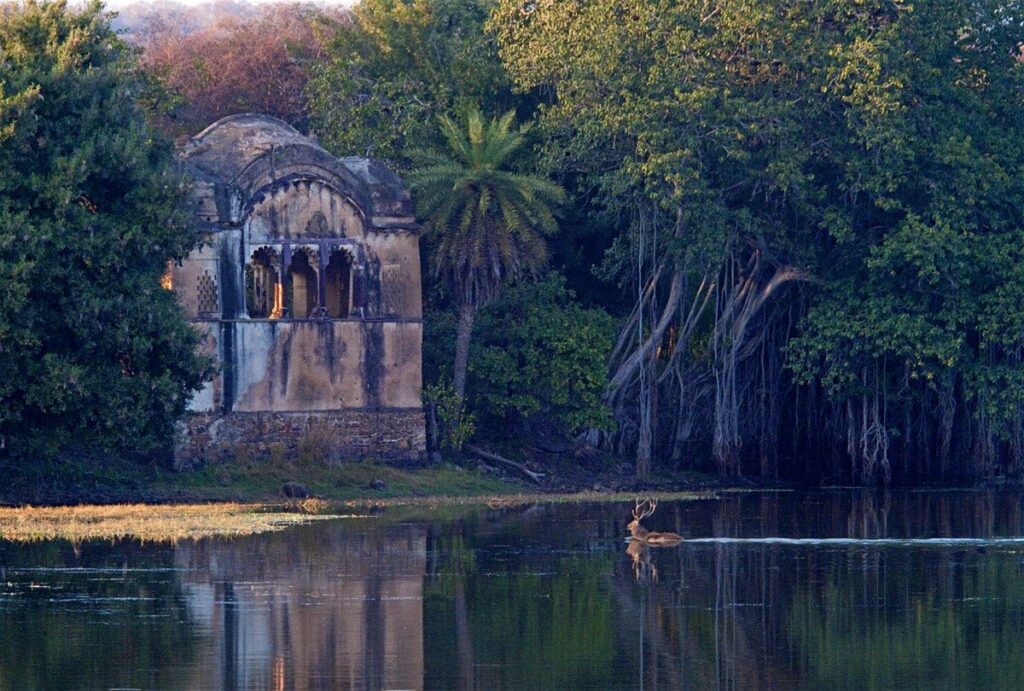
The landscape here is unlike the dense forests of Madhya Pradesh — it is open, rocky, and layered in a way that makes it visually extraordinary independent of the wildlife. Ancient lakes — Padam Talao, Rajbagh, Malik Talao — sit within the forest boundaries, their surfaces reflecting the surrounding vegetation and the ruins of structures that have been standing in various states since the medieval period. Rocky outcrops rise through the treeline. And above the entire forest, visible from multiple points within the reserve, sits Ranthambore Fort — a tenth-century fortification that was successively held by Rajput rulers, the Delhi Sultanate, and the Mughal empire before being absorbed into the forest as the surrounding landscape was depopulated and wildlife moved back in.
This combination — wildlife reserve and medieval landscape simultaneously — gives Ranthambore a quality that the more remote central Indian parks do not have in quite the same way. Moving through the forest on a safari morning, you might pass a crumbling pavilion beside a lake, or drive beneath fort walls that date to the time of Prithviraj Chauhan. The animals exist within a human history that the forest has partially reclaimed. That layering is part of what makes the experience here distinct.
When to Visit — Different Seasons, Different Forests
Ranthambore is open from October through June, with the park closing during the monsoon months when the terrain becomes inaccessible and the animals disperse.
October through February is when the forest feels most comfortable. The air is cool, the vegetation is still relatively dense from the post-monsoon growth, and the landscape is at its most visually appealing. Tiger sighting probability in these months is moderate — the animals have more cover and more water sources, which means they are less predictable in their movement. The experience of the forest itself is excellent, and for travellers who want the full ecological complexity of Ranthambore rather than focused on optimising sighting probability, these months work well.
March through May is when the sighting probability increases significantly. As water sources dry up across the reserve, the tigers — and the large prey species they follow — concentrate around the permanent lakes. Animals that were spread across a wide area in October are now more predictable in their locations. The trade-off is the heat, which becomes substantial by April and significant by May. Morning safaris in these months begin before sunrise and end before the worst of the midday heat; afternoon safaris begin in the cooler late afternoon. The discomfort is real but manageable, and many experienced wildlife travellers specifically prefer March to May for exactly this reason.
June is the final month before monsoon closure. The heat is at its most intense, some areas of the park become increasingly difficult, and the forest is at its driest. The sighting probability remains high for the same reasons as May, and the atmosphere of the forest in June — stripped of most of its greenery, the lakes reduced, the animals visibly concentrated — is dramatic in its own way. This is not the most comfortable month to visit. For those who have been before and want to experience the forest in its most extreme seasonal state, it is worth considering.
The honest summary: come in March or April for the best balance of sighting probability and manageable conditions. Come in November or December for comfort and a beautiful forest. Come prepared in both cases for the possibility that the tiger does not appear — because it often does not, regardless of season.
The Safari — What It Actually Is
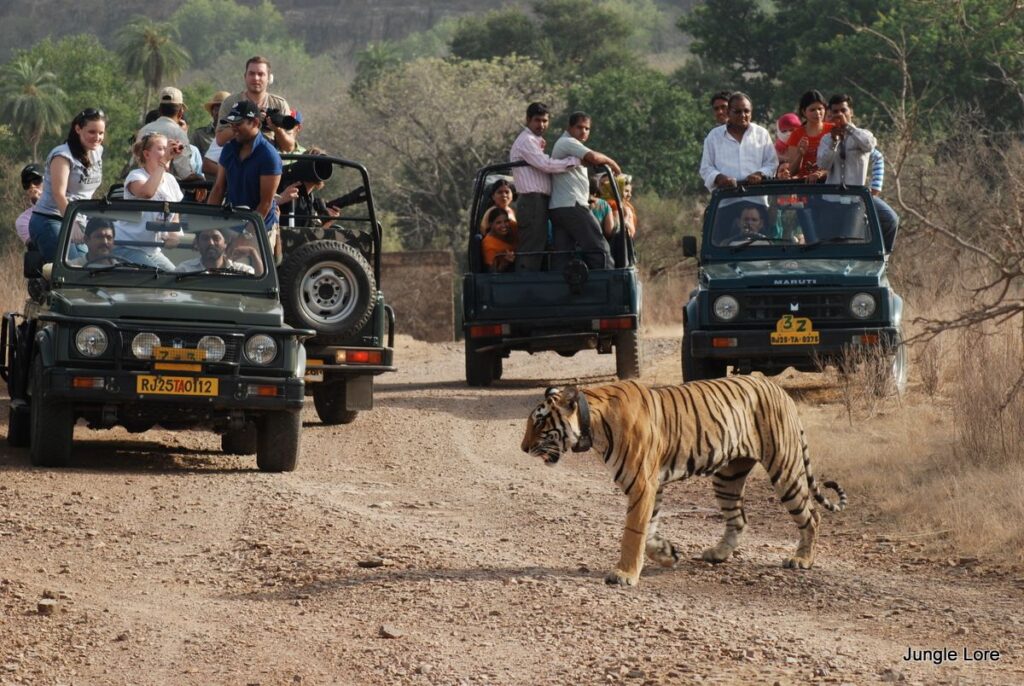
A safari at Ranthambore operates on fixed timings: a morning departure before sunrise and an afternoon departure in the cooler part of the day. The park is divided into zones, and each safari vehicle is allocated a zone — you do not have free movement across the entire reserve, which is worth understanding before expecting to follow a specific animal.
The experience of the safari itself is difficult to describe accurately to someone who has not done it, because the most significant parts of it are the ones where nothing visible is happening.
You are in the vehicle. The forest is around you. The guide is reading the behaviour of the deer at the edge of the clearing, reading the alarm call of a langur in the trees above, reading the quality of silence in a dry riverbed that suggests something has passed through recently. This is information that is entirely invisible to the untrained observer and completely legible to someone who has spent years in this forest. The difference between a mediocre safari experience and a genuinely good one is often not the sighting itself — it is the guide’s ability to read the forest in real time and be in the right place when something happens.
This is why the quality of the guide matters as much as anything else in planning a Ranthambore trip. Ask specifically, when booking, about guide experience and knowledge of the specific zones you will be in. A guide who knows a particular zone’s animal movement patterns over years is not the same as a guide who knows the park generally.
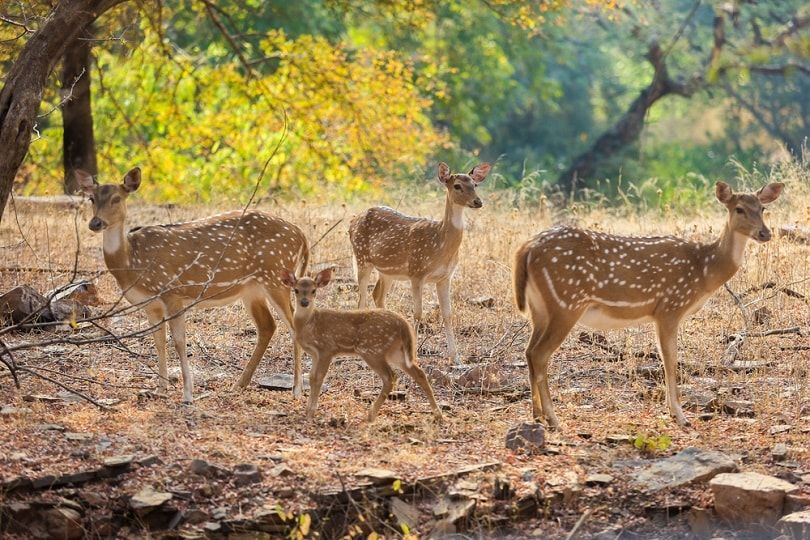
The moments between the visible events — the long stretches of driving through quiet forest, the pauses when the vehicle stops and everyone simply listens — are not the dead time between highlights. They are part of what the forest is offering. A cormorant drying its wings on a lakeside branch. A crocodile lying completely still in the shallows of Padam Talao. Spotted deer in a clearing, moving in the unhurried way that prey animals move when there is no immediate threat. A mongoose disappearing into a rock crevice. None of this is the tiger. All of it is Ranthambore.
Ranthambore Fort — The View That Changes the Scale
Most visitors to Ranthambore focus entirely on the safaris and do not visit the fort. This is understandable — the safaris are the primary reason to come, and the time between morning and afternoon safaris is limited. But for those who have the energy and the interest, the fort is worth the effort.
The ascent to Ranthambore Fort is a steep climb through the forest — you pass through the same vegetation that surrounds the safari routes, and the view opens progressively as you gain altitude. From the fort’s upper sections, the reserve spreads in every direction: the lakes visible as reflective surfaces in the treeline, the rocky terrain that defines the landscape, the full scale of the area that the safari vehicles move through becoming apparent in a way that the ground-level experience does not convey.
The fort itself — a complex of temples, palaces, and defensive structures built and modified across several centuries — is in partial ruin and partially maintained. It is still actively visited by Hindu and Jain pilgrims for the temples within its walls, which gives it a quality of living use that purely archaeological sites lack.
The visit takes two to three hours and is best done in the midday break between safaris, when the forest is at its quietest for wildlife observation anyway. It adds a dimension to the Ranthambore experience that the safaris alone do not provide: the sense of how this landscape has been shaped by human history as well as by the animals that now dominate it.
How Many Days — and Why One Safari Is Never Enough
Two nights and three days is the structure that most consistently produces a satisfying Ranthambore experience, and the reasoning is straightforward.
Each day offers two safaris — morning and afternoon. A two-night stay gives you four safaris. Four chances to be in the right zone at the right time. This is not a statistical guarantee of anything, but it is meaningfully better than the probability of two safaris, and the cumulative experience of four sessions in the forest — in different zones, at different hours, in different light conditions — builds a reading of the place that two sessions cannot.
Beyond the probability question, there is the matter of what the experience feels like over time. The first safari is orientation — the forest is new, the sounds are unfamiliar, the movement of the vehicle and the protocol of the experience are all things being absorbed for the first time. By the second or third safari, you are reading the forest differently. You recognise the call of the grey junglefowl. You understand what it means when the spotted deer raise their heads in the same direction simultaneously. You know the difference between the ordinary movement of the forest and the particular quality of attention that indicates something significant may be happening. This is not expertise — it is basic familiarity, and it makes the experience qualitatively richer than the first-safari version of it.
One night, two safaris is a visit to Ranthambore. Two nights, four safaris is a wildlife trip. The difference is worth the extra day.
Where to Stay — Proximity Is Not Optional
The accommodation decision at Ranthambore is, more than at most destinations, a practical one with direct consequences for the quality of the experience.
The safari timings require very early departures — morning safaris begin before sunrise, which means being in the vehicle at 5:30 or 6am depending on the season. Staying close to the park gate removes the logistics of an early vehicle transfer from a more distant property and ensures that the start of the day is about the forest rather than about getting to the forest.
Beyond the logistics, staying close to the park means inhabiting the rhythm of the place across the full day — the early departure, the return and rest through the hottest midday hours, the afternoon safari, the evening back at the property. This rhythm is the Ranthambore experience in its complete form, and it requires a base that is genuinely proximate to the park rather than forty-five minutes away.
The range of accommodation near Ranthambore runs from budget guesthouses to well-appointed safari lodges that understand what wildlife travellers need. For international visitors on a dedicated wildlife journey, a mid-range or better lodge with naturalist services and a genuine interest in the forest — rather than simply proximity to it — is worth the additional cost. A lodge whose staff can tell you about the animal activity in the zones over the past week is not the same as a lodge that is simply nearby.
Ranthambore in a Rajasthan Circuit
Ranthambore sits at the eastern edge of Rajasthan, about three hours from Jaipur and well-connected by rail from both Delhi and Jaipur. This positioning makes it the most accessible tiger reserve in India for travellers based in the north, and it means it can be incorporated into a Rajasthan circuit without requiring a separate journey to central India.
The honest trade-off relative to the central Indian parks — Bandhavgarh, Kanha — is that Ranthambore receives more tourist visitors, the zone system means more vehicles in some areas of the forest, and the sighting experience is accordingly more managed and less wild in feel. For travellers whose primary purpose is Rajasthan and who want to add a wildlife dimension without a separate wildlife-focused trip, Ranthambore is the right answer. For travellers whose primary purpose is wildlife and who are using Rajasthan as the context, central India is worth the additional journey.
Both are legitimate ways to approach the question. The important thing is knowing which version of the trip you are planning before you decide where to go.
Practical Notes
Booking safaris: Safari permits at Ranthambore must be booked in advance through the government portal, particularly for the more popular zones and peak season dates. Do not assume walk-in availability, especially between October and March. Book through your accommodation or a reliable local operator who can secure the permits as part of the overall booking.
Zone selection: The park is divided into ten zones. Zones one through five are in the core area and have the highest tiger activity and the highest visitor density. Zones six through ten are in the buffer zone — less visited, often with more open terrain, and with different wildlife profiles. Ask your guide or operator about current animal movement and zone conditions at the time of your visit rather than relying on general recommendations that may not reflect current activity.
What to wear: Neutral, earthy colours work best — greens, khakis, browns. Avoid bright colours and white. Cover arms and legs regardless of the temperature, partly for the inevitable insects and partly because direct sun during the morning safari hours is stronger than it feels in a moving vehicle.
Camera and equipment: A telephoto lens of at least 300mm is the minimum for meaningful wildlife photography at Ranthambore. The animals are often at distance, and the zone system means you cannot always position the vehicle ideally. Bring more memory and batteries than you expect to need. The dust on the safari tracks is significant — protect equipment accordingly.
Freedom Trail India plans wildlife journeys to Ranthambore and central India’s tiger reserves. If you are considering a wildlife trip to India and want honest advice on where to go based on what you are looking for — we are glad to help.