Some Places Carry Weight
There are destinations that impress through scale. Others through beauty. A few through the particular quality of atmosphere that accumulates in places where significant things have happened and have not been forgotten.
Chittorgarh belongs to the third category.
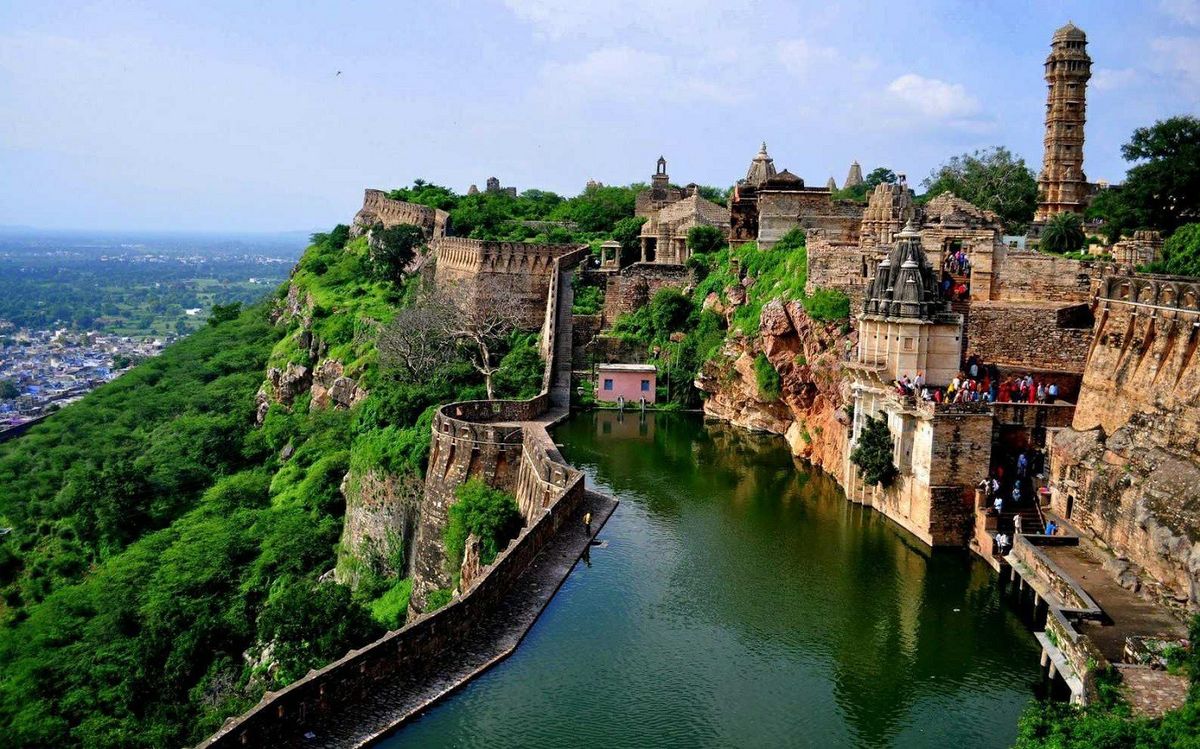
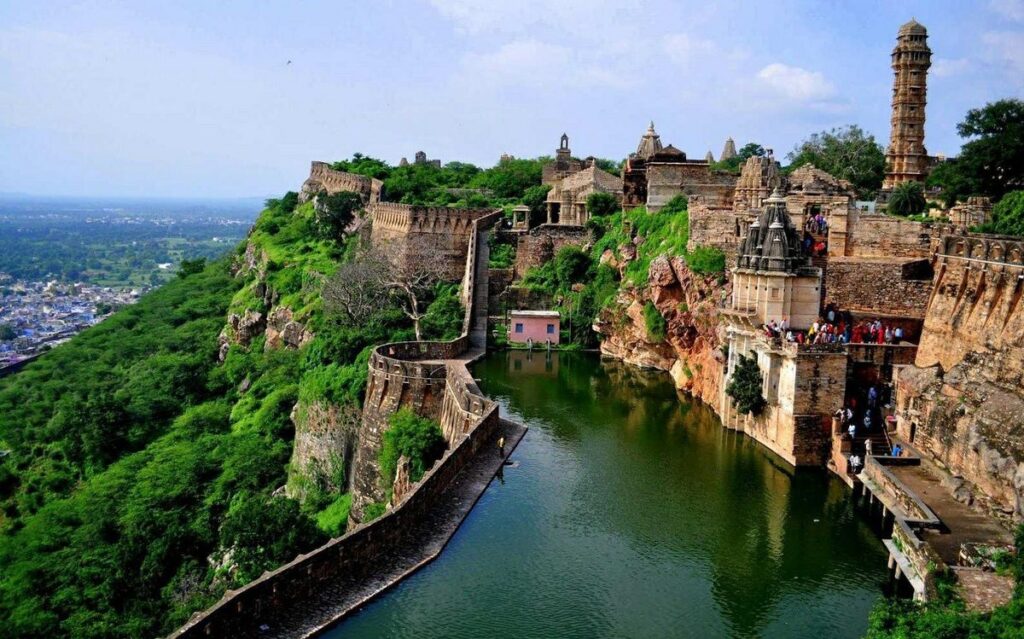
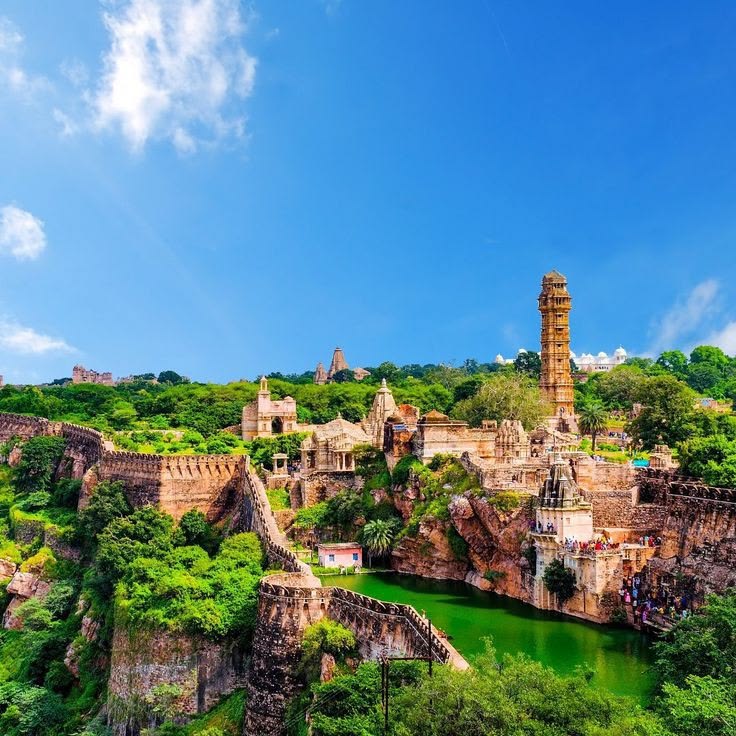
When you enter the fort — driving or walking up through the successive gateways that mark the long climb to the plateau — the immediate sensation is not of a monument or a tourist site. It is of a landscape that has been through something. The walls are massive and partially ruined. The palaces are empty in a way that is different from ordinary abandonment. The scale is so large — 700 acres of fortified hilltop, the largest fort complex in India — that it cannot be processed as a single thing. It simply surrounds you.
Chittorgarh was the capital of the Mewar kingdom before Udaipur, and it was the site of three major sieges across the fourteenth, fifteenth, and sixteenth centuries — each one ending in catastrophic loss, each one embedded in the cultural memory of Rajasthan in ways that are still actively present. The fort was never fully recovered after the final siege of 1568. What stands today is what was left — and what was left is extraordinary.
This is not a place you cover in two hours between Udaipur and somewhere else. It is a place that requires you to slow down, read what you are looking at, and give the history room to register.
Getting There and the Day Trip Question
Chittorgarh is approximately two hours from Udaipur by road, and this proximity makes it the most common approach — a long day trip from Udaipur, seeing the fort and returning by evening. This works, and for travellers with limited time it is the right choice.
But it is worth saying directly: an overnight stay changes the experience significantly.
The fort early in the morning, before the day visitors have arrived, is a different place from the fort at midday with vehicle traffic moving between the monuments. The light at that hour — low, directional, picking out the relief work on the Victory Tower and casting long shadows across the ruined palace courtyards — is the light in which the place makes the most sense. Arriving the evening before and spending that first morning inside the fort before the day heats up gives you something a day trip cannot: the fort in something close to its own time.
The overnight accommodation in Chittorgarh town is functional rather than exceptional — this is not a destination for heritage hotel experiences in the way that Udaipur or Jaipur is. But the trade-off is entirely worth it for those with an extra day in their itinerary.
By train, Chittorgarh is well-connected to both Jaipur and Udaipur, which makes it a natural stop on a circuit rather than an out-and-back detour.
When to Visit — The Fort Is Exposed
Chittorgarh Fort sits on an open hilltop plateau with limited shade across most of its area. This geographical fact defines the visit more than most guides acknowledge.
In the cooler months — October through February — the exposed terrain is a non-issue. The air is clear, the light is good, and you can move between the major sections of the fort without the heat becoming a significant factor. These are the months when Chittorgarh works most comfortably and when the full scale of the complex can be engaged with over a full day.
From March onwards, the temperature builds in a way that is worth planning around rather than discovering on arrival. By April and May, the midday hours on the open plateau are genuinely draining. A summer visit to Chittorgarh requires a very early start — inside the fort by 7am, covering the major monuments before noon, and either leaving or retreating to shade and water for the middle of the day. This is doable, but it is a different kind of trip from a winter visit.
The honest recommendation is October to February. If your timing falls outside that window, the fort is still worth visiting — but structure the day around the heat rather than hoping it cooperates.
The Fort Is Not One Site
The single most common misunderstanding about Chittorgarh is treating the fort as a single monument with multiple things inside it, in the way that a palace or a temple complex works.
Chittorgarh Fort is an entire hilltop. A city that was once inhabited and then largely abandoned, with structures from different centuries in different states of preservation scattered across a terrain that requires a vehicle or significant walking to move between. The distances between the major points are real distances. The landscape between them is part of the experience — not empty space to be hurried through but the actual fabric of what the fort is.
Moving through Chittorgarh well requires accepting this. You will not see everything. You should not try to. Pick the sections that matter most to you, move between them at a pace that allows each one to register, and let the scale of the place be part of what you take away from it.
Vijay Stambh — Victory Frozen in Stone
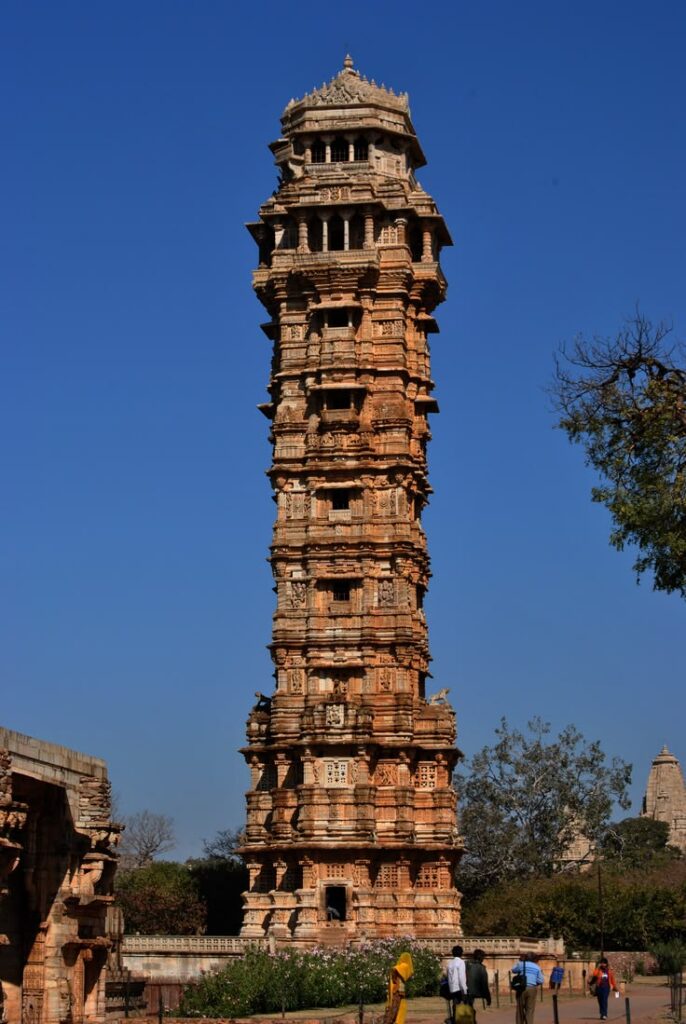
The Vijay Stambh — Victory Tower — is the visual anchor of the fort, visible from most of its area and from the plains below on clear days. Built by Rana Kumbha in the fifteenth century to commemorate a military victory over the combined forces of Malwa and Gujarat, it stands approximately 37 metres tall across nine stories of intricately carved sandstone.
The carvings are the reason to look closely. Every surface is worked — figures from Hindu mythology, narrative scenes, inscriptions that document the victory it was built to celebrate. Climbing to the upper levels gives you both the panoramic view across the fort and the plains and the close-up experience of the carving detail, which at the upper levels is as precisely executed as anything at ground level.
This is not a tower to be photographed from the outside and moved past. Give it an hour. Climb it. Read the figures on the walls. The quality of attention that went into building it deserves a corresponding quality of attention in return.
Rana Kumbha Palace — Where the Silence Is Different
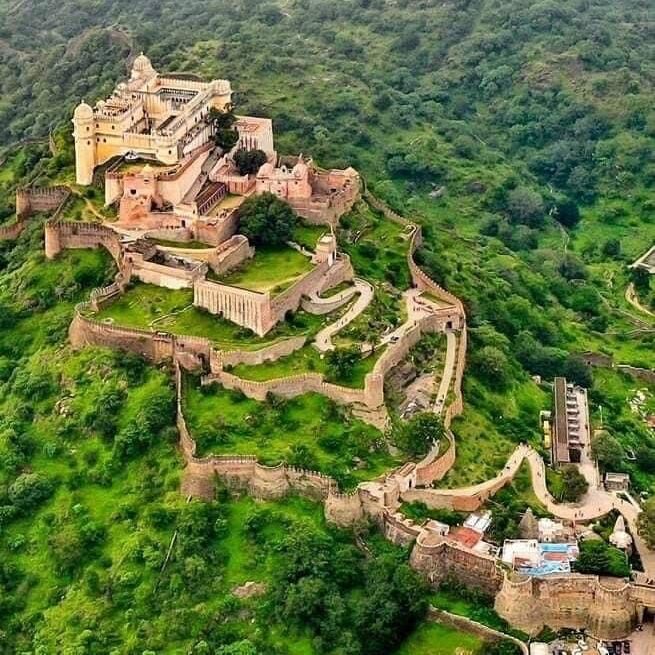
The ruined palace complex of Rana Kumbha sits close to the fort’s main entrance area, and it is where the emotional register of the visit shifts most sharply.
What stands today are roofless walls, stone columns, and the outlines of chambers and courtyards that once formed one of the fort’s primary residential complexes. It is a ruin in the conventional sense — structurally incomplete, exposed to the sky, vegetation growing through joints in the stone. But the feeling of the place is not the ordinary melancholy of abandoned buildings.
Rana Kumbha Palace is associated with the act of Jauhar — the mass self-immolation of Rajput women, including Rani Padmini according to certain accounts, during the siege of 1303. When the fort fell and capture became inevitable, the women of the court chose fire over surrender. The act is not mythologised in the landscape. There is no dramatic interpretation board, no lighting effect, no curated emotion. There is simply the space — a large underground chamber within the palace complex where the act is said to have taken place, visible as a descending stairway into darkness.
Standing there, the absence of interpretation is more powerful than interpretation would be. You are not being told how to feel. The history is present in the structure, and what you make of it is your own.
Padmini Palace — Story and Setting
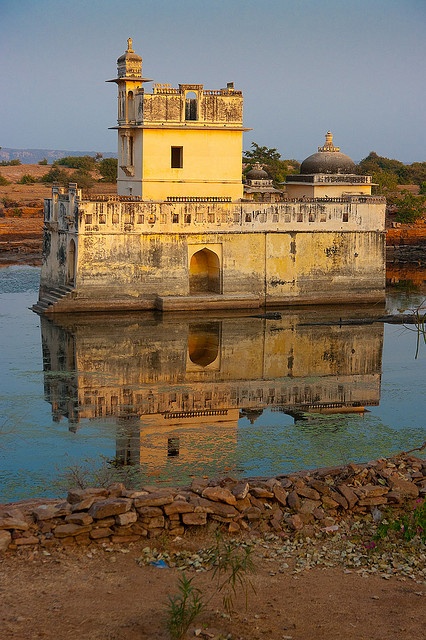
The Padmini Palace sits at the southern end of the fort plateau beside a still-water lake, and it arrives as a contrast to everything that came before it — smaller in scale, quieter in atmosphere, almost intimate compared to the Victory Tower and the palace ruins.
The palace is associated with Rani Padmini, whose beauty is said to have prompted the siege of 1303 by Alauddin Khilji of Delhi. Whether the story is historical or legendary has been debated for centuries and continues to be — the sixteenth-century epic poem Padmavat, from which most of the narrative comes, was written two hundred years after the events it describes. The debate itself is part of the place’s history.
What the setting gives you, independent of the historical questions, is a moment of genuine pause. The water, the small pavilions, the palace reflected at the lake’s edge — it is one of the few points in the fort where the pace naturally slows. Sit here for a while before moving on.
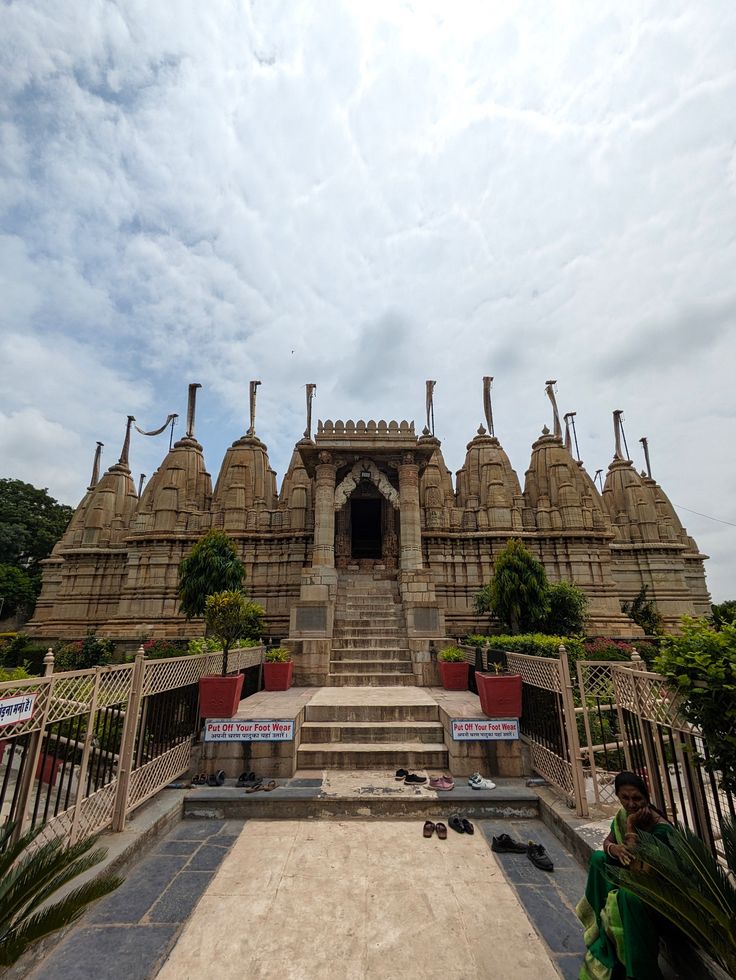
The Jain Temples and Kirti Stambh — A Different Dimension
One of the qualities that makes Chittorgarh more complex than a simple Rajput history site is the presence, alongside the Hindu royal monuments, of significant Jain architecture.
The Kirti Stambh — Tower of Fame — predates the Vijay Stambh by several centuries and was built by a Jain merchant family as a religious monument dedicated to the first Jain tirthankara. It is smaller than the Victory Tower but similarly dense with carving. The Jain temples in its vicinity — several of them built and rebuilt across the centuries — represent a religious tradition that existed in Chittorgarh alongside the Rajput court and contributed substantially to the fort’s architectural legacy.
This dimension of the fort tends to be under visited, partly because it requires moving to a section of the plateau that is slightly off the main vehicle circuit. It is worth the detour. The contrast between the martial commemorations of the Victory Tower and the devotional quietness of the Jain complex gives Chittorgarh a texture that a purely military history reading of the place misses.
How to Move Through the Fort
Chittorgarh Fort is too large to walk between all the major monuments — the distances across the plateau are significant and the terrain is uneven. The standard approach is to hire a vehicle with a driver for the day and move between the major sections by car, getting out at each one.
A guide is worth serious consideration here, more than at most Rajasthan forts. The structures at Chittorgarh are largely unlabelled and the history they carry is specific, layered, and not immediately legible without context. A knowledgeable local guide does not simply tell you what you are looking at — they give you the sequence of events that makes what you are looking at comprehensible. The fort without that context is impressive but somewhat opaque. The fort with it becomes one of the most significant historical experiences in Rajasthan.
Carry water, carry more water than you think you need, and plan for the visit to take a full day. There is a point roughly halfway through a Chittorgarh day when the scale of the place has fully registered and the pace naturally slows. That point is where the real visit begins.
Practical Notes
From Udaipur: Approximately 115 kilometres, two hours by road. The drive through the Mewar countryside is pleasant and straightforward. Hiring a driver from Udaipur for the day is the most common and practical approach.
By train: Chittorgarh Junction is well-connected to Udaipur, Jaipur, and other Rajasthan cities. If arriving by train, auto-rickshaws and taxis are available from the station to the fort.
Entry: The Archaeological Survey of India manages the fort site. Entry fees apply and a separate ticket is required for the Vijay Stambh climb.
Food and water: There are limited food options inside the fort complex. Carry sufficient water for the full visit — particularly important in warmer months — and consider bringing food if you are planning a full day inside rather than leaving at midday.
Freedom Trail India plans private journeys through Rajasthan that include Chittorgarh alongside the broader Mewar circuit. If you are building a Rajasthan itinerary that goes beyond the standard route — we are glad to help.