The Town Behind the Tourism
Manali has a problem that most of its travel guides are too polite to name directly: it has been so thoroughly marketed as a destination that the marketing has become the dominant version of the place, and the actual place — which is quieter, older, more interesting, and more genuinely beautiful than the marketed version — requires some effort to find.
The Manali that most visitors experience is a particular kind of hill station tourism at full volume: the main bazaar clogged with traffic, adventure activity operators competing loudly for attention, hotels stacked up the hillside with views obscured by the hotels above them, and the Rohtang Pass road jammed with vehicles carrying people who have been told that Rohtang is the reason to come. This version of Manali is real and it is overwhelming, and it is the reason that travellers who have been to Manali often say they were disappointed — not because the mountains around it are disappointing, but because the version of the mountains they encountered was mediated through all of this.
The other Manali — Old Manali across the Manalsu stream, the Hadimba Temple in its deodar forest, the Beas river valley at quieter hours, the trails that lead above the treeline into actual Himalayan terrain — is also real and requires only slightly more intention to reach. This guide is an attempt to help you find the second version without dismissing the first.
What Manali Actually Is
Manali sits at approximately 2,050 metres in the Kullu Valley of Himachal Pradesh, at the point where the valley narrows and the high mountain passes begin. The Beas river runs through it, originating in the mountains to the north and flowing south through the valley. The town is the last significant settlement before the road climbs to Rohtang Pass (3,978 metres) and continues toward Lahaul and Spiti beyond.
This geographical position — end of the valley, beginning of the high passes — has shaped what Manali is. It has historically been a waypoint for trade and movement between the Kullu Valley and the high-altitude regions to the north, and it remains a staging point for journeys toward Leh, Lahaul, and Spiti. This gives it a particular kind of energy that is different from a destination that exists purely for its own sake: it is a town that people pass through as well as arrive at, and that dual function is visible in everything from the quality of the accommodation to the variety of the food.
The older part of the town — now called Old Manali, separated from the main bazaar by the Manalsu stream — predates the tourism economy and gives you the clearest sense of what the place was before it became what it is today. The village houses, the orchards, the lanes that follow the hillside rather than a planned grid — this is the Manali that the deodar forests and the river below belong to, and it is still accessible if you know to go there.
When to Go — Different Seasons, Different Manali
Manali operates through most of the year but the experience varies significantly across seasons, and the variation matters enough to choose deliberately.
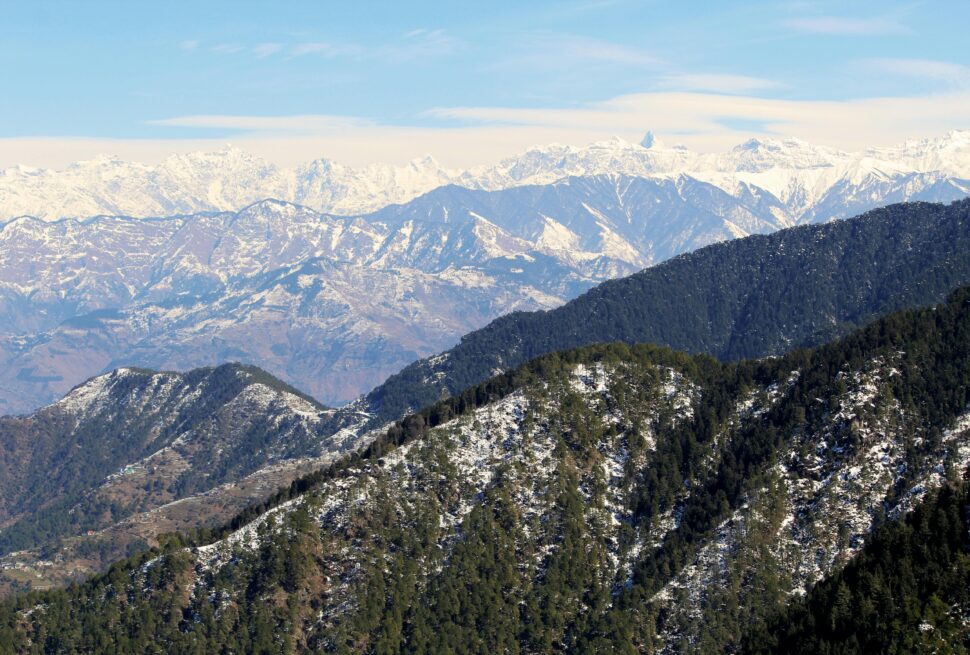
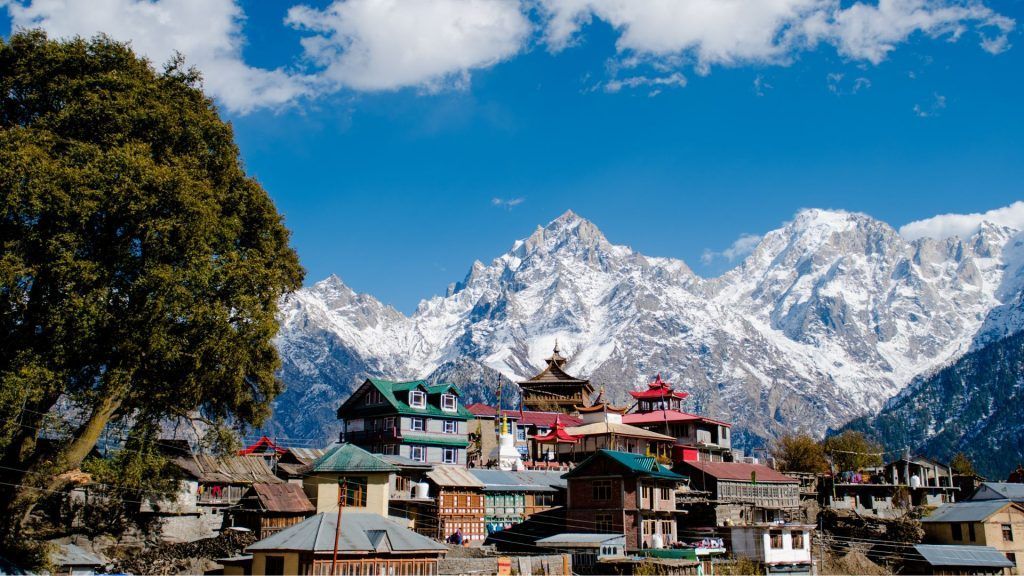
October and November are, in our view, the most consistently rewarding months. The post-monsoon clarity gives the mountains around the valley a sharpness and definition that the summer haze does not — the peaks above the town are cleanly visible, the valley has a particular quality of autumn light, and the tourist volume has dropped from the summer peak. The weather is cold but manageable, the roads are still open, and the town has the settled quality of a place that has returned to something closer to its own pace.
March through June is the primary tourist season. The snow on the higher slopes is still present through April and May, which gives the landscape its most dramatic visual quality. The Rohtang Pass road typically opens by late April or May depending on the snowfall of the preceding winter, which is when the volume of visitors increases substantially. May and early June — the period coinciding with north Indian school holidays — is when Manali is at its absolute busiest and most difficult to navigate. If your dates fall in this window, the early morning strategy becomes essential: the same road that is gridlocked by nine in the morning is passable and pleasant at six.
July and August is monsoon season in the Kullu Valley, and the honest recommendation is to avoid this window for Manali specifically. The Beas river runs in full flood, landslides are a real possibility on the approach roads and on the routes above the town, and the cloud cover that the monsoon brings removes the mountain views that are the primary reason most people come. There are exceptions — some travellers specifically enjoy the drama of the valley in monsoon — but for a first visit or for a trip built around mountain views and outdoor activity, this is not the right window.
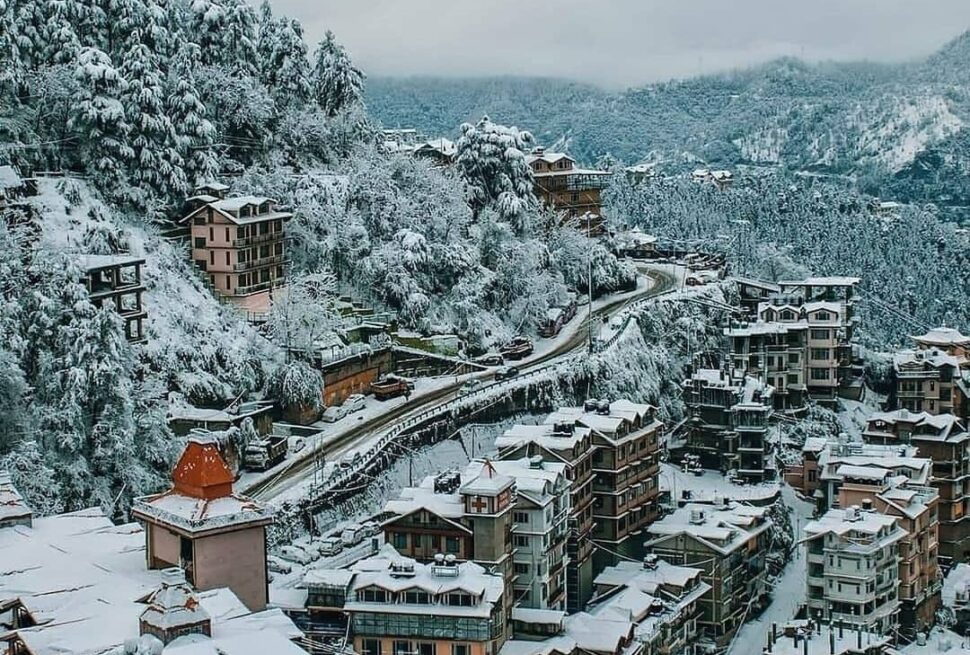
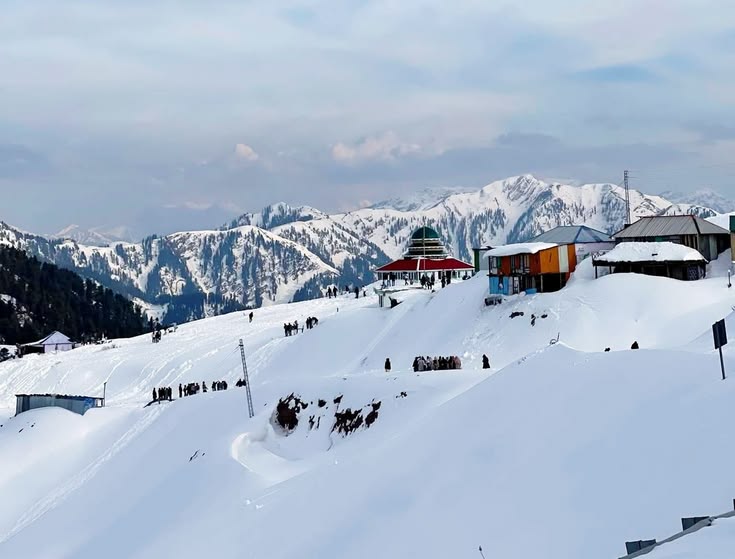
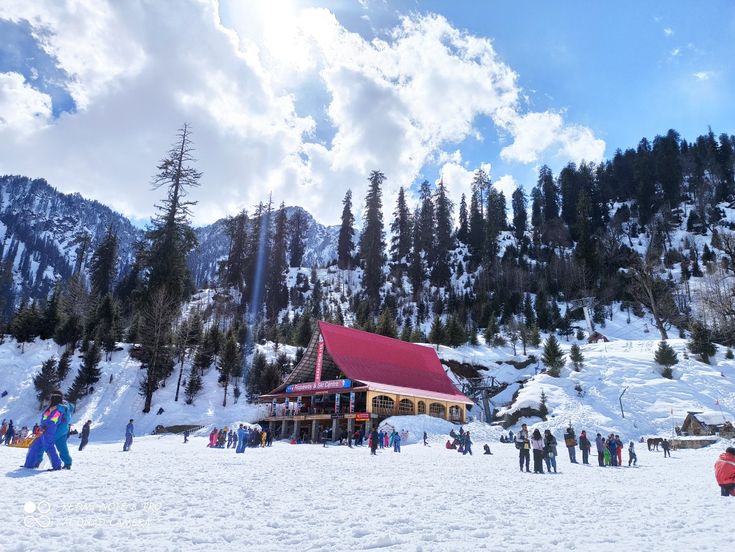
Winter — December through February — brings heavy snow to the main town and closes the higher passes entirely. The Rohtang Pass road closes for the season, Solang Valley becomes a snow activity destination for domestic tourists, and the town quiets considerably. A winter visit to Manali is a specific experience — more local, more settled, and for travellers who want to see the valley under snow without the crowds of the summer season, genuinely worthwhile. Come fully prepared for cold that can reach -10°C and below.
Old Manali — The Place Before the Tourism
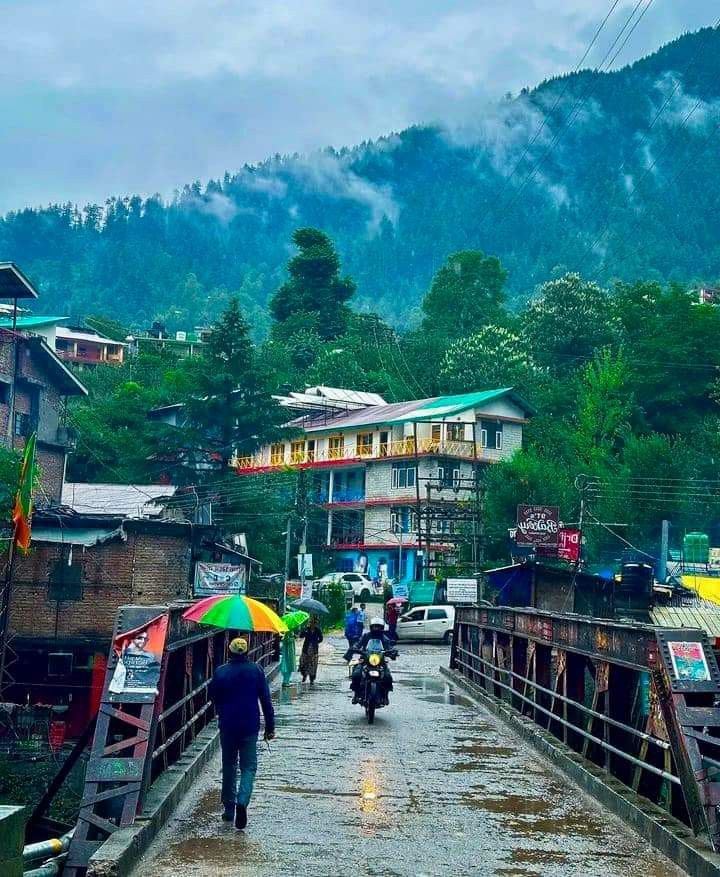
Old Manali, across the Manalsu stream from the main bazaar, is where the town existed before the tourism economy arrived and reshaped the valley floor. The walk from the main bazaar takes fifteen minutes across the bridge and up the lane, and the transition is immediate.
The lanes in Old Manali are narrow and follow the hillside logic rather than any planned grid. Village houses — some of them old enough to have the Himachali wood-and-stone construction style that is increasingly rare in the developed parts of the valley — sit alongside apple orchards that slope down toward the stream. Smaller guesthouses and cafés have established themselves here over the years, mostly catering to the travellers who specifically sought out the older part of town, and they have the quality of places that chose this location because of what it is rather than because of commercial convenience.
Stay in Old Manali if possible — or at minimum spend significant time here across your visit. A morning in the lanes above the stream, before the day has fully started, with the mountains visible above the orchard terraces and the sounds of the village rather than the bazaar — this is the version of Manali that justifies the journey.
The Hadimba Temple — Forest and Devotion Together
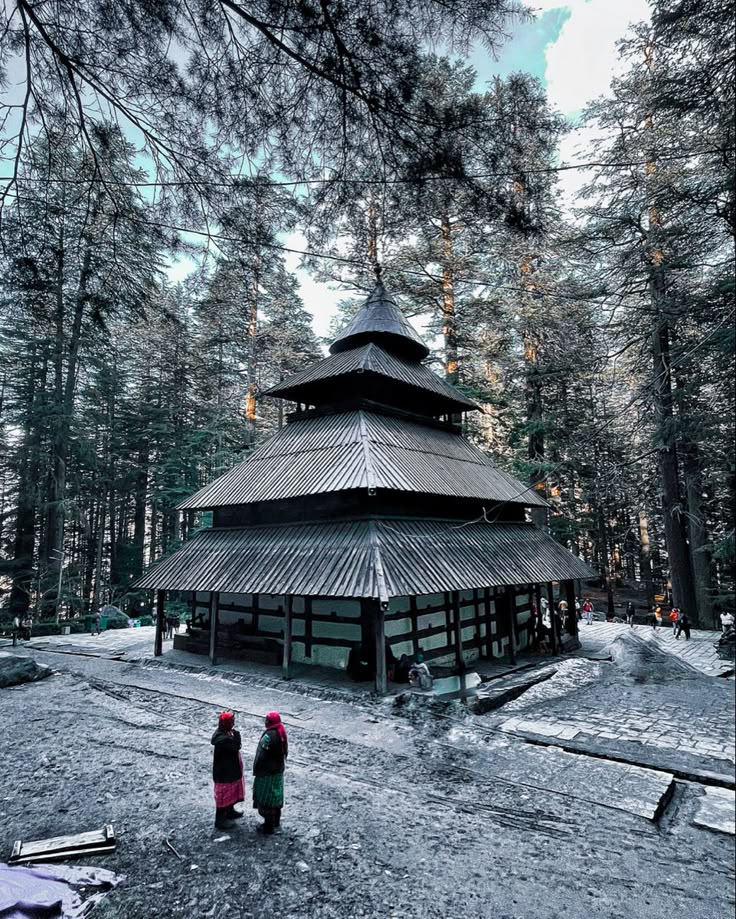
The Hadimba Temple sits in a clearing in a dense deodar forest approximately two kilometres from the main bazaar, and it is one of the most architecturally distinctive religious buildings in Himachal Pradesh — a four-tiered pagoda-style wooden structure dedicated to Hadimba, a figure from the Mahabharata who is venerated as a local deity in the Kullu Valley.
The temple was built in 1553 by the ruler of Kullu in a style that has more in common with the wooden temple architecture of the western Himalayas than with the stone temple traditions of the plains. The carved wooden doorways are extraordinary — layered with figures, patterns, and iconographic detail that takes extended looking to begin to understand. The forest around the temple is old-growth deodar, the kind that takes centuries to produce trees of the size that surround the clearing, and the quality of being inside it — the scale of the trees, the light through the canopy, the temperature that is noticeably cooler than the open valley — is as much a part of the experience as the temple itself.
Visit early in the morning, before the tourist volume builds. The clearing in the morning light, with the temple in front of the trees and the mountains above, is one of the more genuinely peaceful moments available in a visit to Manali.
Solang Valley — With Adjusted Expectations
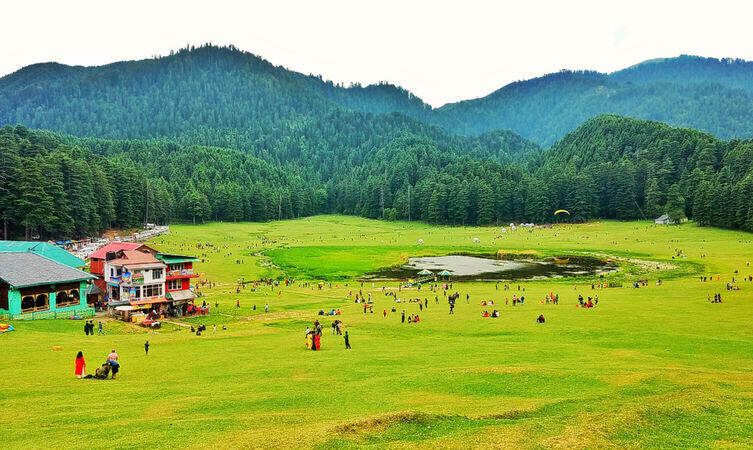
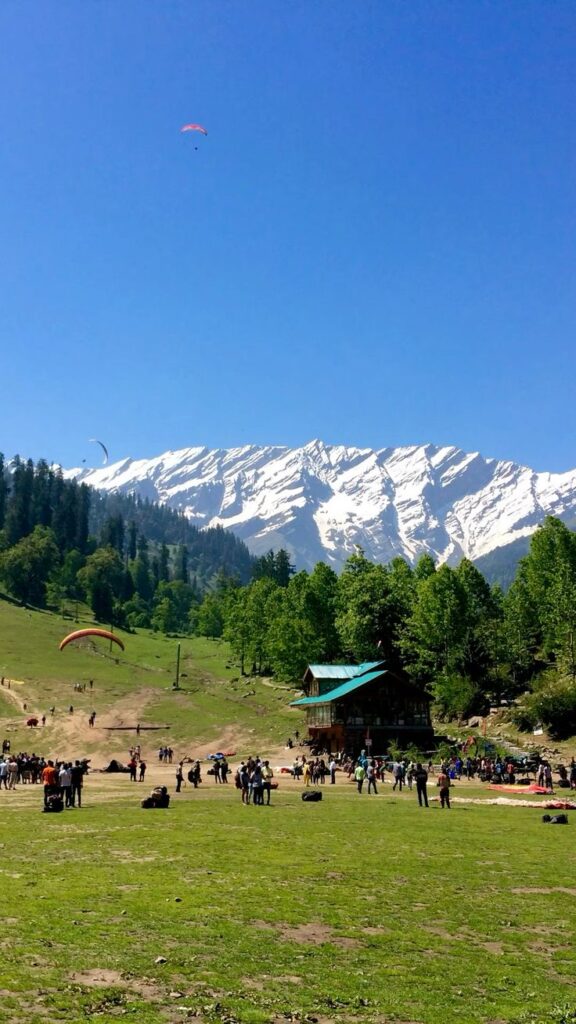
Solang Valley, fourteen kilometres north of Manali on the road toward Rohtang, is a wide glacial valley with the kind of mountain scale that the Manali town environment, surrounded by forested slopes, does not fully reveal. In summer it is a meadow; in winter it is a snow sports destination; in the shoulder seasons it is simply a large valley at altitude with the high peaks visible above it.
The honest context for Solang: it is one of the most heavily commercialised outdoor spaces in Himachal Pradesh, with adventure activity operators, horse ride vendors, and various tourist facilities occupying the lower sections of the valley in peak season. The activities themselves — paragliding, zorbing, seasonal snow activities — are accessible and popular, and for families and first-time mountain visitors they provide an easy entry point to the scale of the landscape.
The alternative version of Solang — walk away from the activity zone, up the valley and toward the higher terrain — is less crowded and more genuinely mountain in character. The path above the main activity area climbs through the valley toward the glacier and the higher pastures, and the distance from the commercial area required to leave it behind is not large. An hour of walking above the main zone gives you a version of Solang that is closer to what the valley actually is.
Rohtang Pass — The Most Overcrowded Experience in Manali, and How to Approach It Honestly
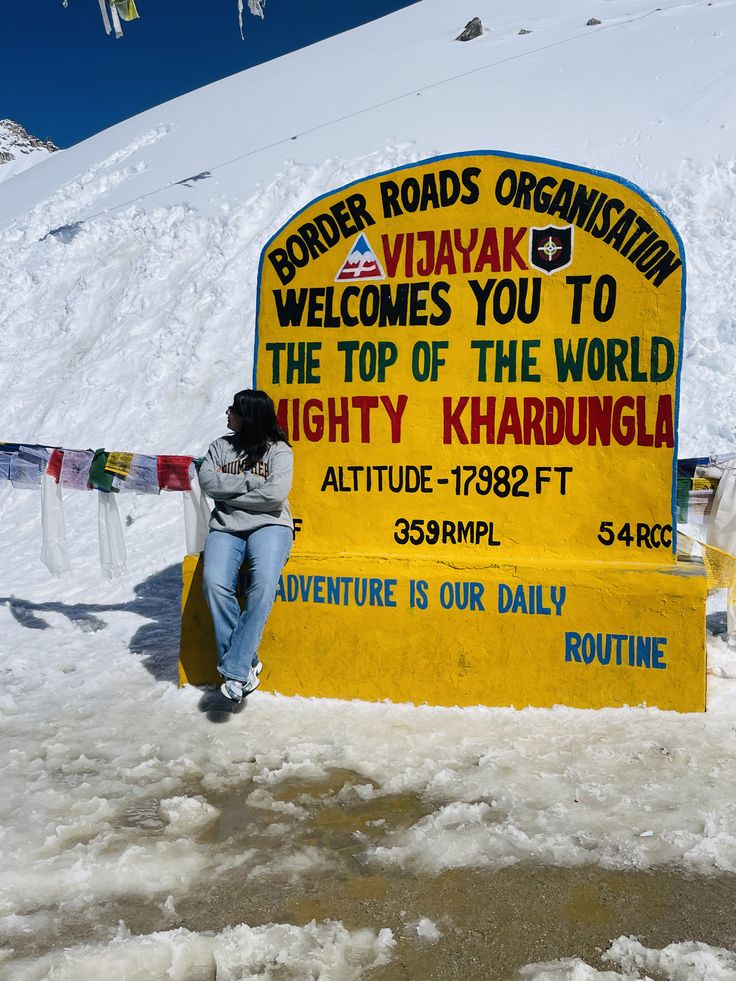
Rohtang Pass is at 3,978 metres and sits on the watershed between the Kullu Valley and the Lahaul Valley beyond. It is spectacular in the way that all high Himalayan passes are spectacular — open, exposed, enormous in scale, with views on both sides that make the effort of the climb comprehensible.
It is also, in season, one of the most congested roads in Himachal Pradesh. The pass opens typically in late April or May and draws an immediate flood of visitors from the moment it becomes accessible — largely for the snow experience that the pass provides when the valley below is already warm and snow-free. The road to Rohtang carries hundreds of vehicles on busy days, the queue at the top is often significant, and the pass itself — which at its best is a silent, extraordinary viewpoint at high altitude — is at peak season something quite different from that.
The pass also requires a permit for non-Himachal vehicles, obtainable online in advance, with a daily limit on the number of vehicles allowed. This limit means that permits can be unavailable on short notice during peak season. Book at least a day or two ahead if visiting during the summer months.
For travellers whose primary interest is the mountain landscape and the high-altitude experience rather than specifically crossing Rohtang, the Solang Valley upper sections and the trails above Old Manali provide similar altitude with significantly less crowd. Rohtang is worth doing if the pass road is open and the conditions are reasonable — but with clear expectations about what the experience will be like rather than what the photographs suggest.
The Beas River Valley — What Most People Drive Past
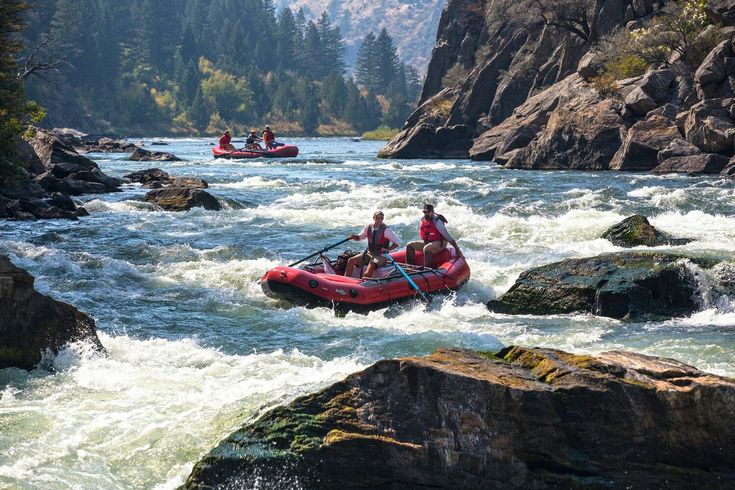
The Beas river, flowing south through the Kullu Valley below Manali, is one of the great rivers of the western Himalaya and the physical heart of the landscape that makes this valley worth coming to. Most visitors to Manali are in vehicles on the roads above it for the majority of their time, and the river itself — the actual river, at close range, with its particular sound and the quality of the light on the water and the scale of the valley visible from its banks — is something most of them see only briefly.
An hour on the riverbank, somewhere between the town and the valley below, is one of the more underrated experiences available in a Manali visit. The gravel banks of the Beas in the early morning or late afternoon, with the forested slopes rising above on both sides and the river in full voice, is the Kullu Valley as it actually is rather than as it is framed from the road.
How Many Days and How to Use Them
Three nights is the minimum for Manali to give you its full range. Four nights is better if the Rohtang Pass excursion is part of the plan.
The structure that works: a first afternoon in Old Manali — the walk across, the lanes, the orchards, the guesthouses above the stream — with the evening at the Hadimba Temple as the day closes. A second morning at Solang Valley, leaving early before the activity zone crowds build, with the afternoon free. A third day for Rohtang Pass if the permit and conditions allow, or for the trails above Old Manali into the higher terrain if they do not. The fourth day, if available, for the slower things — the river, the bazaar at its own pace, the view from above the town that you kept meaning to find.
Leave at least one morning completely unscheduled. Manali has the quality of rewarding the unplanned hour in the way that over-scheduled mountain trips often do not.
Where to Stay — Old Manali Versus the Main Bazaar
The accommodation decision in Manali is the same fundamental question as in several other destinations in this series: do you stay inside the experience or adjacent to it?
Staying in Old Manali means the orchards, the lanes, and the stream as your immediate environment — a slower, more genuinely mountain quality of stay that the main bazaar does not provide. The facilities are simpler and the road access more limited, but for travellers who are here for the mountain rather than the amenities, this is consistently the better choice.
Staying in the main bazaar area or on the hillside above it means convenience — easier access to the Rohtang road, the adventure operators, the main commercial area — but the environment is urban in a way that most people who have made the journey to the Kullu Valley were not primarily looking for.
There is a middle option: properties on the hillside above the main bazaar, set back enough from the commercial strip to have genuine views and quiet, accessible enough to use the town’s facilities without effort. These tend to offer the best balance for travellers who want both access and atmosphere.
Practical Notes
Getting there: Manali is most commonly reached from Delhi by overnight Volvo bus — a roughly thirteen to fourteen hour journey that departs in the evening and arrives in the morning, and is the most practical option for most visitors. The nearest airport is Bhuntar (Kullu-Manali Airport), approximately fifty kilometres from Manali, with connections to Delhi — though flight availability and weather cancellations make this less reliable than the bus for independent travellers. The drive from Chandigarh takes approximately eight to nine hours and passes through the Kullu Valley, which is worth experiencing slowly rather than rushing.
Rohtang permit: Required for all non-Himachal Pradesh registered vehicles. Available online through the Himachal Pradesh government portal. Book at least two to three days in advance during peak season as the daily limit is reached quickly.
Altitude adjustment: Manali at 2,050 metres is not high enough to cause serious altitude sickness for most people, but the excursions above — Rohtang at nearly 4,000 metres, the higher trails — do involve real elevation gain. A gradual first day without strenuous activity is sensible regardless.
River safety: The Beas in monsoon and in the high-water period of summer snowmelt runs very fast and very cold. Do not enter the river or stand on unstable gravel banks in these conditions. The river-related accidents in the Manali area are almost exclusively the result of misjudging the current.
Freedom Trail India plans private journeys through Manali, the Kullu Valley, and across Himachal Pradesh. If you are thinking about a Himachal trip and want honest advice on how to structure it — we are glad to help.