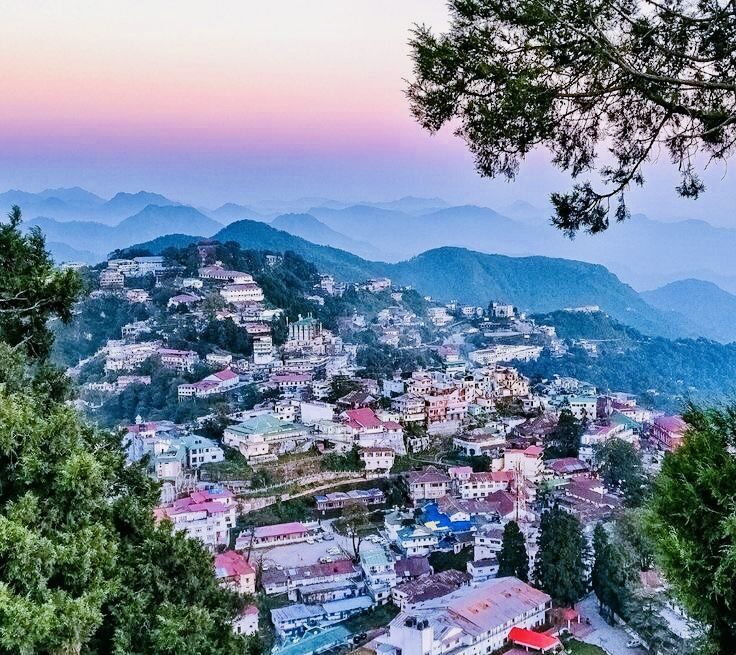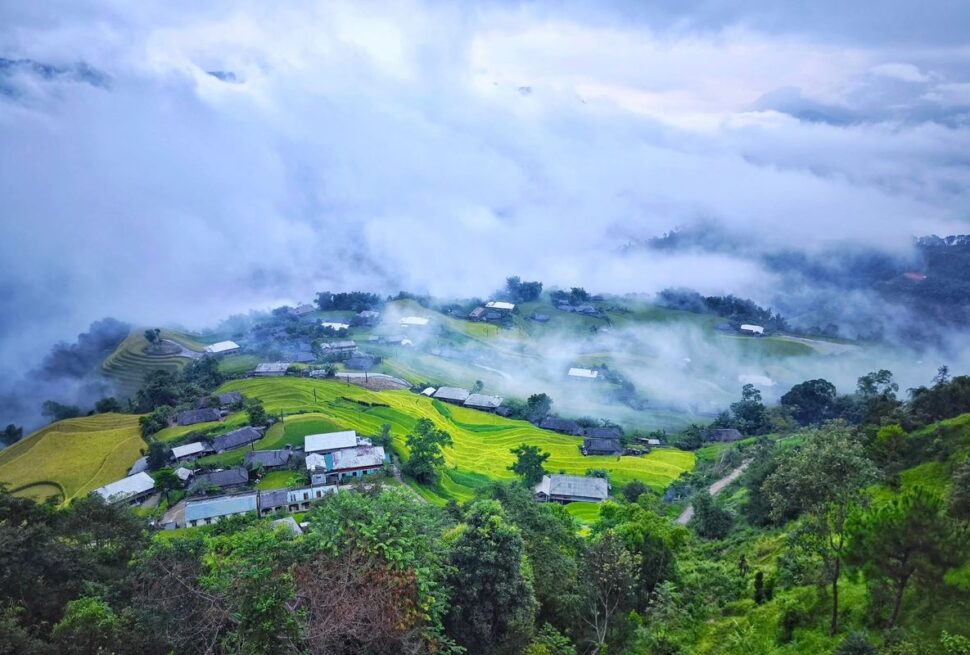
The Town That Doesn’t Have a Single Identity — And Doesn’t Need One
Most places have a dominant character. You arrive, you understand fairly quickly what kind of town it is, and you orient yourself accordingly.
Rishikesh doesn’t work that way.
One part of it moves fast — rafting operators, backpacker cafés, travellers arriving and leaving with a particular kind of restless energy. Another part moves slowly — ashrams, yoga centres, long silences by the river, people who have been here for weeks and intend to stay longer. These two versions of the same town exist not at opposite ends of it, but often within minutes of each other. You don’t transition gradually. You step from one into the other, sometimes without noticing the moment it happened.
Most travel guides try to resolve this by labelling Rishikesh as either a spiritual destination or an adventure hub, depending on who is writing. Both labels are accurate and both of them miss the point. The thing that makes Rishikesh worth coming to is precisely the coexistence — the fact that it holds contrast without requiring you to choose a side.
The travellers who get the most out of it are the ones who don’t choose. Who spend a morning on the river and an evening at the aarti and a morning after that doing nothing in particular, and find that the town gave them something they weren’t entirely expecting.
Before You Decide When to Go
The honest framework for Rishikesh timing is simple: the river shapes the experience more than the weather does.
From September through April, the conditions are most balanced. The Ganga is moving but manageable, the weather allows both outdoor activity and long hours sitting outside, and the town is accessible to the full range of experiences it offers. October and November bring a particular clarity to the air — the post-monsoon light over the hills is striking and the crowds have not yet peaked. February and March are comfortable and busy without being overwhelming.
Monsoon — roughly July through September — changes the character of Rishikesh significantly. The river rises, the current becomes powerful, and most of the adventure activities are suspended. The town is quieter and the landscape is genuinely beautiful after the rains, but it is a different experience from what most first-time visitors are looking for. If you are going specifically for rafting or other river activities, avoid the monsoon months entirely.
Summer — May and June — is warm in the lower areas of the town, though not unpleasantly so by north Indian plains standards. The Himalayan proximity keeps the heat from becoming oppressive. This is peak season for Indian domestic visitors, and the town reflects that in its energy and its crowds.
The River Is Not the Setting — It Is the Experience
Every visitor to Rishikesh ends up spending time near the Ganga. What differs is how consciously they do it.
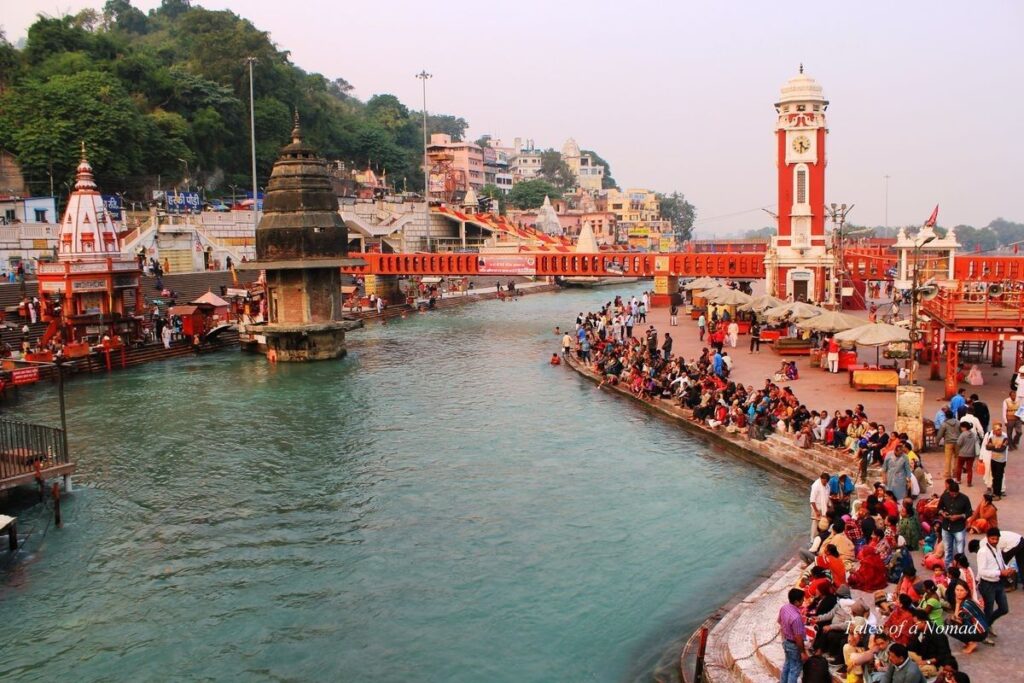
The river here changes character depending on where you encounter it and when. In the early morning, before the activity of the day begins, it is wide and reflective — the kind of stillness that makes you understand why this stretch of the Ganga has drawn people for centuries. By mid-morning, when the rafting groups head upstream and the bridges fill with movement, the same water becomes loud and kinetic and full of human noise. By evening, it softens again — the light changes, the pace reduces, and the river becomes a backdrop for the aarti rather than a stage for activity.
These are not three different rivers. They are three different ways of being in the same place, at different hours of the same day. A trip to Rishikesh that treats the Ganga purely as a venue for adventure activities — something to raft on, a view from the bridge — is a trip that misses what makes the town worth remembering.
Sit by the river in the morning with nothing scheduled. It takes about twenty minutes before it starts to do something to you.
The Bridges: Where the Town Crosses Into Itself
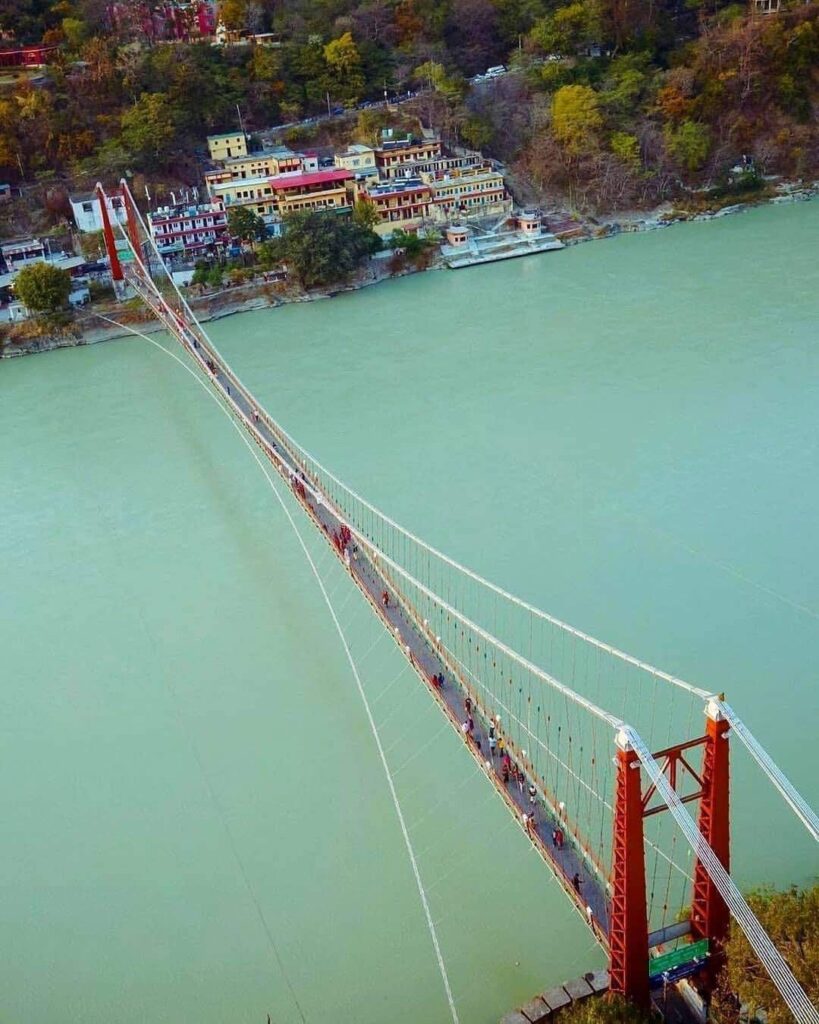
Lakshman Jhula and Ram Jhula are both functional crossings and genuine landmarks — suspension bridges over the Ganga where the movement of the town concentrates into a single point.
Walking across either of them, you pass through something: foot traffic, scooters, the river visible below, the hills on both sides. People stop at the midpoint to look downstream. Others move quickly, part of the current of the town. The view from the centre of the bridge — upstream and downstream both — is one of those moments in Rishikesh where the full geography of the place becomes visible at once.
These crossings also function as transitions between the different registers of the town. One side of the river has a different feel from the other. Crossing takes two minutes. The shift in atmosphere is immediately noticeable.
Note: Lakshman Jhula, the older of the two bridges, has been closed for structural reasons in recent years. Verify its current status before planning around it specifically. Ram Jhula remains open and serves the same purpose well.
The Activity Side: Worth Doing, Not Worth Overdoing
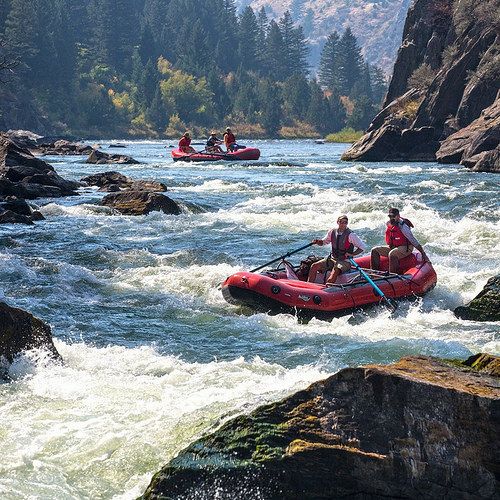
Rishikesh is one of the best places in India for white-water rafting — the Ganga upstream from town offers rapids that range from straightforward to genuinely challenging depending on the stretch and the season. It is accessible, well-organised by Indian adventure standards, and for most visitors, a memorable few hours.
The same applies to the other activity options — cliff jumping at specific points along the river, short treks into the hills above the town, bungee jumping at a site outside the main area. These are all real and they are worth doing if they interest you.
But Rishikesh built its reputation on something older than any of this, and if the activity layer becomes the entire trip, something is lost. The travellers who come back having only rafted and café-hopped often describe Rishikesh accurately but incompletely — as a pleasant stop, energetic, good for a couple of days. The travellers who also walked into the quieter parts of the town, who sat through an evening aarti, who spent time in one of the ashram areas without any particular agenda, describe it differently. As somewhere that stayed with them.
The activity side and the contemplative side are not in conflict here. They coexist, and a well-designed two to three day visit has room for both.
The Quieter Side: What Happens When the Energy Settles
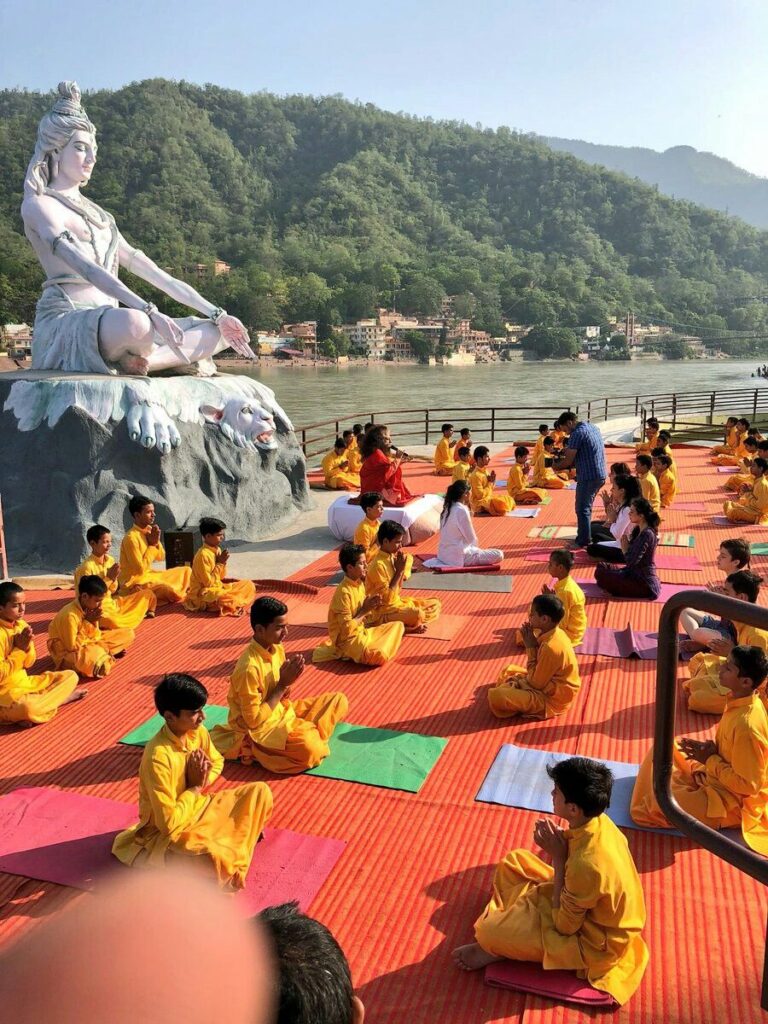
Step slightly away from the main traveller flow — the bridge areas, the popular cafés, the stretches of river that see the most activity — and Rishikesh becomes a different town.
The ashram districts have their own pace. People move with purpose or sit with patience. Conversations, when they happen, tend to be longer and slower. The river is audible but not dominant. The sensory intensity that characterises the busier parts of town reduces noticeably.
You do not need to be on a spiritual journey to appreciate this. You do not need to attend a class or check into an ashram for a week. Simply being in these quieter spaces — walking through them, sitting somewhere that doesn’t ask anything of you — adds a dimension to the trip that the activity-focused version lacks.
This is the part of Rishikesh that is hardest to plan for and most worth encountering.
The Quieter Side: What Happens When the Energy Settles
Step slightly away from the main traveller flow — the bridge areas, the popular cafés, the stretches of river that see the most activity — and Rishikesh becomes a different town.
The ashram districts have their own pace. People move with purpose or sit with patience. Conversations, when they happen, tend to be longer and slower. The river is audible but not dominant. The sensory intensity that characterises the busier parts of town reduces noticeably.
You do not need to be on a spiritual journey to appreciate this. You do not need to attend a class or check into an ashram for a week. Simply being in these quieter spaces — walking through them, sitting somewhere that doesn’t ask anything of you — adds a dimension to the trip that the activity-focused version lacks.
This is the part of Rishikesh that is hardest to plan for and most worth encountering.
The Evening Aarti: Simple, Not Spectacular
The evening Ganga aarti in Rishikesh is a regular feature of any visit — priests conducting a river ceremony at the ghats as the day closes, fire and sound and the river receiving it all.
It is worth saying honestly: this is not Varanasi. The Rishikesh aarti is quieter, smaller, and more contained. It does not have the scale or the overwhelming atmosphere of the ceremony on the Varanasi ghats. Travellers who arrive expecting something dramatic may find it understated.
But it earns its place in the day. After hours of movement and activity and the particular noise of an active riverside town, the evening aarti offers a moment of structured pause. The light on the river changes. The pace of the people around you slows. Whatever the trip has been until that point, this is a different register — and that shift is worth experiencing, even if you observe it from the edge rather than the centre.
How Many Days and How to Use Them
Two nights is the minimum for Rishikesh to make sense. Three nights is better, and for certain travellers — those who want to include a yoga class or two, or do both the adventure activities and the quieter exploration — three nights is closer to right.
The structure that works: one day weighted toward the active side — rafting or a river activity in the morning, the bridges, the busy stretches. One day weighted toward the slower side — a morning walk without a destination, time in the quieter areas, the aarti in the evening. And enough unscheduled space across both days that the town can show you something that wasn’t on the plan.
The version of Rishikesh that disappoints is the one organised entirely around activity bookings, moving from one scheduled thing to the next until the trip is full. Full is not the same as complete. The most common thing visitors say they wish they had done differently is slow down — not add more.
Where You Stay and Why It Matters
The choice of where to stay in Rishikesh shapes the entire texture of the visit in a way that is worth thinking about before you book.
Staying close to the river keeps you connected to the constant movement and sound of the town. You are in the middle of it immediately, and the energy of Rishikesh is right outside the door. For first-time visitors who want full immersion and don’t mind noise, this is usually the right choice.
Staying slightly further from the main activity areas — a little above, a little back from the busiest stretches — gives you access to the same town but with more quiet around the edges. The difference in experience is meaningful, particularly in the mornings and evenings when the contrast between the busy and the still is sharpest.
Neither position is wrong. But the decision is worth making with intention rather than defaulting to whatever is available near the most searched area.
A Few Practical Notes
Getting there: Rishikesh is approximately 240 kilometres from Delhi — a five to six hour drive. The nearest major railhead is Haridwar, about 25 kilometres away, which has frequent connections to Delhi and other north Indian cities. From Haridwar, Rishikesh is a 45-minute drive or shared taxi ride.
Movement within the town: Rishikesh is not large, but traffic in the busier areas — particularly around the bridges — can slow things considerably in peak season. Walking is almost always faster than a vehicle for anything near the river. For the ashram areas and quieter stretches, the distances are short enough that most things are on foot anyway.
Noise: The active parts of Rishikesh are genuinely noisy — river sound, traffic, the particular ambient noise of a busy traveller town. If you are sensitive to noise, the location of your accommodation matters more than almost any other factor. Ask specifically when booking.
Freedom Trail India plans private and customised journeys across Uttarakhand and the rest of India. If you are thinking about a Rishikesh visit or a broader Uttarakhand circuit — we are glad to help you work out what would actually suit you.