The Thing That Makes Nainital Different
Most hill stations spread across ridges. You move outward — up one road, down another, across to a viewpoint, back through a market. The geography invites exploration in different directions. Nainital doesn’t work that way.
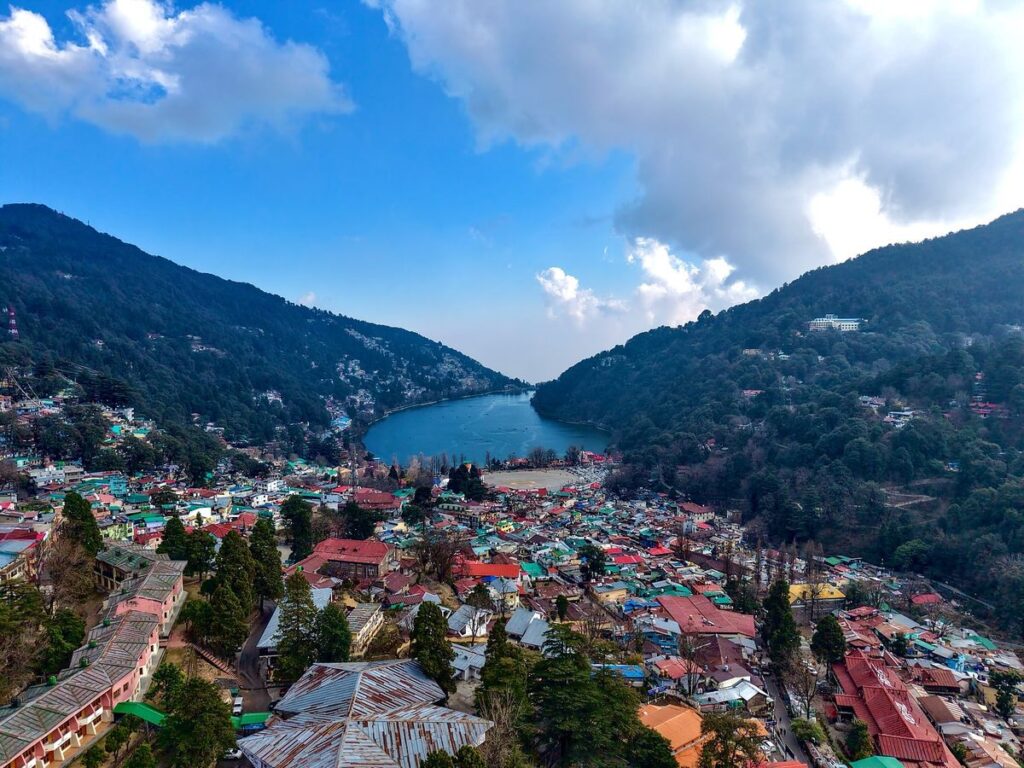
Nainital gathers around a lake. Everything — the roads, the markets, the movement of people through the day — circles back to a single centre. This is not a limitation. It is the defining character of the place. Once you understand it, the entire trip begins to make sense.
The travellers who leave Nainital underwhelmed are almost always the ones who approached it like a conventional hill station — looking for things to discover outward, finding the same streets again, and concluding that there wasn’t much to it. The travellers who leave satisfied are the ones who understood early that this town rewards return, not expansion.
Before You Decide When to Go
Nainital changes less with weather than it does with crowds. That is an unusual thing to say about a hill destination, but it is accurate. The summer months — March through June — bring the town fully alive. The lake is active, the mall road is bustling, the hotels are full. If you want Nainital at its most energetic, this is the window. The weather is genuinely pleasant by Indian plains standards, which is why families from Delhi and Lucknow have been coming here for generations.
The post-monsoon window — September through November — offers a different version of the same place. The air is cleaner, the views are sharper, the crowd has thinned. The lake looks different after the rains. If you prefer your hill towns quieter, this is the better season.
Winter brings cold and calm in equal measure. The town pulls inward. For certain travellers — the ones who actually want to sit somewhere and not do very much — a Nainital winter is quietly excellent. The honest advice: decide what kind of experience you want before you decide when to go. Both peak season and shoulder season Nainital are worth visiting. They are just different trips.
The Lake Is Not Just the Setting
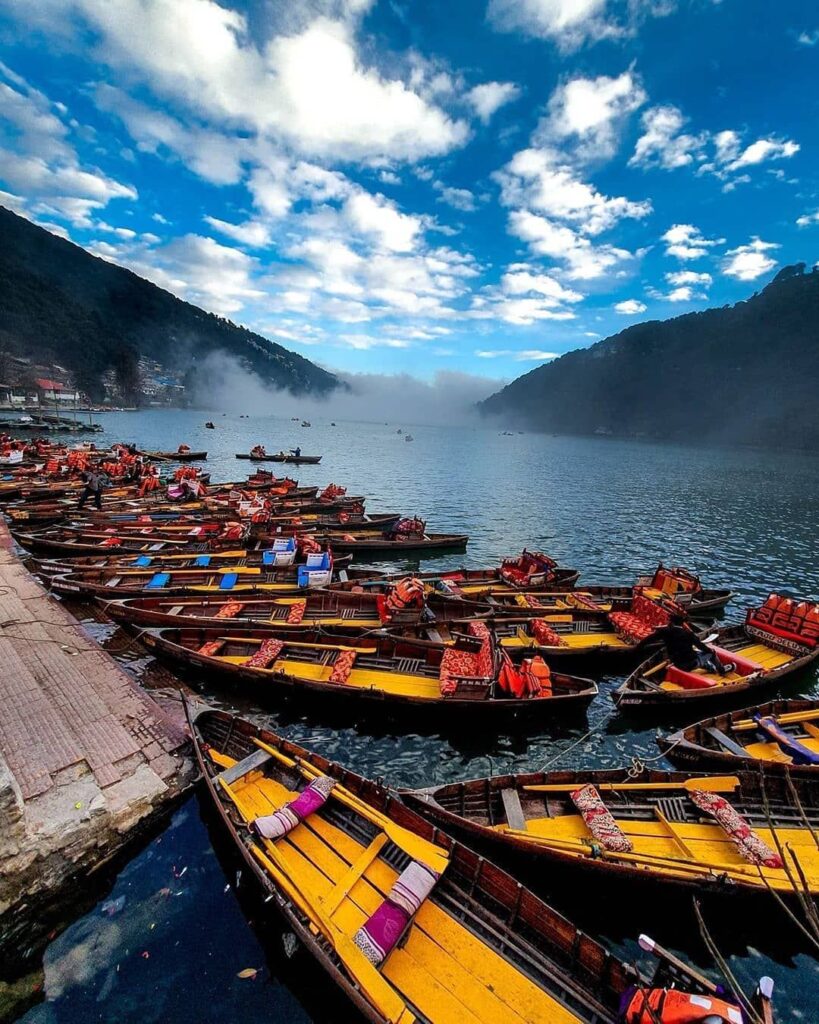
Every description of Nainital mentions the lake. What most of them don’t adequately convey is that the lake is not a backdrop for the rest of the experience — it is the experience, in a way that takes a day to fully appreciate. In the morning, Naini Lake is relatively quiet. The light is soft, the boats are just beginning to move, the reflections are clean. This is the version of the lake that stays with you.
By mid-morning, the activity builds. Boats fill. The mall road alongside gets busier. The lake becomes a social space — loud and colourful and full of movement. This version is equally real, and for certain travellers — families with young children, people who want the energy rather than the quiet — it is the better version.
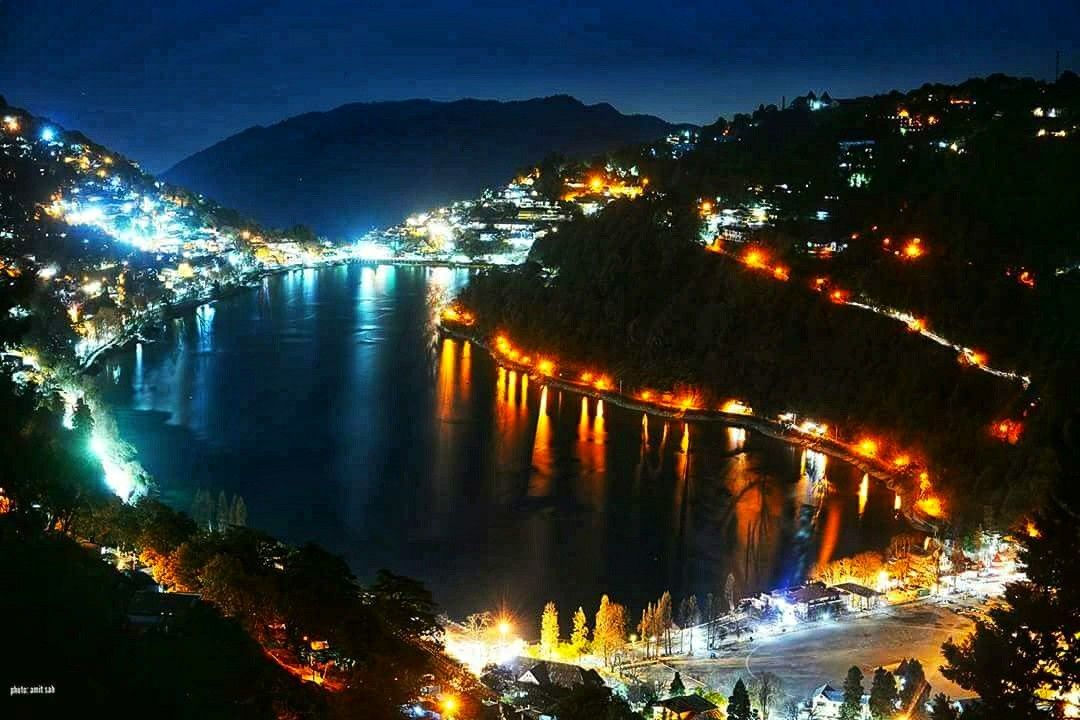
By evening, the lights come on around the water and the reflections change entirely. The same lake you walked past in the morning looks different enough that it justifies the second walk.
Boating is worth doing, but don’t let it be the only thing you do with the water. Walk the perimeter at different times of day. Let the lake show you its different moods rather than ticking it off the list in a single afternoon.
The Walk That Defines the Town
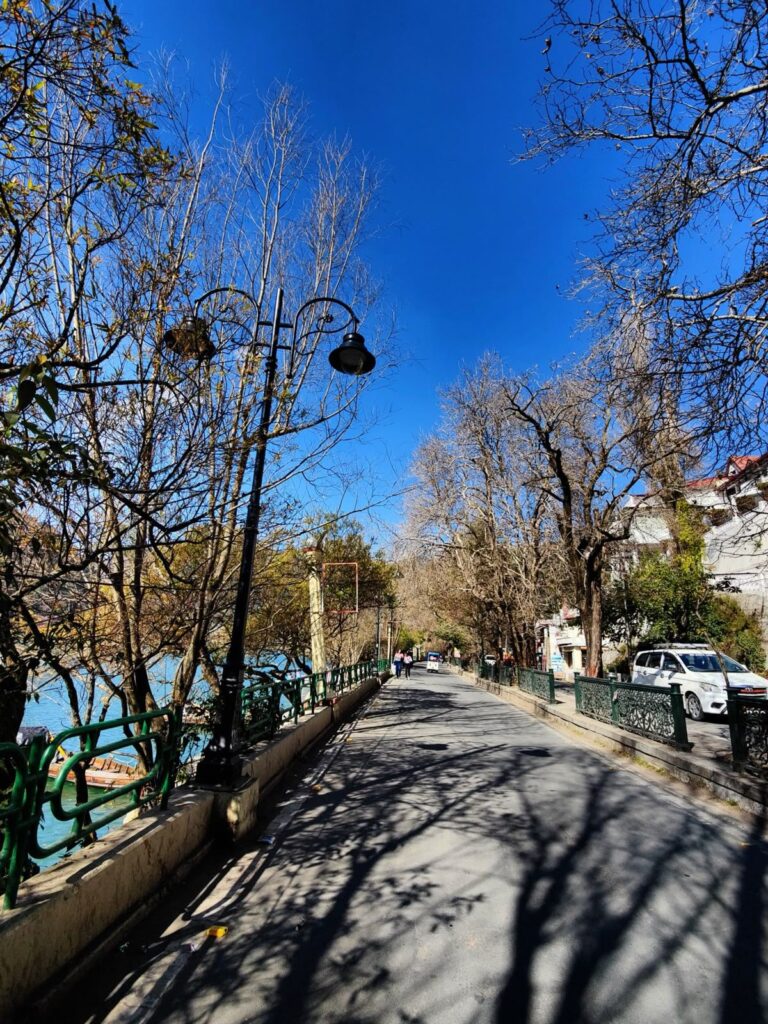
Walking around Nainital lake is one of those simple things that turns out to be more meaningful than it sounds. You move, but you don’t leave. You return to where you started — but the perspective has shifted slightly. The angle of the light has changed. A section of the promenade that was busy an hour ago is quieter now. A reflection that wasn’t there in the morning has appeared.
This circularity is not boring. It is grounding — which is exactly what a short hill getaway is supposed to feel like. The travellers who resist it, who feel they should be going somewhere new rather than returning to somewhere familiar, miss what Nainital is actually offering.
The Viewpoints: When to Step Back
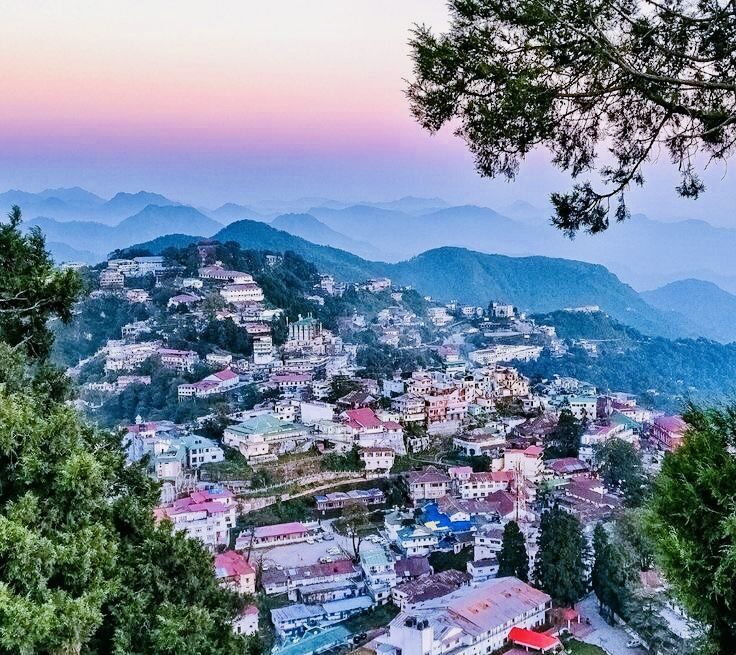
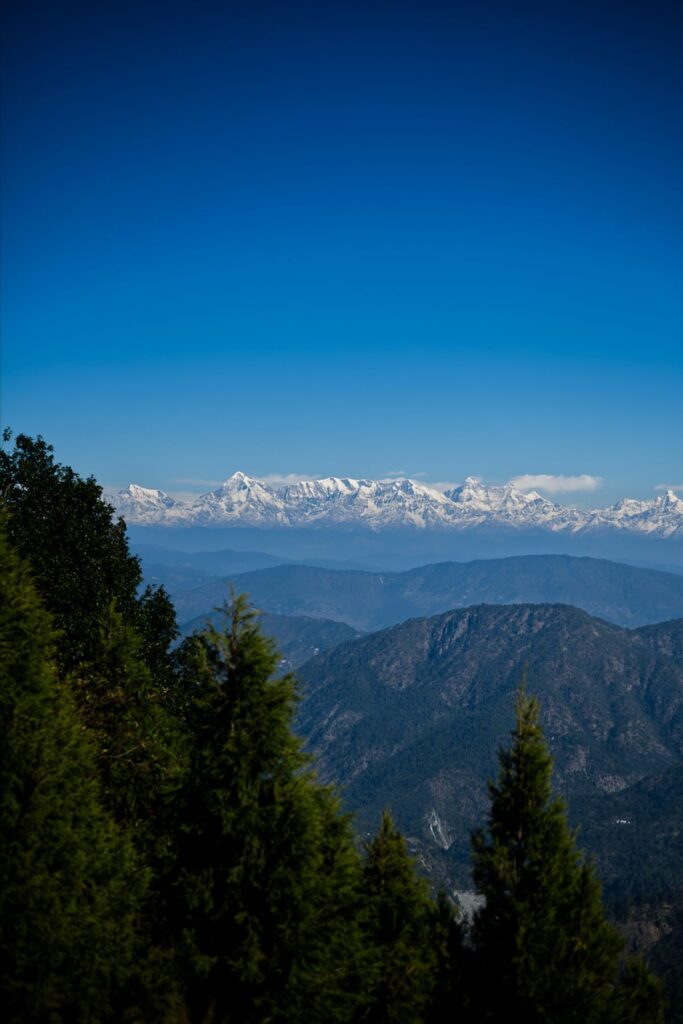
The higher viewpoints around Nainital — Snow View Point, Tiffin Top, Naina Peak for the more ambitious — serve a specific purpose. From up there, the entire town arranges itself below you. The lake becomes a shape rather than a space. The scale of what you have been moving through becomes clear. These moments add necessary contrast to the contained, lake-level experience of the town. They are worth building into the trip — not as the main event, but as the moment when the perspective shifts and the place reveals its full geography.
Snow View Point is accessible by ropeway and is the obvious choice. Tiffin Top requires a short climb and rewards with a wider, quieter view. Naina Peak is for those who want a proper morning walk with altitude. All three work. Which one suits you depends on how much physical effort you want to build into the day.
Where You Stay Matters More Than the Distance Suggests
Nainital is a small town. The distances between staying near the lake and staying slightly above it are genuinely short. But the experience of those two positions is noticeably different, and it is worth thinking about before you book. Staying close to the lake means immediate access to the activity, the promenade, the constant movement of the town. You are in the middle of it from the moment you step outside. For families and first-time visitors who want to feel the energy of the place, this is usually the right choice.
Staying slightly higher — on the hillside above the main activity — gives you better views, more quiet, and a sense of separation from the bustle below. You are still five minutes from everything, but those five minutes make a real difference to how the day feels. For couples or travellers who want rest alongside the experience, the elevated position is worth the slightly longer walk to the lake.
Neither is wrong. But they are different trips, and the decision is worth making consciously rather than defaulting to whatever is available.
How Many Days — And How to Use Them
Two nights is enough for Nainital. Three nights is better if you want the trip to feel unhurried. More than three, unless you are using it as a base for the wider Kumaon region, will likely feel repetitive.
The shape that works best: one morning for the lake early and a viewpoint in the afternoon. One day that is deliberately lighter — a long walk around the perimeter, time at a café, an evening on the promenade without any particular agenda. One morning to absorb the place one last time before you leave.
The version of Nainital that disappoints is the version where you try to fill every hour with a different activity and discover that the town does not have enough variety to sustain that approach. The version that satisfies is the one where you let the rhythm of the place set the pace rather than imposing a sightseeing schedule on top of it. This is a town for slowing down. The travellers who arrive with that understanding almost always leave wishing they had stayed one more day.
What Nainital Is — And Isn’t
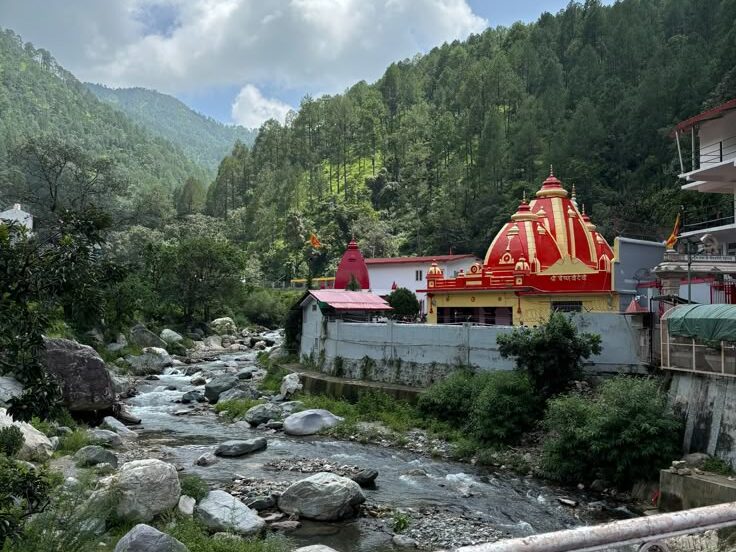
Nainital will not give you the dramatic scale of the higher Himalayas. It will not give you the remoteness of lesser-visited Uttarakhand destinations. The food reflects its popularity — North Indian staples, café culture, accessible rather than distinctive. The market is busy in season and feels like most popular Indian hill markets.
None of this is a problem. It is just an accurate description of what the place is.
Nainital is a contained town that does one thing very well: it gives you a lake, a rhythm, and a pace that is genuinely different from wherever you came from. It does not try to be more than that. The travellers who appreciate it are the ones who came looking for exactly that — not for the dramatic or the undiscovered, but for a place that holds itself together quietly around a single, beautiful centre.
That is a real thing to offer. Not every destination needs to be vast.
A Few Practical Notes
- Getting there: Nainital is roughly 300 kilometres from Delhi — a six to seven hour drive depending on traffic and road conditions. The nearest railhead is Kathgodam, about 35 kilometres away, which is well-connected to Delhi and other north Indian cities. From Kathgodam, the road up to Nainital is scenic and takes approximately an hour.
- Vehicles in town: Nainital is a small town but traffic in peak season can slow movement considerably. Walking works better than driving for anything within the central area. For viewpoints and outer areas, taxis and shared vehicles are available.
- Crowds in peak season: If you are visiting between April and June, especially around Indian school holidays, expect the town to be at its busiest. Mornings before 9am are significantly more peaceful. Plan active sightseeing early and let the middle of the day be quieter.
Freedom Trail India plans private and customised journeys across Uttarakhand and the rest of India. If you are thinking about a Kumaon or Uttarakhand trip and want to talk through what would actually work for your group — we are glad to help.