A City That Was Planned to Work
There is something that becomes apparent about Shimla once you have spent a few hours in it, and it is not immediately obvious from photographs or descriptions. The place was designed.
Not in the improvised, organic way that most Indian cities develop — not as a settlement that grew around a trade route or a religious site or a ruler’s fortress — but as a deliberate act of urban planning, carried out with clear intentions about what kind of place it should be and how it should function. The ridge along which the main town stretches was chosen specifically. The promenade was laid out to allow pedestrian movement with views on both sides. The buildings were sited in layers down the hillside with an attention to the visual effect of the whole. The vehicle restrictions in the central area — which feel modern but were, in some form, part of the original plan — preserve the experience of a town designed for people on foot.
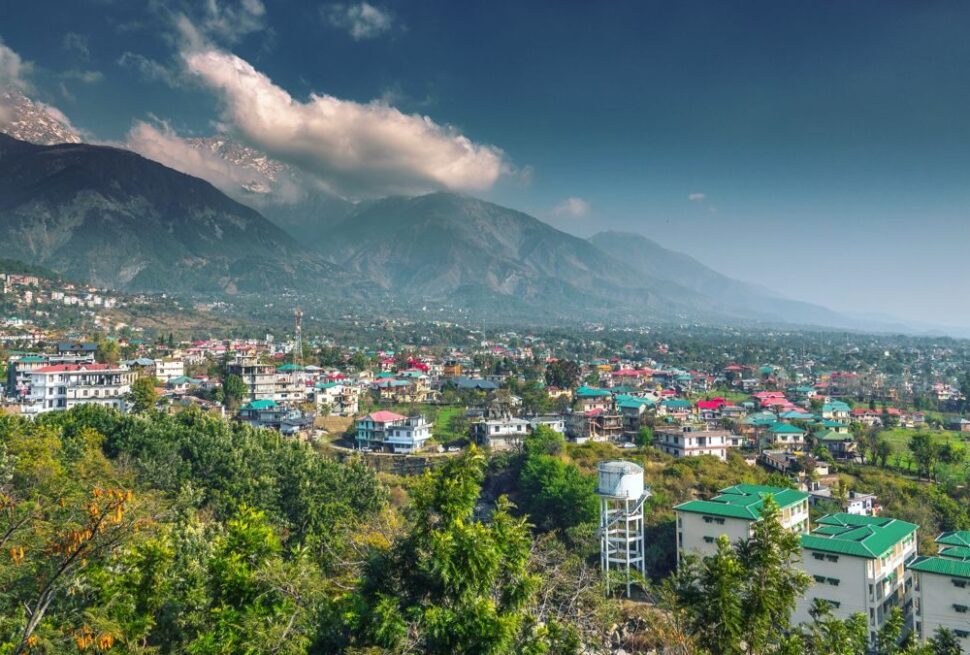
Shimla was developed as the summer capital of British India from the 1860s onward, and for nearly a century it was the administrative centre of an empire during the months when the Delhi and Calcutta plains became too hot to function. The town that was built for this purpose — the Viceregal Lodge above the main town, the churches, the half-timbered buildings of Mall Road, the carefully maintained walking paths — still exists, and in its best-preserved sections it is still legible as the colonial hill city it was designed to be.
This history shapes the visit in a way that is worth understanding before arrival. Shimla is not the untouched mountain town that some Himachal destinations are. It is a city with a specific design heritage, a significant visitor volume, and the particular combination of assets and challenges that comes with both. The experience of it depends heavily on how you engage with what it actually is rather than what you might have expected it to be.
What Shimla Is — The Honest Version
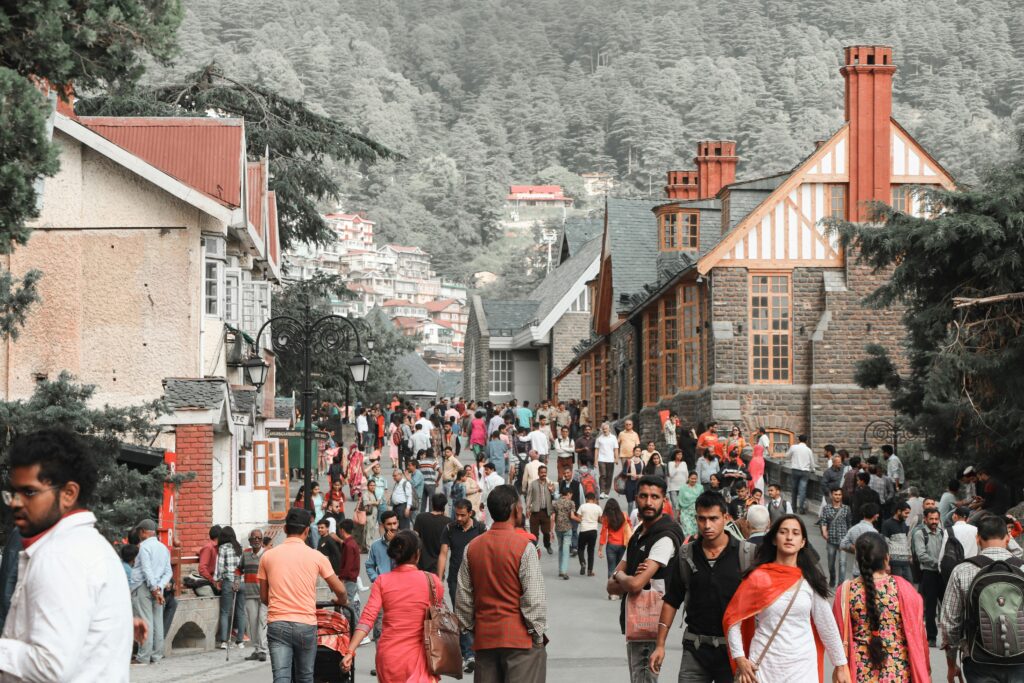
Shimla is the largest hill city in the western Himalayas and the capital of Himachal Pradesh. It is well-connected, well-developed, and one of the most visited hill destinations in India. In peak season — particularly the April to June window when families from the plains are seeking cooler temperatures — it is genuinely busy, with the Mall Road and Ridge area carrying a volume of visitors that can make those spaces feel more like a crowded promenade than the serene hilltop walk that photographs suggest.
This is not a reason to avoid Shimla. It is a reason to approach it with clear expectations and a plan that accounts for the crowd reality rather than hoping it is otherwise.
The city’s assets are real: the architecture, the elevation, the toy train approach that is one of the more extraordinary railway journeys in India, the genuine quality of the walking-centred central area when experienced at the right hour, the forested sections above and around the main town that are still genuinely wild. The crowd is manageable with timing. The heritage is accessible with attention. The experience of Shimla, done well, is substantively different from what the midday Mall Road impression suggests.
When to Go — Crowd Management Is the Primary Variable
March through June is the primary season, and for most families travelling from north India, the school holiday window in May and early June is when Shimla is at its absolute busiest. If your dates fall in this window, expect the central areas to be densely populated during the day. The solution is the same as at most crowded destinations: early mornings and late evenings, when the day visitors have not yet arrived or have already left, give you a substantially different version of the same space.
March and April — before the school holiday rush — are the best months within this window. The rhododendrons in the forests above the town are in bloom in March, the weather is excellent, and the crowd has not yet reached its summer peak.
September through November is the post-monsoon window that consistently offers the better experience. The air after the monsoon is clean in a way that the summer haze is not, the views to the surrounding ranges are sharper, and the visitor numbers drop significantly from the summer peak. October is particularly good: comfortable temperatures, clear skies, and the particular quality of autumn light in the Himalayan foothills. This is when Shimla is at its most photographically rewarding and most personally pleasant.
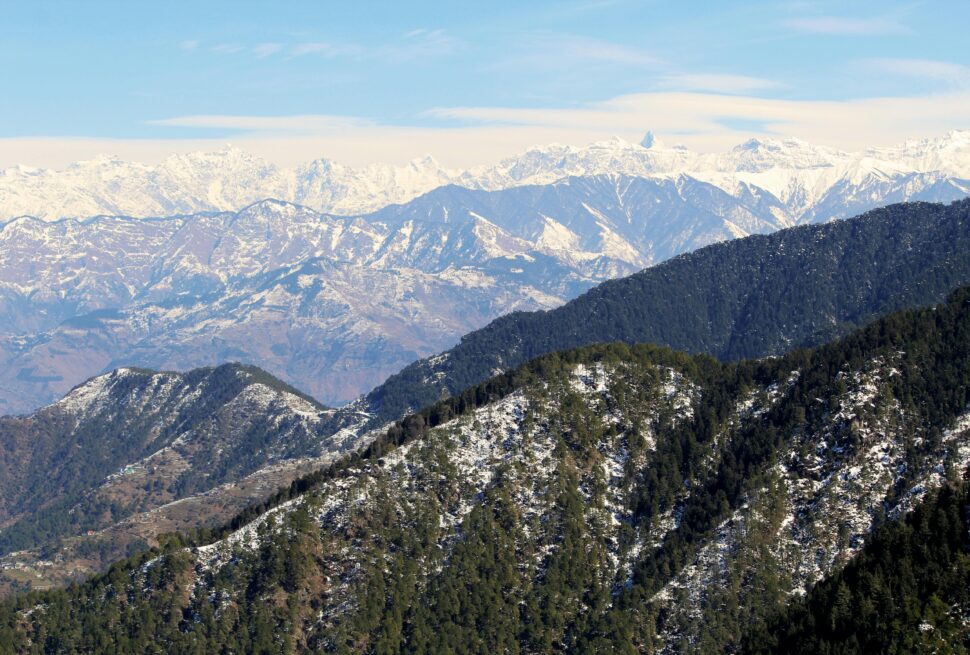
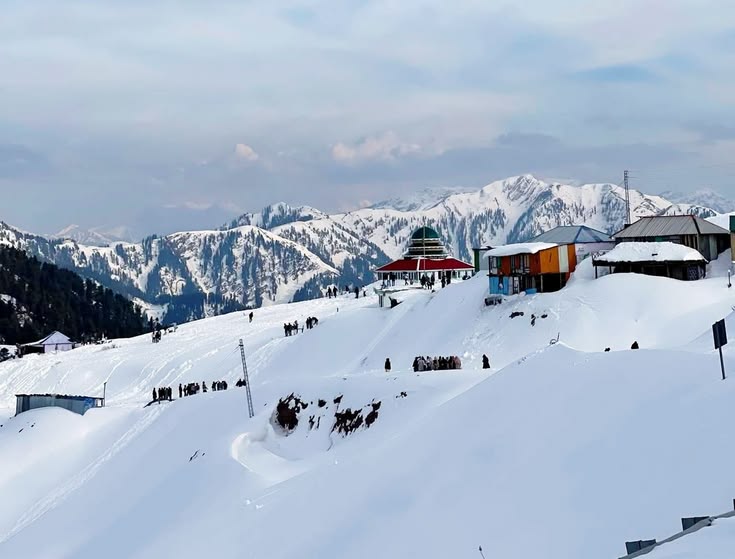
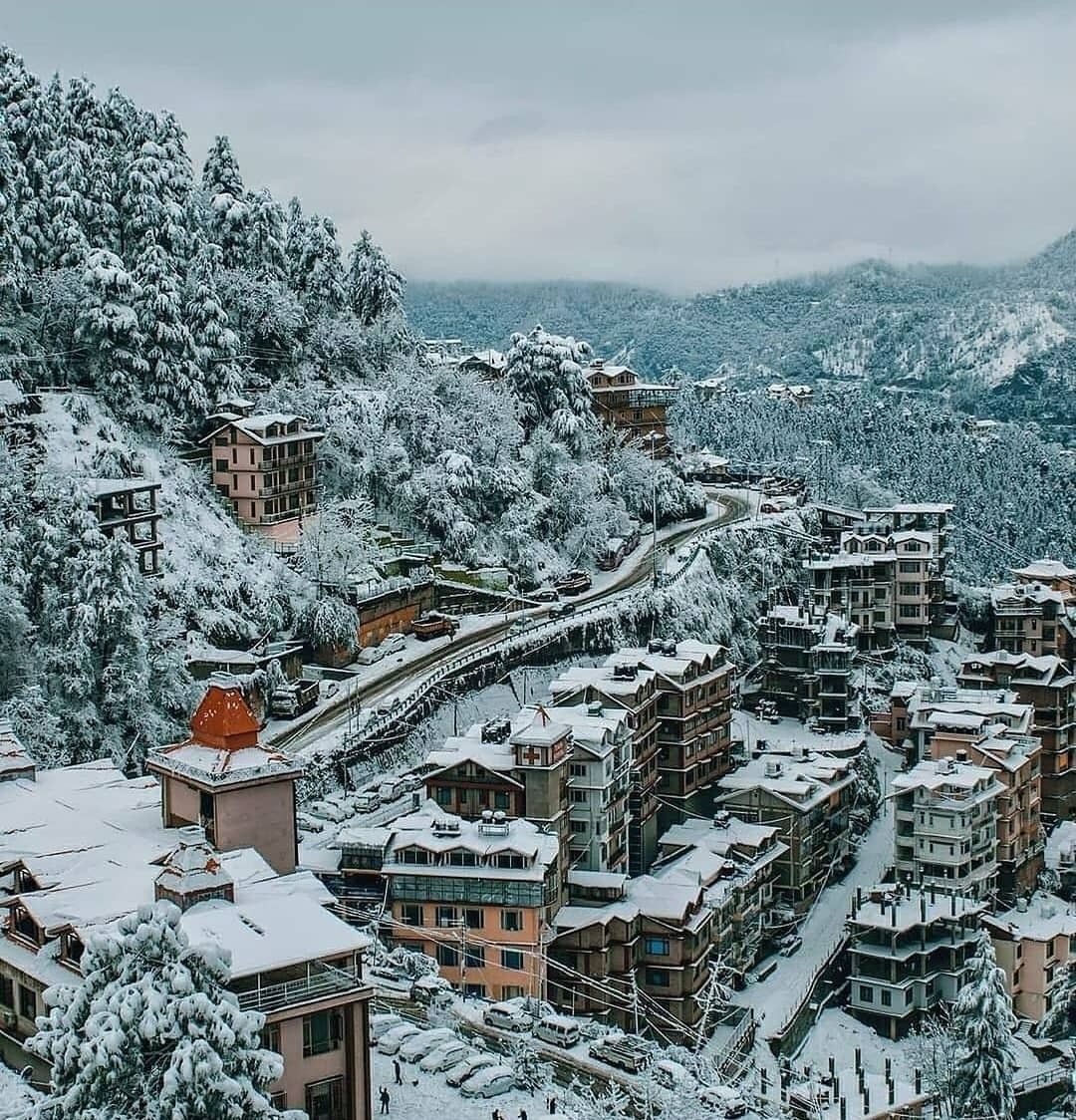
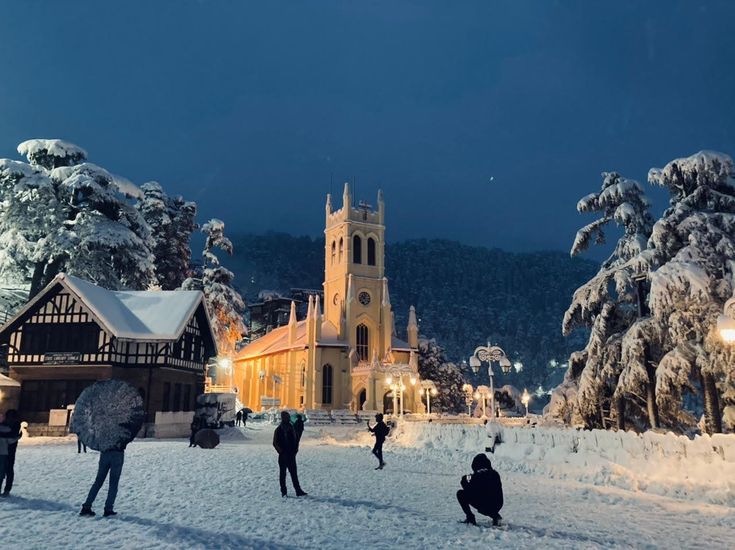
Winter brings snow, typically from December through February, and a city that quiets down considerably. The snow transforms the colonial architecture and the forested sections into something visually extraordinary — the half-timbered buildings with snow on the rooftops, the Ridge in the early morning after a fresh fall. The trade-offs are genuine cold and some disruption to road access in heavier snow periods. For travellers who specifically want the snow version of Shimla, this is the window. For those who want a comfortable visit, October or April is more reliable.
Mall Road and the Ridge — The Right Time Changes Everything
The Ridge is the open esplanade at the heart of Shimla — a wide, flat plateau that gives the entire town its most expansive views and serves as the communal space around which the city organises itself. Mall Road runs along the ridge to either side, with the main commercial and institutional buildings of colonial Shimla facing onto it.
In the middle of the day during peak season, this area carries a level of activity that can feel overwhelming if you were expecting a quiet hilltop promenade. It is not quiet. It is a working city centre and a major tourist destination simultaneously, and both functions are operating at full volume between ten in the morning and eight in the evening on busy days.
The same space in the early morning — between six and eight, before the shops have opened and before the day visitors have arrived — is a completely different experience. The Ridge in the morning, with the mountains visible on clear days and the Jakhoo hill with its temple rising above the town to the east, has a quality that the midday version makes it difficult to imagine. It is worth waking up for.
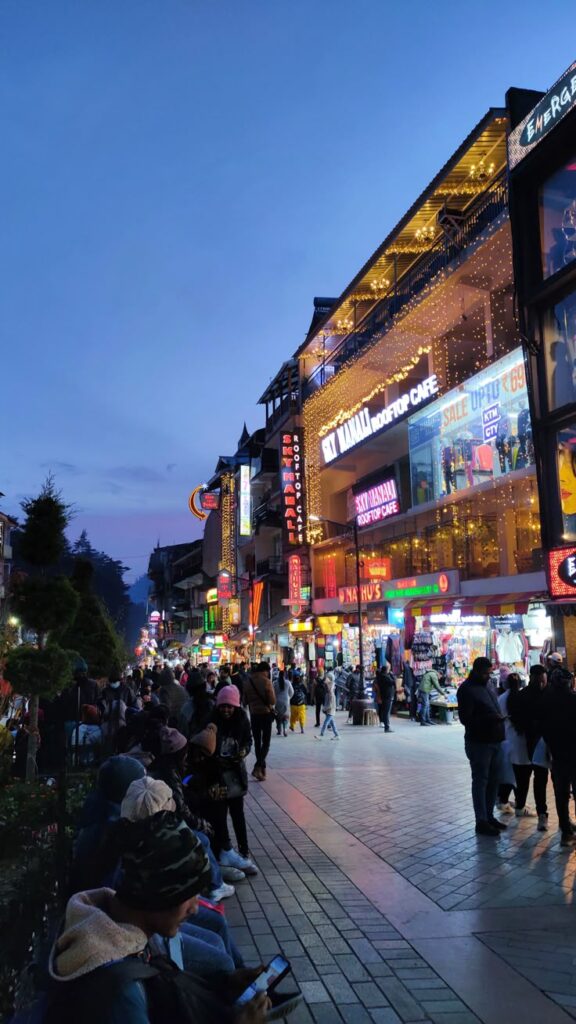
The evening version — after the day visitors have left but before the restaurants have closed — has its own quality: the lights coming on along the Mall, the activity settling into the particular rhythm of a city night, the views toward the south softening as the light fades. Both the early morning and the evening are better versions of the Ridge than the midday one, and a visit that includes both will give you a Shimla that is substantially more rewarding than one that does not.
Walking — The Design Principle of the City
Shimla’s vehicle restrictions in the central area are not an inconvenience — they are the reason the city’s central experience works as well as it does. The Mall Road and Ridge area is pedestrian, and this creates a quality of urban space that is increasingly rare in Indian cities: a place you can walk through for extended periods without the constant negotiation with traffic that most Indian streets require.
This pedestrian quality is worth taking seriously as a design intention rather than simply as a practical fact. Shimla was built for walking, and the town reveals itself through walking in a way that a vehicle-based visit does not access. The side streets that drop away from the Mall, the paths that lead through the older residential sections of the town, the walks through the forest above the main ridge — all of these require being on foot, and all of them give you versions of Shimla that the main promenade alone does not.
The Jakhoo Hill temple is one of the most worthwhile walks from the main town. The path ascends through forest from the eastern end of the Ridge to the hilltop Hanuman temple — a climb of approximately two kilometres with a significant elevation gain that takes between forty-five minutes and an hour depending on pace. The temple at the top is active and the views from the hilltop — the town spread below, the surrounding ranges visible on clear days — give you a perspective on Shimla’s geography that the town-level experience does not provide. The forest on the ascent is dense and old, with rhesus monkeys throughout; keep valuables secured and food out of sight.
The Glen Forest area, below the main town to the north, is a less-visited section of forest with walking paths through deodar and oak. It requires descending below the main ridge level and returning by a different route or by taxi, which makes it a slightly more committed excursion than the Jakhoo walk. For travellers who want to experience the forested character of the Shimla hillside away from the main tourist area, it is worth the effort.
Beyond the Ridge — Where Shimla Becomes Something Else
Moving away from the central ridge area — either upward toward the residential sections and the Viceregal Lodge, or outward along the surrounding ridges — gives you a progressively different version of the city.
The Viceregal Lodge, now operating as the Indian Institute of Advanced Study, is one of the finest examples of colonial architecture in the Himalayan region — a Scottish baronial-style building sitting on Observatory Hill above the main town, surrounded by gardens that were maintained for the administrative purposes of a summer capital. It is open to visitors for guided tours of the exterior and some of the interior. The building itself is extraordinary, and the setting — elevated above the main town with views in multiple directions — makes the forty-five-minute guided tour worthwhile. This is not a building you will see referenced in most standard Shimla guides; it is consistently undervisited relative to its quality.
The area around Chharabra and Mashobra, east of Shimla along the main road toward Kufri, begins to feel like a different kind of Himachal — orchards rather than buildings, quieter roads, the broader mountain landscape becoming more visible as the density of the main town recedes. A drive through this section on the way to or from Shimla, with stops where the views open, gives you a counterpoint to the urban centre of the city that rounds out the visit.
The Toy Train — Do Not Skip It
The Kalka-Shimla railway — a narrow-gauge line completed in 1903 that climbs from Kalka at the foothills to Shimla through ninety-six tunnels and over eight hundred bridges — is one of the more extraordinary engineering achievements of the colonial railway era and one of the more beautiful train journeys in India.
The journey takes approximately five hours in the regular service, passing through a landscape that shifts from the hot plains foothills through increasingly forested and elevated terrain to the final approach to Shimla. The view from the train — the valleys dropping below, the curve of the track visible ahead as it climbs — is one of those travel experiences that stays in the memory specifically because of how it makes the distance between origin and destination physically legible.
If your routing allows, arrive in Shimla by the toy train rather than by road. It takes longer. It is worth every additional hour. The Heritage Train service offers an elevated version of the journey with better seating and catering; the regular service is cheaper and equally scenic. Book in advance, particularly for the Heritage service and during peak season.
How Many Days and How to Structure Them
Two nights gives you enough time to experience Shimla properly without the sense that you have exhausted it. Three nights adds room for the Viceregal Lodge, the Glen Forest walk, or a day excursion toward Kufri and Mashobra without compressing the central experience.
The structure that works: a first morning on the Ridge and Mall Road, timed to arrive early before the day crowd builds, followed by the Jakhoo Hill walk in the later morning. A second day with the Viceregal Lodge and a slower afternoon in the quieter sections of the town. The toy train journey as either the arrival or departure experience rather than a separate excursion.
The mistake is spending all the time in the central area at peak hours, deciding the experience is disappointing, and not returning to it at a different time of day to discover that it is something else entirely.
Where to Stay
The accommodation decision in Shimla follows the same logic as Mussoorie: proximity to the central area versus quiet and views.
Staying on or near the Mall Road means walking access to the Ridge, the main commercial area, and the starting points for the Jakhoo and other walks. It also means the noise and activity of the busiest part of the city. For first-time visitors and those who want full immersion, this proximity is worth the trade-off.
Staying in the quieter sections above the Mall — toward Chhota Shimla or in the residential areas below the Viceregal Lodge — gives you better views, more quiet, and often the better heritage properties, which tend to be further from the main bazaar area. The walk or taxi ride to the Mall is short. For travellers who want to sleep and wake up somewhere that feels more like the Shimla of its original design, these positions are worth considering.
Practical Notes
Getting there: The toy train from Kalka is the definitive approach and worth prioritizing if the schedule allows. Kalka is well-connected by rail from Delhi — the overnight trains arrive at Kalka in the early morning, in time to board the first Shimla service. By road, Shimla is approximately 360 kilometres from Delhi — a seven to eight hour drive depending on traffic leaving the capital. Direct buses from Delhi to Shimla run regularly and are a practical option.
Vehicle restrictions: The central Mall Road and Ridge area is pedestrian-only. Vehicles drop off and pick up at designated points below the main promenade. This is easy to navigate once you understand the system but can be confusing on first arrival. Your accommodation can advise on the specific drop-off point relevant to where you are staying.
Monkey precautions: The rhesus macaque population in Shimla is large, confident, and experienced in extracting food from visitors. Keep food covered and secured, do not eat in the open on the Ridge or near Jakhoo Hill, and be aware of bags and cameras in the more heavily populated monkey areas near the temple.
Freedom Trail India plans private journeys through Shimla, the Himachal Pradesh circuit, and across northern India. If you are building a Himachal itinerary and want honest advice on how to structure the time — we are glad to help.