The Moment That Almost Everyone Remembers
There is a specific moment that travellers to Udaipur tend to describe when asked what the city was like.
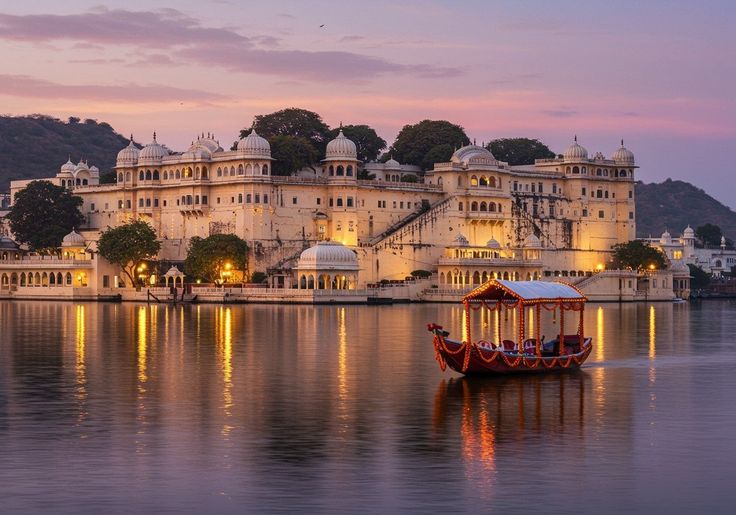
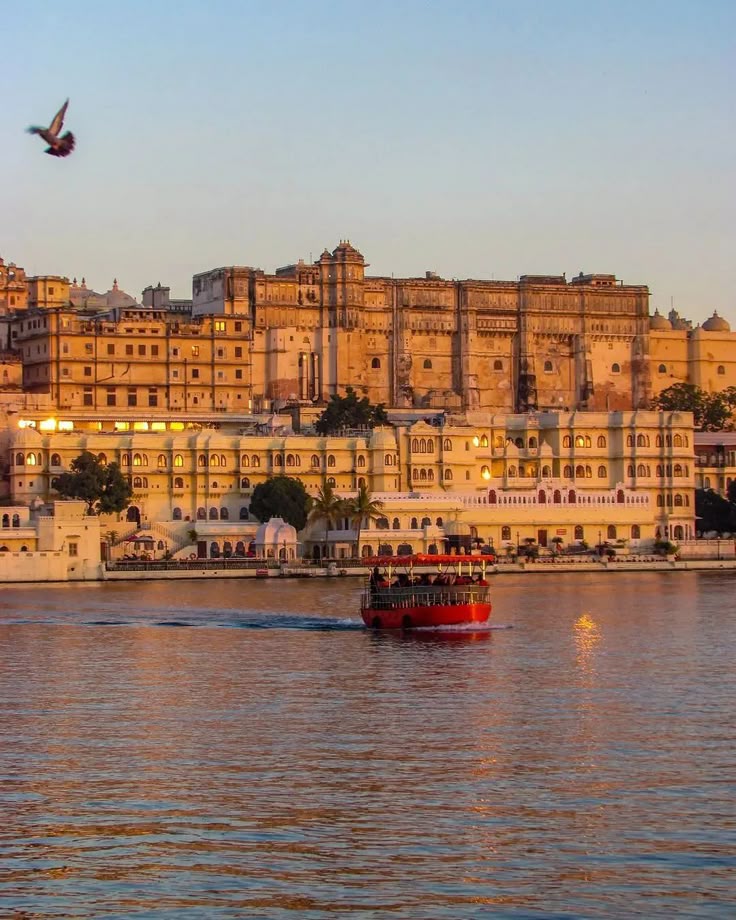
They are on a rooftop — the exact rooftop varies but the experience is consistent. It is late afternoon, moving toward evening. The light over Lake Pichola has shifted from its midday flatness into something warmer and more directional. The City Palace, which has been visible all day as a massive white complex on the far side of the lake, is beginning to reflect the last of the direct sun. A small boat is crossing the water somewhere below. And without anyone explaining the significance of what is being looked at, the scene simply lands — quietly, completely, without requiring anything additional from the viewer.
This is what Udaipur does, and it does it consistently. It is a city that has been arranging itself around this quality for four and a half centuries, since Maharana Udai Singh II chose this particular system of lakes and surrounding hills as the site for his new capital in 1559. Every decision since then — the placement of the City Palace, the positioning of the island pavilions, the way the old city crowds toward the water — has been shaped by the same logic: that the lake is the centre of everything, and everything else should reflect that.
What this means practically for the visitor is that Udaipur is not a city you cover. It is a city you settle into. The travellers who approach it with a sightseeing schedule and move efficiently between monuments leave having seen Udaipur. The travellers who give it time, who let the same lake look different at different hours, who understand that sitting on a ghat for an hour is not wasting time — those travellers leave having actually been there.
When to Go — The Lake Is Central to Everything
The season in Udaipur shapes the experience through one primary variable: the water level of Lake Pichola.
October through February is the window when Udaipur is most fully itself. The post-monsoon lake is at or near its full level — the island palaces sit properly in the water, the reflections are clean, and the full visual logic of the city is readable. The weather is comfortable for walking, for boat rides, for the long evening hours on rooftops. This is the version of Udaipur that the city’s reputation is built on, and it earns that reputation consistently.
December and January bring the highest visitor numbers and genuinely beautiful conditions. The evenings are cool enough to require a light layer, the mornings have a clarity that the warmer months lack, and the city’s hospitality infrastructure — its rooftop restaurants, its heritage properties, its guided experiences — is operating at full capacity. The trade-off is the crowds, particularly at the City Palace and at the most popular rooftop restaurants. Arriving early everywhere, and being willing to eat dinner at a slightly off-peak hour, solves most of this.
February and March offer a good middle ground — the conditions are still excellent, the crowd pressure has eased slightly from peak winter, and the warm afternoons are pleasant rather than difficult.
Monsoon — July through September — is Udaipur at its most atmospheric and its most complex. The lakes refill, sometimes dramatically. The Aravalli hills above the city turn green. The light has a quality that photographers specifically travel for. The city quiets considerably. For travellers who want a more personal and less curated experience of Udaipur, this season has genuine appeal. The trade-offs are real — rain can disrupt plans, the lake can occasionally flood the lower ghat areas, and some of the boat services operate on reduced schedules. Go with flexibility built into the itinerary rather than fixed plans.
Summer is the honest caveat: by May and June, Udaipur’s beauty is still present but the heat makes extended time outdoors difficult. The lake may be lower from pre-monsoon drying. The city adjusts to early mornings and late evenings, but the quality of the visit is meaningfully different from the October to March experience.
The City Palace — Take Your Time and Use a Guide
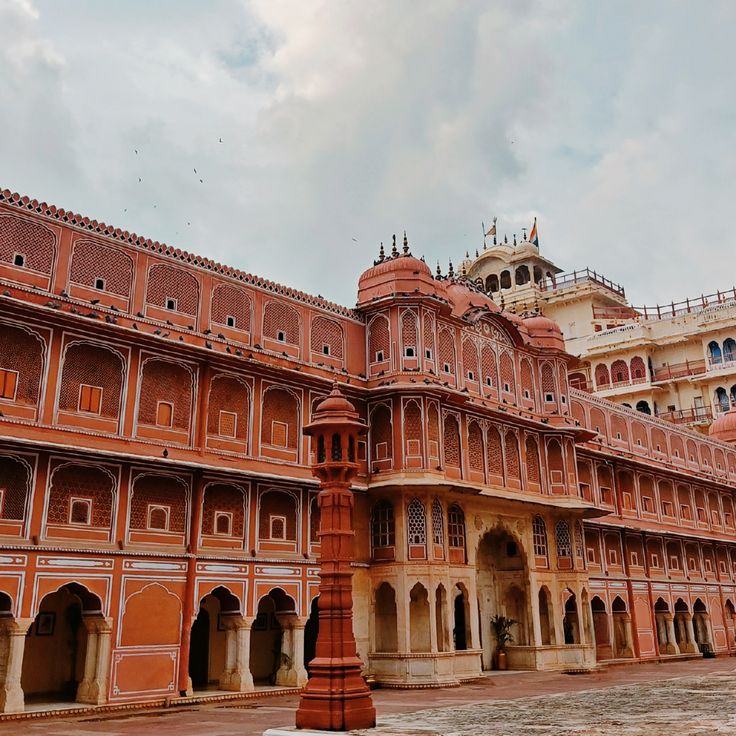
The City Palace is the largest palace complex in Rajasthan — a structure that grew across several centuries as successive rulers of the Mewar kingdom added to what their predecessors built. This is important to understand before entering, because it explains why the palace does not feel like a single building. It is an accumulation of buildings, each reflecting the priorities and aesthetics of a different period, connected by courtyards and passageways and ramps that follow a logic that becomes clear once you understand the timeline.
Moving through the City Palace quickly produces the experience of a series of rooms — decorated, historically labelled, physically impressive — without the connecting narrative that makes sense of what you are seeing. Moving through it slowly, or with a guide who knows the chronology, produces something quite different: a coherent story of a kingdom that maintained its independence through three centuries of Mughal pressure, that developed distinctive artistic traditions in painting and architecture, and that eventually negotiated its relationship with the British on terms that allowed the royal family to continue in a form that is still visible today.
Give the City Palace a minimum of three hours. If you have genuine interest in the history of the Mewar kingdom — and it is one of the most extraordinary stories in Rajasthani history — four hours is not too many. The museum within the palace complex is among the best-presented in Rajasthan. The view from the upper terraces over Lake Pichola, with Jag Mandir and Jag Niwas in the middle of the water, is one of the defining views of the city.
A guide for the City Palace is worth booking — not as an optional enhancement but as the thing that converts impressive rooms into a comprehensible history. The audio guide available at the entrance is a reasonable alternative if a private guide is not feasible.
Lake Pichola — The Centre That Everything Returns To
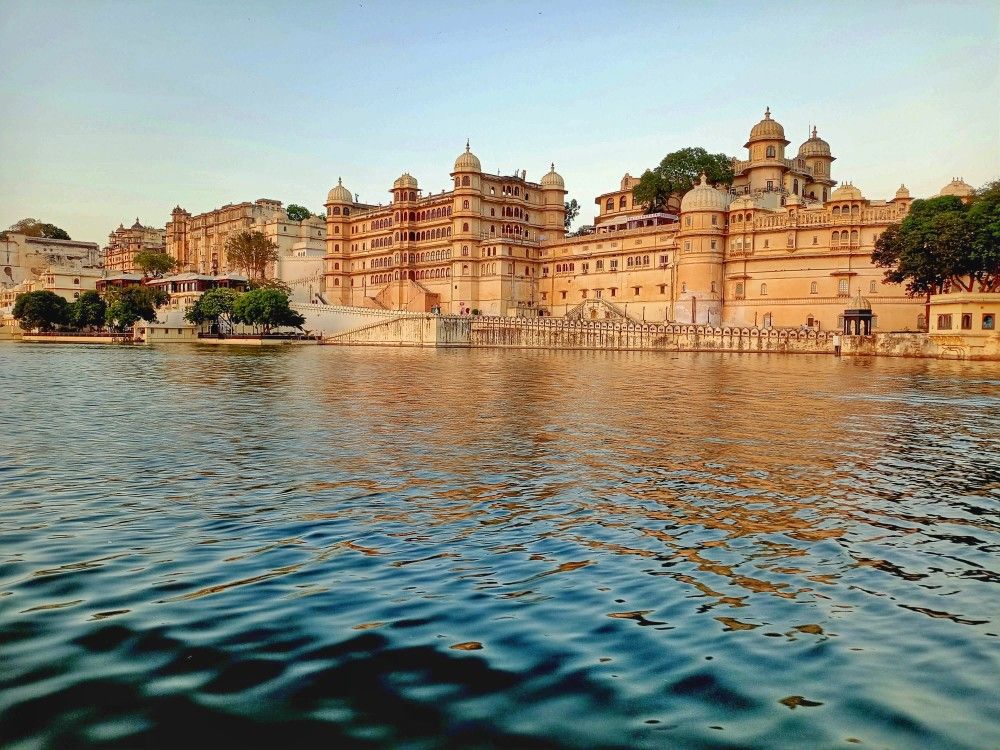
Lake Pichola is not a background element in Udaipur. It is the reason the city is arranged the way it is, and the quality of any stay in Udaipur is directly affected by how much time is spent at and on the water.
The lake changes character across the day in ways that are worth experiencing rather than assuming. Early morning — before the city has fully started and before the boat services have begun their main operating hours — the water is at its most still. The reflections of the palace and the surrounding ghats are clearest at this hour. The ghats themselves are occupied by people engaged in the ordinary morning activities of a city that borders a sacred body of water: washing, prayer, the quiet routines that have been happening here for centuries.
By afternoon, the light flattens and the lake becomes more visually active — boats moving between the ghats and the island palaces, the increased activity of a city in its working hours. By evening, the light returns and the lake becomes, briefly, extraordinary: the copper tones of the sunset reflected across the water, the City Palace illuminated on its hill, the islands glowing from within.
A boat ride on Lake Pichola is not optional. It is the best way to understand the geography of the city — to see the City Palace from the water’s level, to understand the relationship between the lake and the surrounding hills, to be inside the reflection that you have been looking at from the rooftops. The sunset boat ride is the most popular version and deservedly so, but a morning ride on a quieter lake is a different experience with its own particular quality.
The Old City Lanes — Where Udaipur Becomes Personal
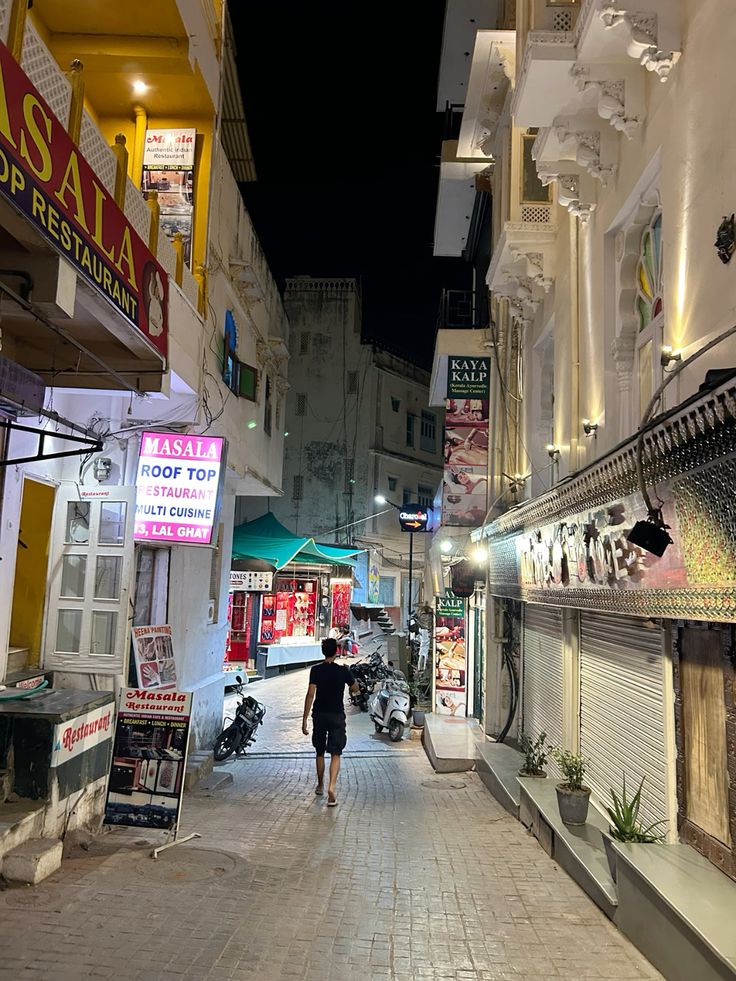
Between the City Palace and Jagdish Temple, and extending through the streets behind the main lake-facing promenade, lies the old city of Udaipur — a dense and genuinely interesting neighbourhood that most visitors pass through quickly and few give the attention it deserves.
The miniature painting tradition associated with the Mewar kingdom has maintained a genuine presence in these lanes — studios where artists still work in the classical style, producing paintings that range from traditional devotional subjects to contemporary adaptations of the form. The quality varies considerably across what is available, and the distinction between a painting produced by a trained artist working in an authentic tradition and one produced for the tourist market is sometimes subtle. If you are interested in buying, take time to understand what you are looking at before purchasing. Ask about the artist’s training and background. The good studios welcome the conversation; the ones that push you toward a quick sale are giving you information about their product.
Beyond the art studios, the lanes contain the ordinary life of a city that has been inhabited continuously since the sixteenth century. Small temples set into building facades. Neighbourhoods where the transition from tourist-facing commerce to residential streets happens in a single turn. A chai stall that has no interest in being picturesque and is therefore more interesting than the ones that do. Walk without a destination, turn when something looks interesting, and give the old city at least one unstructured morning or afternoon during the stay.
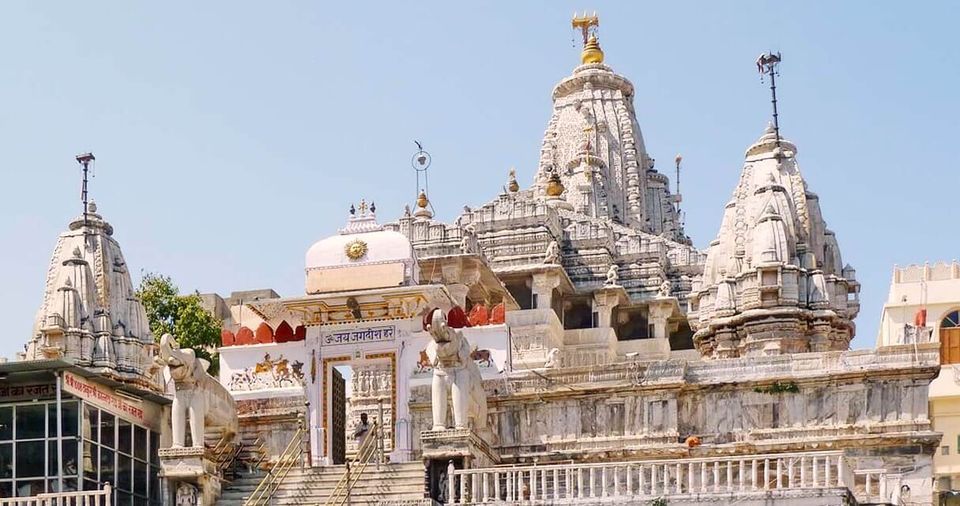
Jagdish Temple — Be Present to What It Is
Jagdish Temple, a five-minute walk from the City Palace entrance, is a seventeenth-century Indo-Aryan style temple dedicated to Vishnu that has been in continuous active use since it was built. It is not the most architecturally elaborate temple in Rajasthan, but it is one of the most continuously alive — bells ringing, priests conducting worship, devotees arriving with offerings throughout the day and evening.
The mistake is to approach it as a monument. It is not a monument. It is a working religious space that visitors are permitted to enter, and the way to experience it is to enter and be present to what is actually happening rather than to move through it with the pace and attention appropriate to a museum gallery.
Take your shoes off at the entrance. Stand somewhere that is not in the way of the movement of worship. Give it ten or fifteen minutes without an agenda. The contrast between the ordinary tourist experience of most of Udaipur’s sights and the active religious life of Jagdish Temple is part of what gives a visit to Udaipur its full texture.
Sajjangarh — Go for the Perspective, Not Just the Sunset
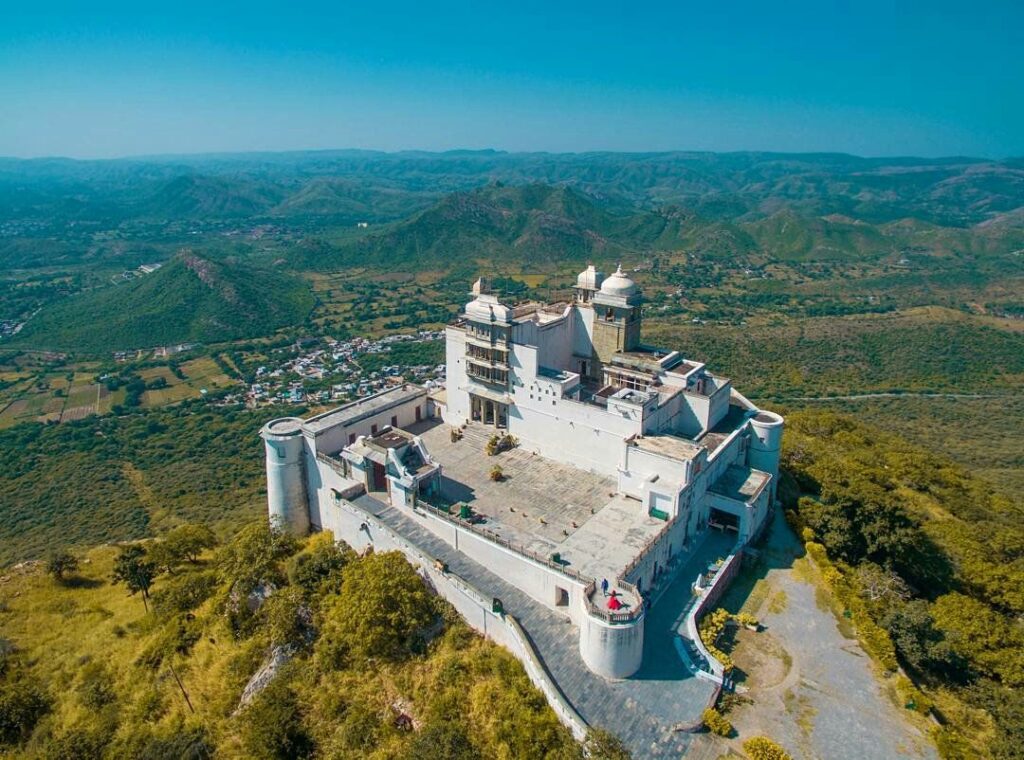
Sajjangarh — the Monsoon Palace — sits on a hill above the city, visible from the lake and from most of the old city as a pale structure against the Aravalli skyline. The drive up takes about twenty minutes from the old city, and what you find at the top is a partially restored palace building and a terrace with a view that reframes the entire geography of Udaipur.
The lakes — Pichola, Fateh Sagar, and others — are all visible from here simultaneously. The city arranges itself around the water in a way that makes sense from above: how the old city clusters at the lake’s edge, how the newer city extends beyond, how the surrounding hills contain the whole thing. The scale of the lake system is not apparent from ground level; from Sajjangarh, it becomes clear.
The sunset from Sajjangarh is popular and the crowds reflect that popularity. Go somewhat before the sunset rush — the view in the late afternoon light before the golden hour begins is excellent, and you will have more space and time to look without the compression of a large number of people attempting the same photograph simultaneously. Stay for the sunset if you wish, but do not leave immediately after it: the light in the fifteen minutes after sunset, with the lakes reflecting a sky that is still lit from below the horizon, is often the best version of the view.
Day Trips From Udaipur — Two Worth Making
Kumbhalgarh — approximately ninety kilometres from Udaipur and two to two and a half hours by road — is a fifteenth-century fort that is simultaneously one of the most significant Rajput fortifications in India and one of the most undervisited by travellers on the standard Rajasthan circuit. The wall that surrounds its perimeter — approximately 36 kilometres — is the second longest continuous wall in the world after the Great Wall of China, a fact that is not widely known and that gives you some indication of the scale of what you are looking at. The fort, and the wildlife sanctuary that surrounds it, make for a genuinely excellent full-day excursion from Udaipur.
Ranakpur — about ninety-five kilometres from Udaipur in the opposite direction — contains one of the finest Jain temple complexes in India, built in the fifteenth century in pale marble and carved with an intricacy that rewards extended looking. The main temple has 1,444 individually carved pillars, each different from the others. The complex is in a forest setting that gives it a quality of isolation unusual for a major pilgrimage site. Combined with a stop at Kumbhalgarh on the same day if the routing works, or as a standalone excursion, Ranakpur is worth the journey.
Both of these trips work well as third or fourth day additions to an Udaipur stay. They require an early start and a full day, and they give the visit a dimension that the city itself — for all its qualities — cannot provide.
Where to Stay — The Lake Decides Everything
The accommodation decision in Udaipur is more consequential than in most Rajasthan cities, and the primary variable is straightforward: does your room face the lake?
A lake-facing room — or at minimum a property from which the lake and the City Palace are visible — changes the quality of the stay in ways that are difficult to overstate. The lake is not a background in Udaipur. It is the defining visual element of the city, and having it accessible from your window or your balcony means that the experience of the city is continuous rather than episodic. You see it in the morning light. You see it when you return in the afternoon. You see it at dusk when it does the thing that made you understand why people come here.
The heritage properties that line the lake-facing streets and ghats of the old city range from modest guesthouses with rooftop access to well-established heritage hotels with significant history. At almost every price point, a lake-facing property in the old city is a better experience than a more comfortable property away from the water. The noise in the old city is real and the lanes are narrow and vehicles cannot always access the door. These are real trade-offs. They are worth making for the quality of what the right location gives you.
If budget requires a property further from the lake, prioritise at least one evening at a lake-facing rooftop restaurant. The view cannot be replicated from elsewhere in the city.
Practical Notes for International Visitors
Getting there: Udaipur’s airport is well-connected to Delhi, Mumbai, and other major Indian cities, with direct flights from most hubs. By train, Udaipur is accessible from Jaipur (approximately five hours on the fastest services), from Delhi (twelve to fourteen hours by overnight train), and from Ajmer/Pushkar (three to four hours). The train journey to Udaipur — through the Aravalli landscape — is one of the more scenically interesting rail journeys in Rajasthan.
Art shop caution: Udaipur has a well-established and sometimes persistent set of practices around directing tourists to particular art shops, often via taxi drivers, auto-rickshaw drivers, or individuals who approach you near the City Palace or the lake. The art is real — Udaipur miniature painting is a genuine tradition — but the commission structures involved can significantly inflate prices. Buy art because you want it and have understood what you are buying, not because someone has created urgency around the decision.
Boat services: Official boat services on Lake Pichola operate from the City Palace boat jetty. Private operators offer similar services from other ghat locations. The official service is straightforward and well-priced. Book the sunset ride early in the day during peak season, as the capacity is limited and this is the most popular activity in the city.
Lake levels: In years with poor monsoon rainfall, Lake Pichola can drop significantly by late spring and summer, sometimes to the point where the island palaces are no longer surrounded by water in the visual sense. This does not ruin a visit but does change the quality of the boat experience and the reflections. October through February this is almost never a concern; later in the year it is worth checking current conditions.
Freedom Trail India plans private journeys through Udaipur, across the Mewar circuit, and throughout Rajasthan. If you are building a Rajasthan itinerary and want honest advice on how to structure the Udaipur section — or how it connects to the rest of the trip — we are glad to help.