
- Best for: Spiritual travellers · Coastal journeys · Slow explorers · South India circuits
- Ideal duration: 1–2 days
- Best time to visit: October to March
Why Rameshwaram Feels Different From Anywhere Else
The approach to Rameshwaram changes something quietly.
You drive across the Pamban bridge, and suddenly, land feels less solid.
Water stretches on both sides.
The horizon opens.
And the idea of distance becomes more visible.
By the time you enter the town, the shift is already complete.
This is not just another destination.
👉 It feels like you’ve reached the edge of something
Understanding Rameshwaram Before You Visit
Rameshwaram is one of the most important pilgrimage sites in India, associated with Lord Rama and the Ramayana.
But beyond its religious significance, the place itself carries a different kind of presence.
It is not built around expansion.
It is built around position.
A narrow island, surrounded by sea, connected to the mainland by a single route.
And that geography defines the experience.

When to Visit (And What It Actually Feels Like)
From October to March, the climate is more comfortable.
The sea breeze balances the temperature, and movement around the town feels manageable.
Summers can feel intense due to heat and humidity.
But regardless of season, the environment remains open and exposed.
👉 Rameshwaram is shaped more by its location than its weather
The Temple — Structure Within Stillness
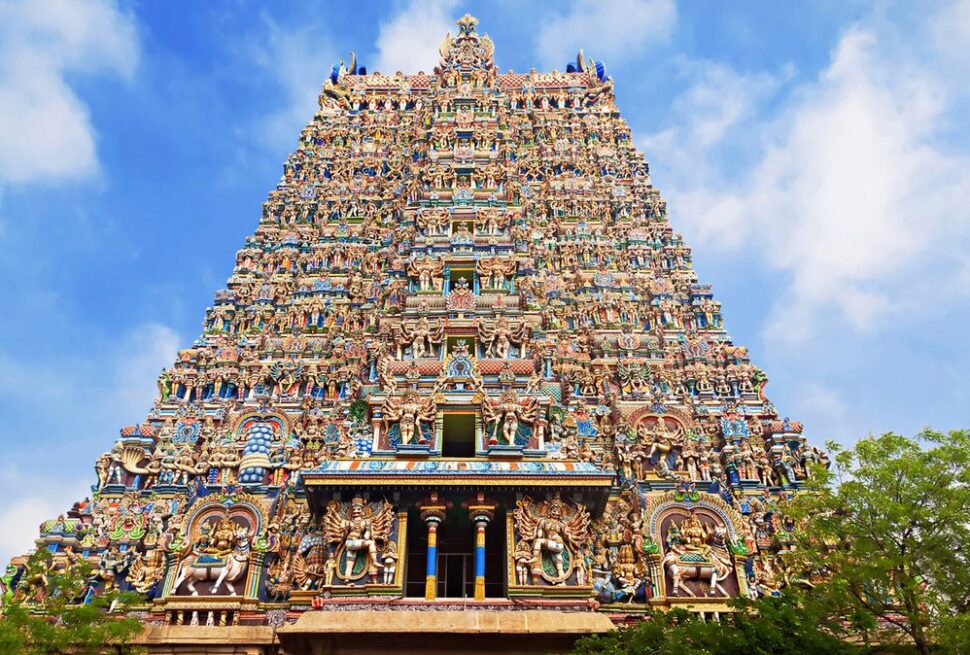
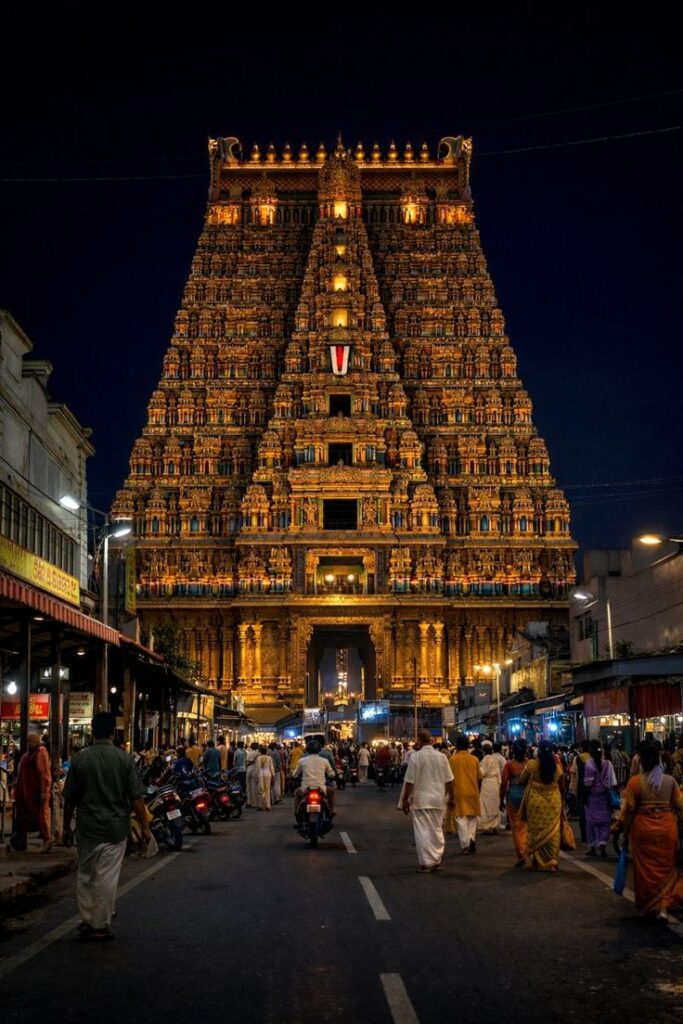
The Ramanathaswamy Temple is the central experience.
But like Madurai, it is not just a monument.
It is active, continuous, and deeply rooted in ritual.
What stands out immediately are the corridors.
Long, repeating, almost endless.
Walking through them creates a rhythm — steps, pillars, light, shadow.
Unlike many temples, the experience here feels less dense and more extended.
👉 It gives you space within structure
The Ritual Experience — Moving Through Process
For many visitors, the temple experience includes rituals.
These are not quick or simplified.
They involve movement, sequence, and time.
And that changes how you engage with the space.
You are not just observing.
👉 You are participating in a flow that has existed for generations
The Sea — Always Present, Even When You Don’t See It
Even when you are inside the town, the sea is never far.
You feel it in the air.
In the wind.
In the openness of the surroundings.
At places like Agni Theertham, the connection becomes direct.
Water, people, ritual — all coming together at the edge.
But unlike crowded coastal cities, the sea here feels quieter.
Dhanushkodi — Where the Land Ends
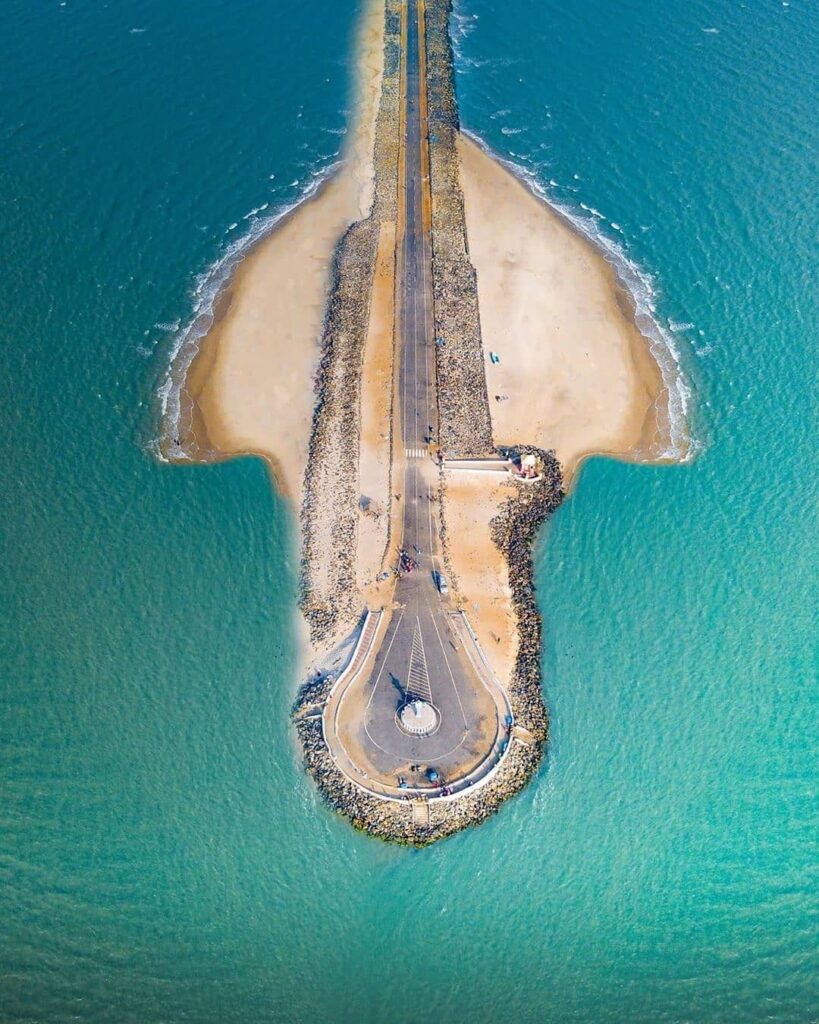
Further ahead lies Dhanushkodi.
A stretch of land that feels almost unfinished.
Minimal structures.
Open sky.
Sea on both sides.
Remnants of what once existed, now largely gone.
Standing here feels different.
Not dramatic.
Not overwhelming.
👉 Just quiet, open, and final
Movement in Rameshwaram
Movement here is simple.
Short distances, limited routes, and a natural sense of direction.
You are either moving toward the temple
or toward the sea.
And that simplicity shapes the experience.
Where You Stay (Keep It Practical and Close)
Accommodation in Rameshwaram is functional.
Staying close to the temple area makes movement easier, especially if you are participating in rituals.
Comfort matters, but expectations should remain grounded.
Because here, the focus is not on the stay.
👉 It is on the place itself

How to Plan Your Time (Without Overbuilding It)
One to two days is enough.
But like similar destinations, the experience is not about covering multiple points.
A simple flow works:
- temple
- sea
- Dhanushkodi
And time in between.
Because Rameshwaram does not require a packed plan.
👉 It works better when left slightly open
Final Thought
Rameshwaram does not try to hold your attention with variety.
It offers something simpler.
A place where land, sea, and belief meet — without needing explanation.
If you move through it quickly, it may feel limited.
If you slow down, it begins to feel complete.
Not because there is more to see.
But because you have reached a place where there is less to add.