
- Best for: Culture seekers · History lovers · Thoughtful travellers · Art and architecture interest
- Ideal duration: 1–2 days
- Best time to visit: October to March
Why Khajuraho Feels Different From Other Historical Places
Khajuraho surprises people.
Not because of its size.
Not because of scale or crowds.
But because of what it represents.
You walk into the temple complex expecting architecture —
and you find stories carved into stone.
Some familiar.
Some unexpected.
Some that make you pause a little longer than you planned.
And gradually, you realise:
This is not just about temples.
👉 It’s about expression — of life, of human experience, of things usually left unspoken.
Understanding Khajuraho Before You Visit
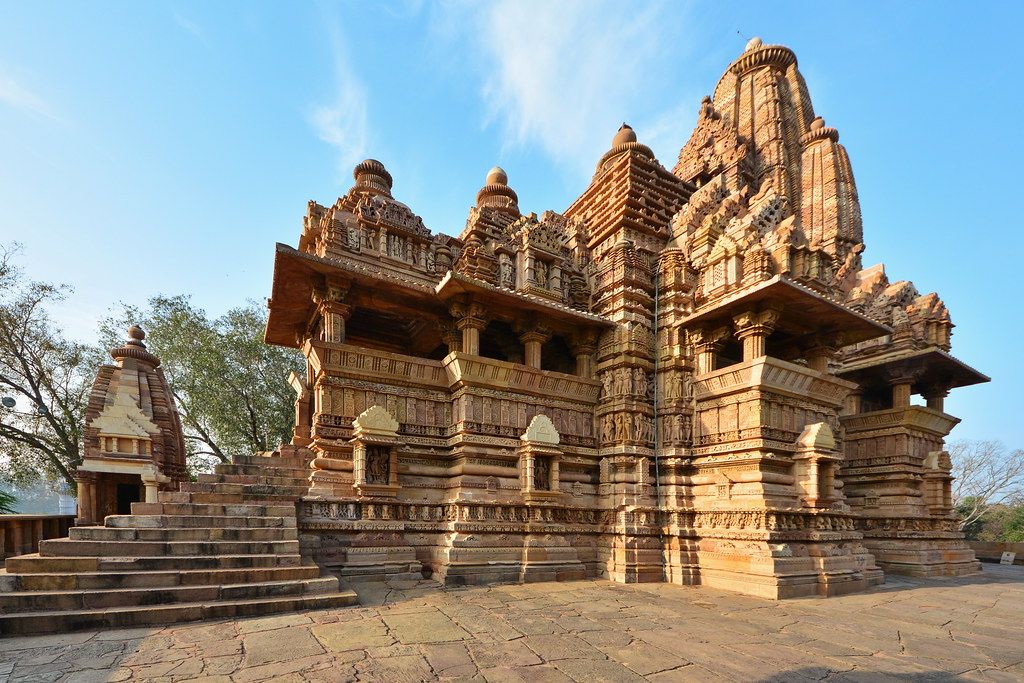
Built between the 9th and 12th centuries by the Chandela dynasty, the temples of Khajuraho were once part of a much larger complex.
Today, only a portion remains — but what remains is enough.
What makes these temples unique is not just their structure.
It is the detail.
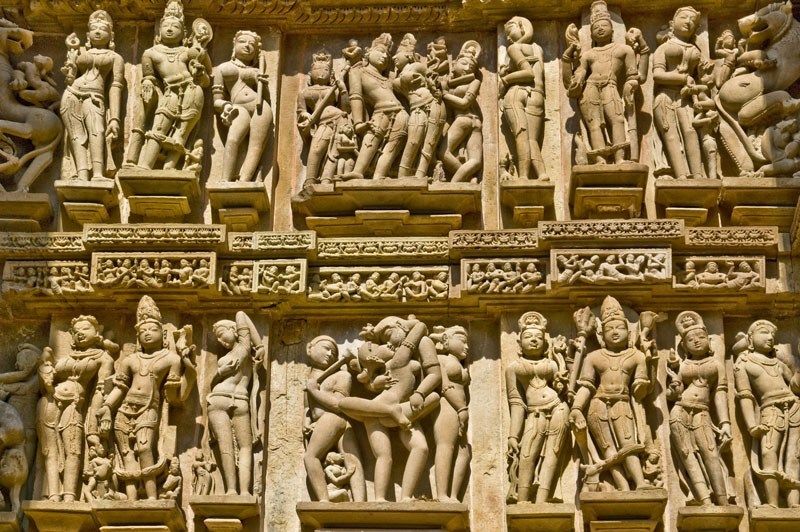
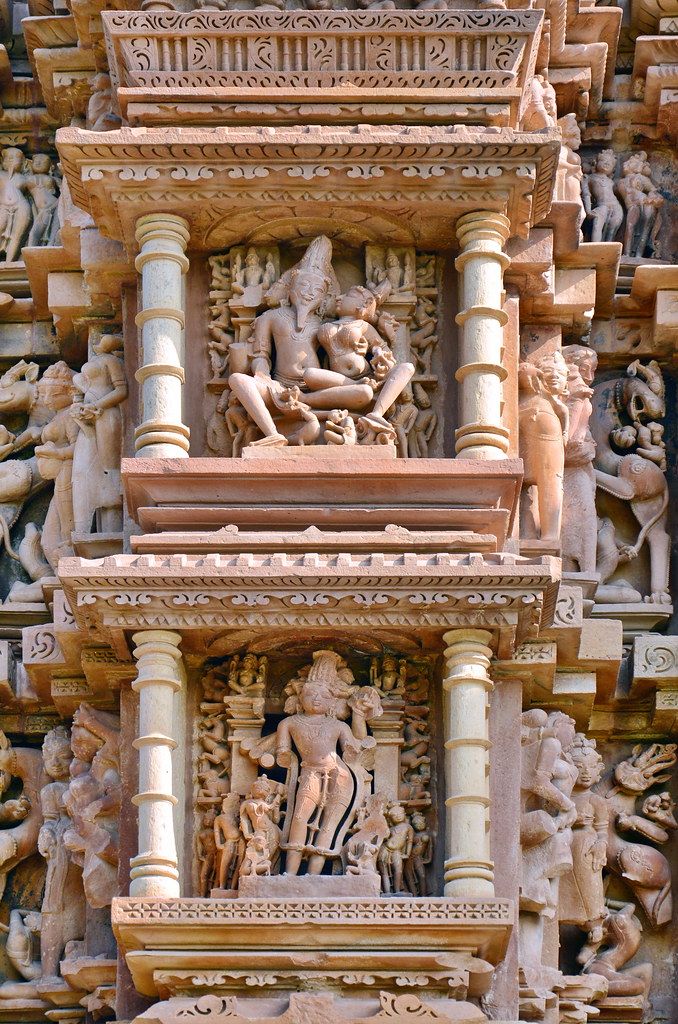
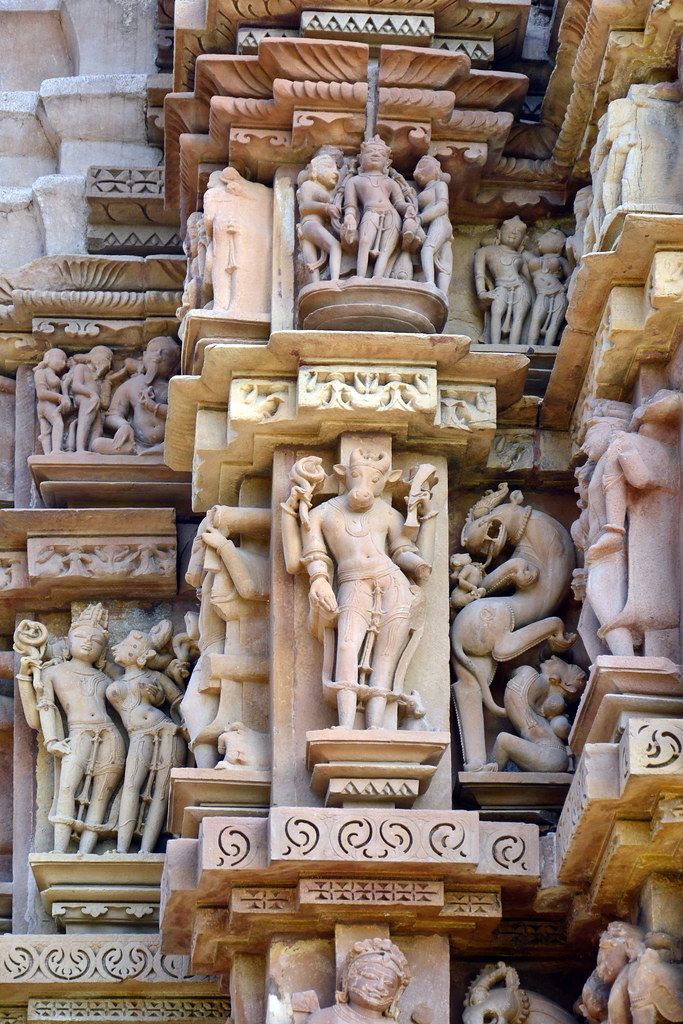
Every wall, every surface carries carvings — not just of gods and rituals, but of daily life, relationships, movement, and moments that feel surprisingly human even today.
And that’s where Khajuraho becomes different.
It doesn’t present history as distant.
👉 It makes it feel immediate
When to Visit (And What It Actually Feels Like)
From October to March, Khajuraho feels most comfortable.
The open temple grounds are easier to explore, and walking between sites is manageable.
Summers can feel harsh due to exposure.
Winter mornings, on the other hand, bring a certain quietness — soft light on stone, fewer crowds, and a slower rhythm.
👉 Khajuraho works best when you can move slowly without discomfort
The Temples — Not One Experience, But Many Layers
Khajuraho is divided into temple groups, but the experience doesn’t need to follow strict categories.
What matters is how you approach them.
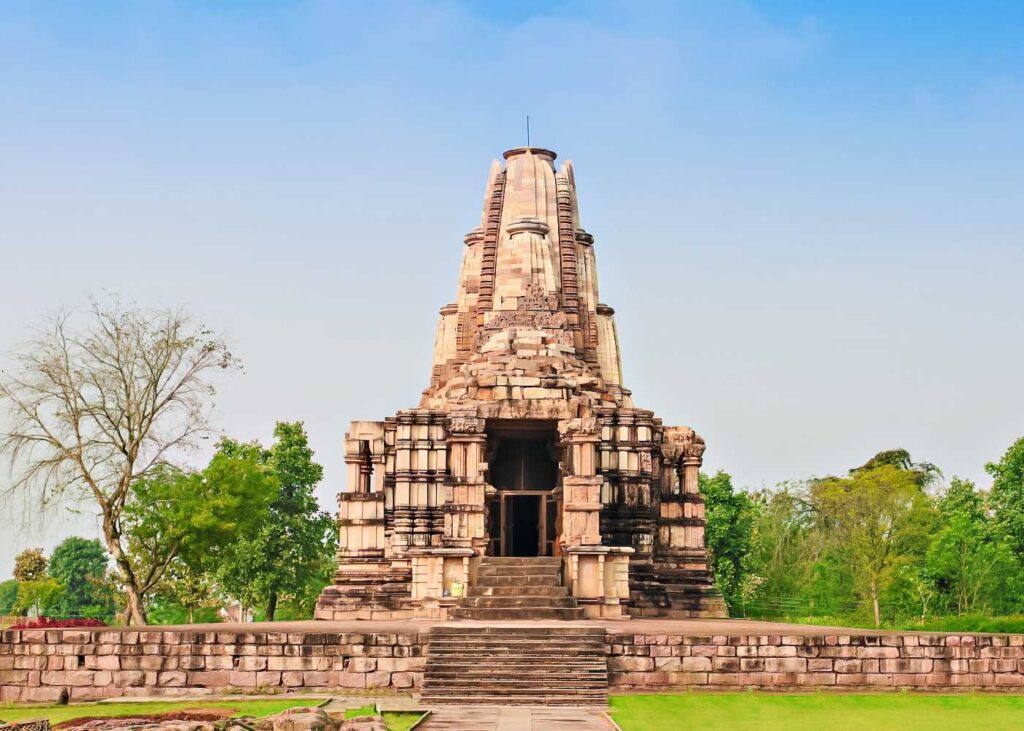
From a distance, the temples feel symmetrical and structured.
Up close, they begin to reveal something else.
Details.
Figures in motion.
Scenes that feel almost like snapshots of another time.
Expressions that range from spiritual to deeply human.
And this is where most travellers pause.
Because what they see is not always what they expected.
Moving Through the Temples — Why Slowing Down Matters
If you walk quickly, you will see impressive architecture.
If you slow down, you begin to notice patterns.
The carvings are not random.
They are placed intentionally — layered, repeated, connected.
And over time, the experience shifts.
From observation → to interpretation → to reflection.
👉 Khajuraho is not about “how many temples you saw”
👉 It’s about how you moved through them
The Famous Sculptures — Looking Beyond the Surface
Khajuraho is often reduced to one thing.
Its erotic sculptures.
But when you actually stand in front of them, something becomes clear.
They are not isolated.
They are part of a larger narrative.
Placed among everyday life, spiritual imagery, and symbolic forms.
And gradually, they stop feeling shocking.
They start feeling contextual.
👉 This is not about provocation
👉 It is about balance within human experience
The Space Around the Temples
What also defines Khajuraho is what’s not there.
No overwhelming noise.
No excessive crowding.
No constant movement.
The open grounds, the distance between temples, the quiet surroundings — all of this allows the experience to settle.
You are not pushed from one point to another.
You are given space to stay.
Beyond the Temples — Extending the Experience
Khajuraho is often seen as a short stop.
But if you extend slightly, the region begins to open up.
Nearby landscapes, small villages, and natural areas add contrast to the temple experience.
Even a short excursion changes the rhythm.
From structured architecture → to open surroundings.
Where You Stay (Keep It Simple and Close)
Khajuraho doesn’t require complex accommodation decisions.
Staying near the temple area works best.
It allows you to:
- walk easily
- revisit spaces
- move without planning transport
Comfort matters, but proximity matters more.
How to Plan Your Time (Without Overloading It)
One to two days is enough.
But the approach matters.
Instead of trying to cover every group quickly, allow time within fewer spaces.
Return if needed.
Sit for a while.
Observe without rushing.
Because Khajuraho is not about completion.
👉 It is about absorption
Final Thought
Khajuraho does not try to explain itself.
It doesn’t guide you toward a single interpretation.
It simply presents — in stone — a view of life that is layered, open, and unfiltered.
If you approach it with expectations, it may feel confusing.
If you approach it with openness, it becomes something else entirely.
Not just a place you visited.
But a place that made you think differently.