
-
Bus, Cab
-
Rishikesh
-
April to November
-
Eco-Tour, Spiritual
-
All meals during the trek
-
English, Hindi
-
Easy to Moderate
-
2-15
-
12
-
65
Introduction to Char Dham Yatra
The Char Dham Yatra is one of the most respected and spiritually powerful pilgrimages in India. Nestled in the lap of the mighty Himalayas, this sacred journey takes devotees through four holy shrines—Yamunotri, Gangotri, Kedarnath, and Badrinath. For centuries, people have believed that completing the Char Dham Yatra cleanses the soul, removes negative karma, and opens the path toward moksha, or liberation.
This journey is not only about religion; it is also about self-discovery. The silence of the mountains, the sound of flowing rivers, and the devotion in the air create an experience that words often fail to describe. Whether you are a devotee or a nature lover, Char Dham leaves a deep and lasting impression on your heart.
Meaning of Char Dham
The term Char Dham comes from two Sanskrit words—Char meaning four, and Dham meaning holy place or sacred abode. Together, Char Dham represents the four divine destinations that every Hindu wishes to visit at least once in their lifetime.
These dhams are believed to be gateways between the earthly world and the divine realm. Visiting them is like walking a spiritual ladder, step by step, toward inner peace and higher consciousness.
Why Char Dham is Spiritually Important
Char Dham Yatra holds immense importance in Hindu belief. It is said that the journey washes away sins accumulated over many lifetimes. People often begin this yatra during difficult phases of life, hoping to find clarity, healing, and peace.
Many pilgrims say that Char Dham changes them from the inside. The journey teaches patience, humility, and faith—qualities that stay with you long after you return home.
Historical and Religious Background
The roots of Char Dham go deep into ancient Indian history. These sacred sites are mentioned in holy texts like the Skanda Purana, Vishnu Purana, and Mahabharata. For thousands of years, sages and saints have meditated in these regions.
The roots of Char Dham go deep into ancient Indian history. These sacred sites are mentioned in holy texts like the Skanda Purana, Vishnu Purana, and Mahabharata. For thousands of years, sages and saints have meditated in these regions.
Role of Adi Shankaracharya
Adi Shankaracharya, a great Hindu philosopher of the 8th century, played a key role in reviving and organizing the Char Dham Yatra. He re-established the temples and encouraged people to visit these holy places as a spiritual duty. Even today, his teachings guide the rituals and traditions followed at these dhams.
Geographical Location of Char Dham
All four dhams are located in the Garhwal region of Uttarakhand. This region is known for its rugged terrain, snow-covered peaks, and sacred rivers.
Himalayan Landscape and Climate
The journey takes pilgrims through high altitudes, narrow mountain roads, deep valleys, and dense forests. The climate can change suddenly, making the yatra both challenging and adventurous.
Spiritual Energy of the Himalayas
The Himalayas are often called the abode of gods. The peaceful environment and pure air naturally calm the mind and help pilgrims connect with their inner self.
Char Dham: Meaning, History, and Importance
Yamunotri Dham – The Sacred Source of River Yamuna
Mythological Importance of Yamunotri
According to Hindu belief, Goddess Yamuna is the daughter of Surya (the Sun God). Bathing in her holy waters is believed to protect devotees from untimely death and reduce the fear of Yama, the God of Death.
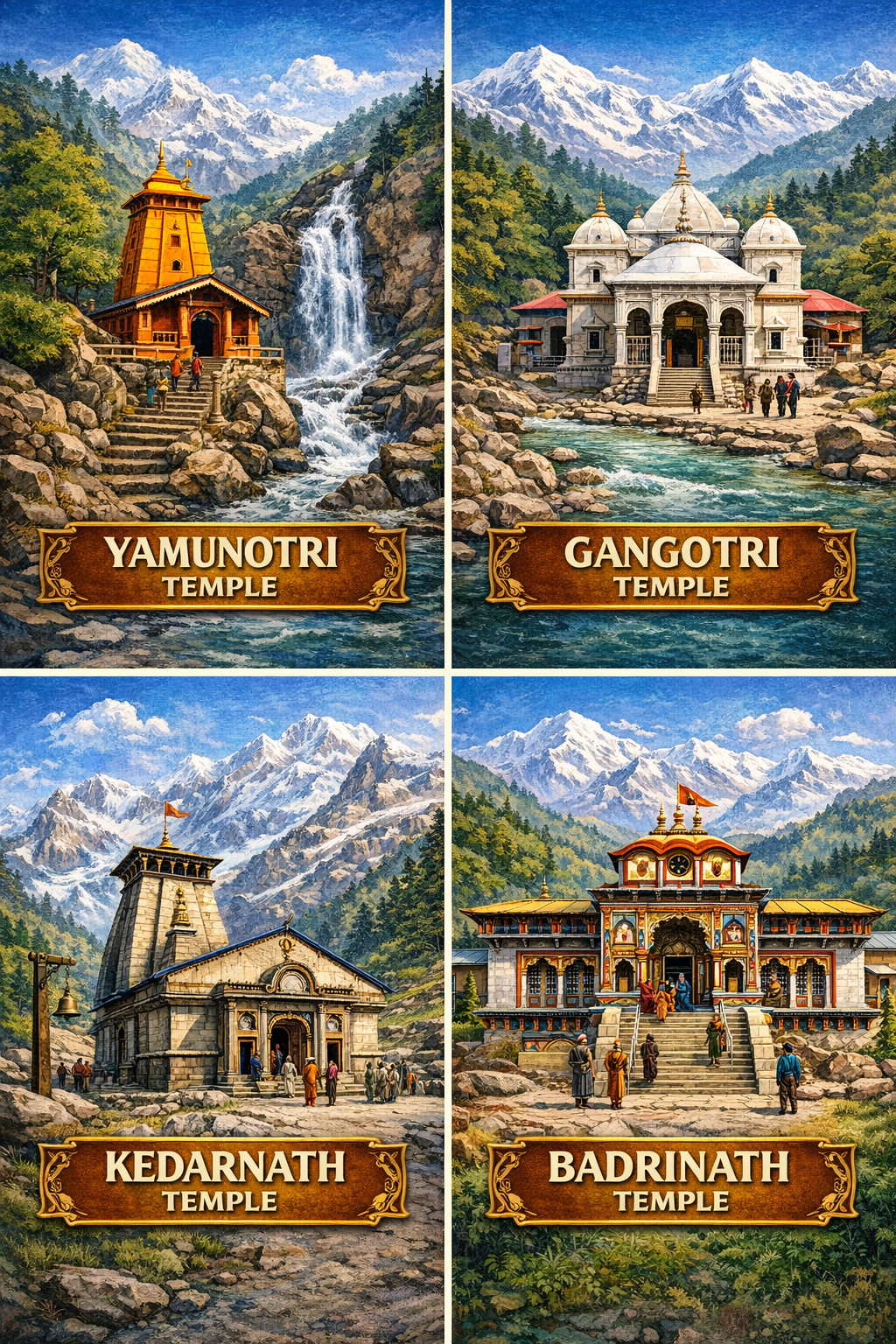
Yamunotri Temple and Surya Kund
The Yamunotri Temple stands near Surya Kund, a natural hot water spring. Devotees cook rice and potatoes in the hot water as prasad, a tradition that adds a unique charm to this holy place.
Gangotri Dham – The Divine Origin of River Ganga
Gangotri is the second dham and marks the place where River Ganga descended from heaven to Earth.
Legend of King Bhagirath
According to legend, King Bhagirath performed severe penance here to bring Goddess Ganga down to cleanse the souls of his ancestors. Lord Shiva controlled her powerful descent by holding her in his matted hair.
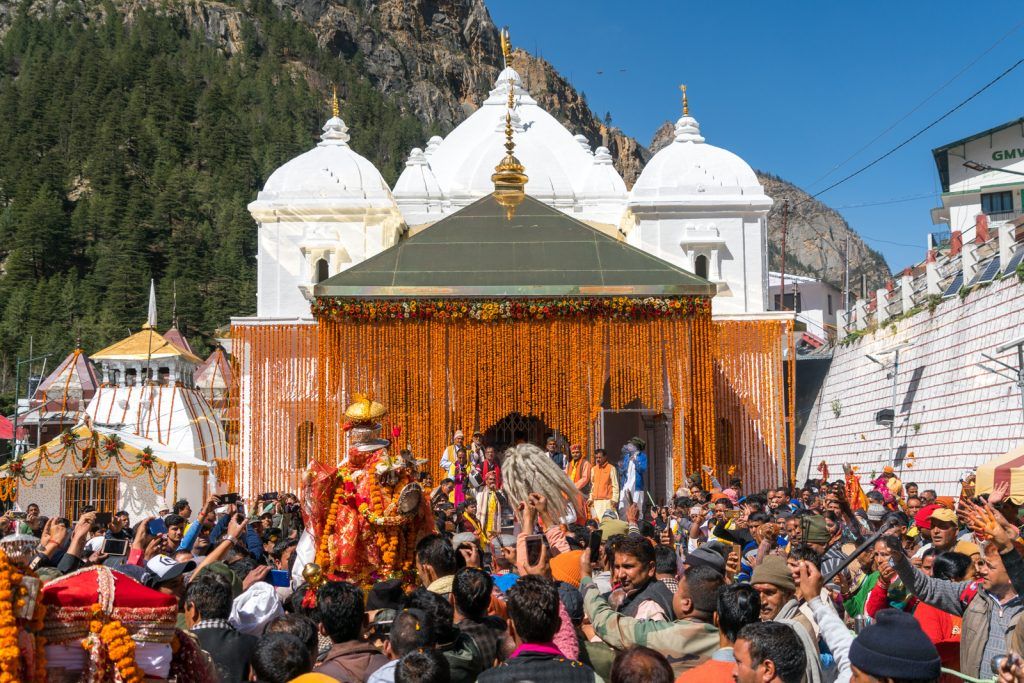
Gangotri Temple and Bhagirathi River
The Gangotri Temple, built with white granite, stands beside the Bhagirathi River. The peaceful surroundings make it an ideal place for meditation and prayer.
Kedarnath Dham – The Sacred Abode of Lord Shiva
Kedarnath is one of the most important shrines dedicated to Lord Shiva and is also one of the twelve Jyotirlingas.
Spiritual Significance of Kedarnath
It is believed that visiting Kedarnath helps devotees break free from the cycle of birth and rebirth. The temple holds a strong connection to the Pandavas from the Mahabharata.
Temple Architecture and Natural Surroundings
Built from massive stone slabs, the Kedarnath Temple has withstood centuries of harsh weather. Surrounded by snow-clad peaks and the Mandakini River, the place feels deeply divine.
Badrinath Dham – The Holy Seat of Lord Vishnu
Badrinath Dham is one of the most sacred Hindu pilgrimage sites, nestled in the Himalayas of Uttarakhand. Dedicated to Lord Vishnu, this holy shrine is revered as part of the Char Dham and Chota Char Dham, symbolizing spiritual liberation, devotion, and divine peace.
Religious Importance of Badrinath
It is believed that Lord Vishnu meditated here for thousands of years, while Goddess Lakshmi protected him in the form of a Badri tree.
Badrinath Temple and Tapt Kund
Before entering the temple, devotees take a holy dip in Tapt Kund, a natural hot water spring believed to have healing properties.
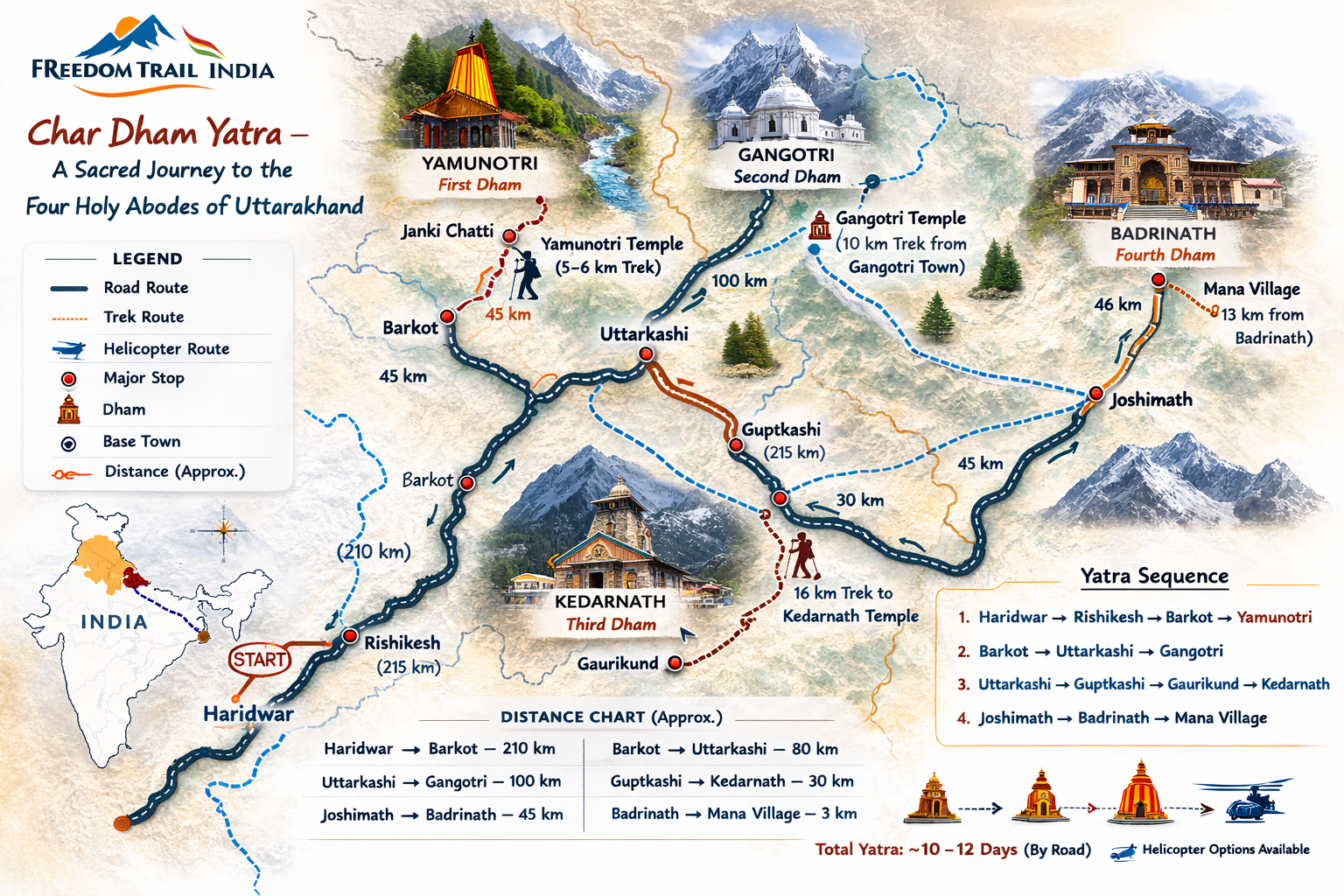
Correct Order of Char Dham Yatra
The traditional order of the yatra is:
Yamunotri → Gangotri → Kedarnath → Badrinath
This order is followed for spiritual balance and smooth travel across the region.